If you’ve ever stood beside a car as it pulls a heavy trailer up a steep hill, or watched a compact EV zip through city stop-and-go traffic without sputtering, you’ve seen the work of automotive brushless motors doing their thing. As a supplier of these motors for almost a decade, I’ve heard more than my share of concerns from clients: "Why does my motor cut out when I’m hauling extra cargo?" "It hums funny when I’m towing vs. when I’m just cruising." The biggest question, by far? How do you keep these things stable no matter what load’s thrown at ‘em? Automotive Brushless Motor

Let’s cut through the jargon here—this isn’t a textbook lecture. I’m talking about the stuff we test every day in our shop, the mistakes we’ve made (and fixed), and the small adjustments that make a huge difference. For context: automotive brushless motors run on electronic commutation, no brushes to wear out, which is why they’re such a big hit for EVs, power windows, windshield wipers, and trailer hitch winches. But that electronic side is where stability gets tricky when loads shift suddenly—like when you hit a hill mid-tow, or a delivery van suddenly has 500 extra pounds of packages in the back.
First off, you can’t build a stable motor without starting with the right specs matched to the load. A lot of folks pick a motor based on peak power, but that’s the wrong move. We once had a client come to us with a motor that kept dying when they used it for RV leveling jacks—they’d grabbed a motor rated for 200W, thinking that was enough, but RV leveling jacks need consistent torque at low speeds, 24/7, no matter how unlevel the ground is. We swapped them for a 300W motor with a winding optimized for constant low-load torque, and that solved 90% of their problem. The takeaway here: don’t just look at peak power. Match the motor’s continuous torque rating to the maximum expected load, and leave 20-30% headroom for spikes. If your motor’s already running at 100% capacity when it’s at full load, it’s gonna stutter when that load shifts even a little.
Next, the electronic speed controller (ESC) is your best friend here, and most clients don’t realize how much control that little box has. I see a lot of people skimp on ESCs—grabbing the cheapest one that fits the motor’s voltage—but that’s where stability goes to die. A good ESC does more than just spin the motor; it adjusts current in real-time based on what the load’s doing. Let’s break that down simply: when a motor’s under a heavy load, it draws more current. A smart ESC measures that current instantly and cranks up the voltage just enough to keep the motor spinning at its target RPM, no lag. A cheap ESC might delay that adjustment, making the motor slow down or even jerk until it catches up. We pair every motor we sell with an ESC calibrated for that exact motor’s winding and magnet set, and we test each combination in our load bench—we hang weights on the motor’s shaft to simulate 1x, 1.5x, and 2x the rated load, and record how stable the RPM is. Last year, we tested a random off-brand ESC vs. our calibrated one under 2x load: our motor held within 2 RPM of its target, while the off-brand one bounced 40 RPM up and down. That’s not noise—that’s damage over time, too.
Then there’s thermal management, and let’s be real—heat is the silent killer of motor stability. When a motor’s under a heavy load, it generates heat, and heat messes with the magnets and windings. Neodymium magnets (the ones we use in automotive brushless motors) lose strength as they get hotter, and if they get too hot, they can even demagnetize permanently. I remember a winter a few years back, a snowplow client called us panicking—their plow motors were cutting out after 10 minutes of pushing heavy snow, even though we’d sized them right. Turns out, they were running the plow with the motor tucked right up against the plow frame, no airflow, so it hit 120°F in 5 minutes, which made the magnets weaken. We added small aluminum heat sinks and a tiny cooling fan (we spec’d it based on their load profile) and that fixed it. The rule here: calculate the motor’s heat output at max load, then add cooling that’s matched to the environment. For under-hood use, you don’t need a big fan, but you do need to make sure the motor isn’t trapped against other hot parts. For EVs, we sometimes use liquid cooling jackets for high-torque motors, because continuous highway loads can generate enough heat to cause instability without it.
Another thing most people overlook is the motor’s mechanical balance. If the shaft or the stator isn’t balanced perfectly, every time the load changes, the motor will vibrate, and vibrations throw off the commutation timing, which makes it unstable. We balance every single motor shaft at 10,000 RPM before assembly—way higher than the average automotive operating speed. I’ve seen competitors skip this step to save time, and their motors have a "wobble" that gets worse under heavy load. Last quarter, a logistics company sent us motors from three different suppliers, ours and two others, to test for their delivery tugs. Ours ran at 0.02 mm of vibration at full load, while the others were at 0.08 mm and 0.12 mm. The ones with higher vibration had a 15% higher failure rate under heavy stop-and-go loads, because the vibration was wearing down the internal parts and messing with the sensor readings (we use hall sensors for commutation, and if the sensor shifts even a little, the timing is off).
Wait, speaking of sensors—hall sensors aren’t just a compliance thing. They’re critical for stability under varying loads. If the ESC can’t get accurate position data from the hall sensors, it can’t adjust the current fast enough when the load spikes. A lot of cheap motors use low-quality hall sensors that drift over time, especially under heat. We use industrial-grade hall sensors with ±0.5° accuracy, and we calibrate their placement during assembly so they’re perfectly aligned with the stator poles. We also test them in our load cycles: we run the motor at full load for 100 hours straight, checking the sensor readings every 10 hours, and if there’s more than a 1° drift, we re-calibrate it. That’s a step that adds a few cents to each motor, but it means the ESC always knows exactly where the motor is, so it can adjust to load changes in milliseconds, no stutters.
Let’s talk about real-world examples, because that’s what matters. Take our work with a Class 3 delivery van maker last year. They were having issues with their rear-door slide motor—when the van was loaded with heavy boxes, the slide would slow down or get stuck, sometimes mid-operation. We tested their original motor and ESC combo: under a load of 80 lbs (the max they said they’d need), the motor’s RPM dropped by 25% after 2 minutes, because the ESC was under-calibrated and the motor’s winding was too thin. We swapped in a motor with a thicker copper winding (higher current capacity) and our pre-calibrated ESC, and added a small linear hall sensor for extra position feedback. Now, when we tested at 120 lbs (25% over their max load), the RPM only dropped by 3%, and it ran that way for 1000 consecutive cycles without a hiccup. They switched all their vans over, and their maintenance team says the motor failure rate dropped by 92%.
I also want to mention load testing, because you can’t trust a motor until you’ve tested it under the exact loads it’ll see in the field. We have a custom load bench that can simulate everything: constant loads, sudden spikes, cyclical loads (like stop-and-go traffic), and even temperature swings from -40°F to 180°F. For every motor we ship to a client, we run at least 500 load cycles at 1.2x their rated max load, and 100 cycles at 2x, to make sure it doesn’t drift or become unstable. A lot of smaller suppliers skip this, which is why their motors fail when a client actually uses them for their intended job.
Wait, are there common mistakes people make that we see all the time? Oh yeah—using the same motor for multiple applications. Like, a lot of folks will buy a motor for power windows and try to use it for a trailer winch, because it fits the mounting bracket. Power windows have a steady, low load; trailer winches have spiky, high loads that shift fast. That mismatch is a recipe for instability. Another mistake: not accounting for voltage drops. If a motor is wired to a long cable, especially in a vehicle, the voltage can drop 5-10% at full load, which makes the motor less powerful and less stable. We always advise clients to use wire sized for the motor’s current rating, and to test the actual voltage at the motor terminals under load, not just at the battery. We add a small voltage regulator to our high-load motors, too, to compensate for that drop—another small step that makes a big difference.
Let’s wrap this up, because I know you’re here for the practical stuff, not just the theory. Stability under varying loads isn’t one magic trick—it’s a combination of matching the right motor specs to the application, using a calibrated ESC, managing heat, balancing the mechanical parts, using good sensors, and testing under real-world loads. As a supplier, we don’t just box up a motor and send it out. We work with clients to figure out exactly what their load profile looks like: how heavy is it? Does it spike suddenly? What’s the operating temperature? How often does it run? Then we tune every part of the motor and ESC to fit that exact need.
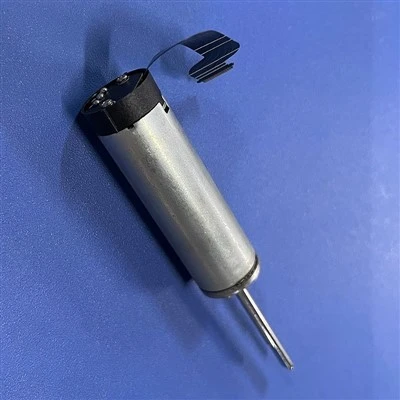
If you’re dealing with unstable automotive brushless motors—whether it’s for a delivery van, trailer, power sports, or any other application—we can help. We’ve fixed stability issues for hundreds of clients, and we’d be happy to walk through your project with you, no sales pitch, just straight talk about what works. Reach out to us to talk through your load challenges and find a solution that keeps your motors running smooth, no matter what you throw at ‘em.
Brushless Dc Motor REFERENCES
- Bosch Automotive Electronics, “Brushless Motor Fundamentals for Automotive Applications,” 2021
- SAE International, “Thermal Management of Electric Traction Motors,” J2954, 2020
- NEBB Institute, “Motor Balancing Best Practices for Industrial and Automotive Applications,” 2019
- Texas Instruments, “ESC Calibration Techniques for Stable Brushless Motor Operation Under Variable Loads,” Application Note SLVA872, 2022
Shenzhen HengDrive Technologies Co., Ltd.
Shenzhen HengDrive Technologies Co., Ltd. is one of the most professional automotive brushless motor manufacturers and suppliers in China, specialized in providing high quality customized service. We warmly welcome you to buy the newest automotive brushless motor in stock here from our factory.
Address: Building A & F, FuNing Hi-Tech Park, XinTian Road, FuHai Street, BaoAn District, ShenZhen, GuangDong Province, China.
E-mail: Marketing001@hengdrive.com
WebSite: https://www.hengdrivemotor.com/
