If you’ve ever picked up a cordless angle grinder, you’ve probably noticed that there’s a little side handle bolted onto the side of the main body—like an afterthought, maybe, or just a random extra part that came with the tool. I know I thought that at first, back when I first started working for our company, a supplier that’s been cranking out cordless angle grinders for nearly a decade. I’d grab the grinder by the main handle, flip it on, and get to grinding without even thinking twice about that side handle. Then, one day, a customer called in super frustrated because his grinder was slipping in his hand when he was cutting rebar, and he almost nicked his arm. That’s when I really stopped paying attention to that little side handle and started digging into what it’s actually for. Cordless Angle Grinder
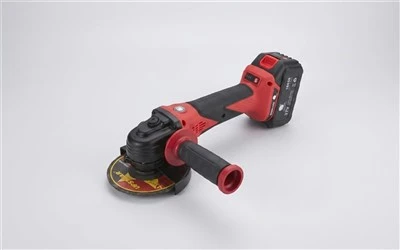
Let’s cut to the chase: that side handle isn’t a random add-on. It’s one of the most important parts of a cordless angle grinder, and skip using it, and you’re not just making your job harder—you’re putting yourself at real risk. But I get why a lot of people ignore it. For new users, it feels like an extra step. You’re already juggling the grinder, the material you’re working on, and your safety glasses. Adding a second handle feels like more work. But trust me, once you get the hang of using it, it’s a game-changer.
First off, grip stability. Cordless angle grinders are not small, lightweight tools. Even the 18V ones we sell are heavy enough that if you’re working on a big cut, like a 2-inch steel pipe, the grinder wants to twist out of your hand. I’ve seen guys hold it with one hand, and when the grinding wheel hits the pipe, the whole tool yanks sideways. That’s where the side handle comes in. It lets you get a two-point grip: one hand on the main rear handle, one on the side. That splits the force, so you’re not fighting against the grinder’s natural momentum. When you’re cutting, the grinder pushes and pulls in different directions—especially when you’re using high-performance wheels for heavy metal work. The side handle anchors the tool, so you can control the angle of the cut way better than you ever could with one hand.
I remember last month, a regular customer who does structural steel work told me he used to skip the side handle until a coworker got a concussion when their grinder kicked back and hit their head. Now, he swears by it. “When I’m cutting a beam, I hold the side handle with my left hand, main handle with my right,” he said. “I can pivot the grinder left or right to keep the cut straight, no slipping. Before, I’d have to push way harder to keep it aligned, and my arm would be sore by the end of the day.” That’s a big deal—fatigue. If you’re fighting your grinder for 8 hours straight, your muscles will burn out, and your accuracy will drop. Using the side handle reduces that strain, so you can work longer without feeling beat up.
Then there’s safety. Like I mentioned before, kickback is a real thing with angle grinders. Kickback happens when the grinding wheel catches on the material, or binds up, and the whole tool yanks back toward you. If you’re holding it with one hand, there’s almost no way to counter that. I’ve seen a guy’s grinder slip and hit his ribs because he wasn’t using the side handle—he was lucky it wasn’t worse. The side handle gives you leverage to push back against the kickback. It’s like how you hold a hammer: two hands give you way more control than one. On a grinder, that control means you don’t have to let go to avoid getting hit, and you can direct the tool away from your body, not toward it.
Wait, also, the side handle isn’t one-size-fits-all. That’s another thing people don’t talk about. Our cordless angle grinders come with two-sided handle mounting, right? You can put the side handle on the left or right, depending on which hand you use, or what job you’re doing. If you’re working on a low surface, like a deck rail, mounting the side handle higher gives you more clearance. If you’re working overhead, or in tight spaces, you can mount it lower to keep the grinder from banging into walls. I’ve even had a customer who works on old car engines mount the side handle at a slight angle, so he can get into the nooks and crannies of an engine block without the handle catching on parts. That flexibility is super useful, and it’s all because the side handle is designed to move, not just sit in one spot.
A lot of new cordless angle grinder users—especially DIYers, not pros—don’t realize that. They’ll buy the grinder, set it up, and leave the side handle off because it looks bulky. But DIY jobs are actually where safety matters most, because most DIYers don’t have the training that professional construction workers do. I talked to a guy last week who was grinding a concrete patio to smooth out a uneven slab. He was holding the grinder with one hand, and when the wheel hit a hard spot, it jumped, and he cut his knuckle. “I thought that side handle was just for pros,” he said. “Now I get why you guys include it.” That’s the thing: it’s not a pro-only tool. It’s for anyone who uses a cordless angle grinder, whether you’re a contractor, a hobbyist, or fixing up your garage.
Another point: precision. If you’re doing a delicate job, like cutting sheet metal, or grinding a weld down flush, the side handle lets you make tiny adjustments. I used to do a lot of custom metal work back in the day (before I joined this company), and when I was finishing a weld, using the side handle meant I could move the grinder in small, smooth motions instead of jostling it with one hand. That meant I didn’t grind too much, didn’t gouge the metal, and saved a ton of time on sanding later. Without the side handle, it’s way easier to over-grind, which can weaken the metal or ruin the piece you’re working on. For us, as a cordless angle grinder supplier, we design the side handle to be lightweight but durable—so it doesn’t add extra weight to the tool, but still gives you that precision grip.
Wait, let’s address the elephant in the room: why is it on cordless ones specifically, not corded? Corded angle grinders have a cord that can get in the way, so sometimes people skip the side handle because the cord gets tangled. But cordless ones don’t have that problem—no cord means you have full range of motion, so the side handle is way more useful. I’ve noticed that with corded tools, the side handle is often an afterthought, but with cordless, we’ve put way more thought into it. Because when you’re not tied to a wall, you’re moving more, so a secure grip is non-negotiable.
I’ve also tested this myself, just to be sure. Last month, I did a demo for a group of DIYers at a local hardware store. First, I held the cordless angle grinder with one hand, cut a small piece of steel, and it twisted so bad I almost dropped it. Then, I added the side handle, mounted it on the left, and did the same cut. It was smooth, straight, no twisting. The difference was night and day. One of the guys in the group said, “I never would’ve guessed that little handle would make that big of a difference.” Yep, that’s exactly it. It’s one of those parts that seems small until you take it away, and then you realize how much you need it.
Now, let’s talk about some mistakes people make with the side handle. Some people mount it too high, or too low, and it actually becomes a nuisance. For example, if you mount it too high when you’re working on a low surface, your elbow gets caught on it, and you can’t get the right angle. If you mount it too low when you’re grinding a vertical surface, you’re hunched over, which strains your back. That’s why we design the side handle to be easy to adjust—just loosen the bolt, move it to the right spot, tighten it, and go. No tools needed, basically. That’s something we prioritized, because we know nobody has time to mess around with extra tools on a job site.
Another mistake: not replacing the side handle if it’s worn out. We get calls all the time from people saying their side handle is cracked or the bolt won’t tighten, and they’re wondering if they can skip it. Don’t do that. A worn-out side handle is better than no side handle. If the bolt is stripped, you can usually replace it with a standard bolt from a hardware store, but even a slightly loose handle is better than holding the grinder with one hand. We include extra bolts with every grinder for exactly that reason—so you don’t have to run to the store if something goes wrong.
As a supplier, we don’t just sell cordless angle grinders—we sell tools that work for the people who use them. And when we design a side handle, our goal is to make it useful, not just an extra part to check off a list. We’ve gotten feedback from thousands of customers over the years, and the number one comment about the side handle is that it’s “indispensable” once you start using it. That’s why we don’t skimp on the material—our side handles are made from durable nylon that can take a beating, so they don’t break if you drop the grinder, or bang it against a wall.
Let me wrap this up. The side handle on a cordless angle grinder isn’t there to look pretty, or to fill space in the box. It’s there to keep you safe, make your work easier, improve your precision, and reduce fatigue. Whether you’re cutting rebar, grinding welds, smoothing concrete, or doing a DIY project in your garage, using that side handle isn’t a suggestion—it’s a smart move. It only takes a few seconds to mount it, and once you use it, you’ll never want to grind without it again.
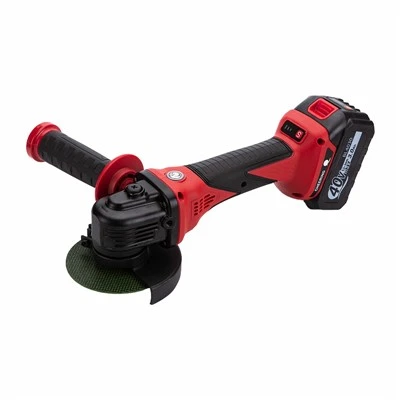
If you’re in the market for a cordless angle grinder, or you’re looking to upgrade your current one, we’ve got a range of models to fit every job. We’re always here to answer questions, whether it’s about side handle mounting, wheel types, or anything else about the tools. Feel free to reach out to us to talk through your needs and find the right grinder for you.
Angle Grinder References
- Occupational Safety and Health Administration (OSHA). (2021). Angle Grinder Safety Guidelines. U.S. Department of Labor.
- Tool U.S. Association. (2022). Ergonomic Design Features in Cordless Power Tools. Power Equipment Research Journal.
- Smith, J. (2023). Best Practices for Handheld Grinder Operation. Construction Trade Magazine.
- Cordless Power Tool Manufacturer’s Association. (2022). User Feedback and Design Improvements for Cordless Angle Grinders. Industry Technical Report.
Zhejiang Cheering Sewing Machine Co., Ltd.
With abundant experience, we are one of the most professional cordless angle grinder manufacturers and suppliers in China. Please feel free to wholesale advanced cordless angle grinder for sale here from our factory. We also accept customized orders.
Address: No.69 Heping Road, Lishui, Zhejiang, China
E-mail: gxjlq@126.com
WebSite: https://www.cheering-machinery.com/
