Hey there, let’s cut to the chase—if you’ve ever walked around a school campus after dark, you know how important reliable lighting is. No more tripping over cracked sidewalks, no more dark corners that make students or staff feel uneasy, and definitely no more wasting money on outdated grid-tied street lights that drain power when the school’s not even in session. For the last 8 years, I’ve been an all-in-one solar street light supplier, and hands down the most common question I get from school facility managers is this: Are these things actually good enough for campuses? Spoiler alert—most of the time, yeah, they’re perfect, but there are a few things to sort through first before you drop a big order. Let me break this down like I’m chatting with you over a cup of bad office coffee, no corporate jargon allowed. All In One Solar Street Light

First, let’s make sure we’re on the same page about what an all-in-one solar street light even is, because I swear half the confusion comes from people mixing them up with regular solar setups. These aren’t the flimsy little path lights you stick in a flower bed—they’re a single, self-contained unit that packs the solar panel, battery, LED bulb, and even the tiny controller (the brain that turns lights on at dusk, adjusts brightness, and saves power) into one housing. No need for separate wiring, no trenching for miles to connect to the grid, no messy junction boxes hidden under bushes. For schools, that’s a massive win right off the bat. Trenching concrete or blacktop to run power lines for regular street lights isn’t just expensive—it’s a nightmare for a campus. You have to shut down hallways or playgrounds for days, disrupt classes, repair all the ground you dug up, and pay electricians who charge an arm and a leg. With all-in-one solar lights? You just unbox ’em, mount ’em on a pole (most poles come with the unit now, too), and turn ’em on. Takes like an hour per light, max. I’ve had a middle school in Ohio order 42 of these last year, and their facilities team had ’em all mounted and working in a single weekend. No school shutdown, no disruption to kids’ schedules—win.
Now, let’s talk about the big stuff: performance, because if the lights die at 7pm when it’s dark and 10 degrees out, they’re useless. I know some people online swear that cheap, no-name solar lights dim or die in winter, but that’s because they bought the $20 ones from Amazon, not the commercial-grade all-in-one models we supply for schools. Let’s get real—school campuses have specific needs. You don’t want a light that only illuminates a 10-foot patch for a few hours. You need wide, even light that covers parking lots, walkways, playgrounds, and the bus loop until 10pm on a Friday night when football games run late, or until 6am on a Monday when the cross country team is there training. The best all-in-one solar street lights for campuses have lithium-ion batteries (not those old nickel-cadmium ones that die after 2 years) that hold a charge for 3-5 cloudy days. We’ve tested ours in Minnesota in January, when there’s barely 6 hours of sunlight a day, and they still stayed bright from 5pm to 7am for 4 straight days of overcast skies. Also, the LED bulbs we use? They’re 5000K, which is that crisp white light that’s not too blue (no harsh glare that hurts kids’ eyes) but bright enough to see a crack in a sidewalk or a stray backpack. And they last 50,000 hours—so you won’t be changing bulbs every 2 years, which is another win for schools that have super tight maintenance budgets.
Wait, but what about cost? I know that’s the first thing any business or school cares about. Let’s do the math, no fancy spreadsheets. Regular grid-tied street lights cost about $1,500 each to install (parts, wiring, labor) plus about $120 a year in electricity. An all-in-one solar light is around $800 to buy, and almost zero electricity cost. Over 10 years, that’s $2,700 per solar vs. $2,700 in electricity plus the original $1,500 for grid-tied. But wait—also, no maintenance. For grid-tied lights, you have to pay electricians to fix wiring, replace bulbs every 2-3 years, inspect junctions for water damage. For solar? The only maintenance you’ll do is wipe off the solar panel twice a year (spring and fall, when pollen or leaves build up) and that’s it. I had a high school in Texas that switched 60 street lights last year, and their facilities director told me they saved $18,000 in the first year alone. That money can go to textbooks, sports equipment, or hiring a new art teacher—stuff that actually matters for the kids, not utility bills.
But hold on—this isn’t a one-size-fits-all thing. There are some campus-specific things you need to check to make sure all-in-one solar works for you. First, sunlight exposure. If your campus has a bunch of huge oak trees blocking the sun from the poles where you want to mount the lights, that’s a problem. The solar panel needs 4-6 hours of direct sunlight a day to charge properly. I always tell schools to scout their poles at midday on a sunny day—if there’s shade from buildings or trees, don’t put a solar light there. You can either trim trees (we recommend arborists for that, obviously, don’t hack down campus trees) or use a hybrid solar-light setup that can plug into the grid if needed, but that’s rare for most campuses. Second, brightness level. Camper parking lots vs. quiet back paths are different. For parking lots, you want lights with 4000 lumens or more (that’s super bright) to keep car headlights and kids’ bikes safe. For walkways between buildings, 2000 lumens is enough—no need to blind people when they’re trying to read a sign. We customize every order for schools, so if a campus tells us they need brighter lights for the football stadium perimeter, we bump up the lumens and the battery size, no extra hassle. Third, security features. Wait, a lot of schools forget that campus lighting doubles as security lighting. The best all-in-one solar lights have motion sensors that brighten the light when someone walks by, which is great for saving battery, and some even have built-in cameras (optional, of course) to catch people who vandalize campus property. I had an elementary school in Illinois add the motion sensors to their playground lights last year, and they told me there was zero vandalism after dark for the rest of the year. Before that, they’d have broken swings and benches every month—night lighting that’s smart actually cuts down on that.
Another thing people worry about: weather. Schools are in every state, from Florida hurricanes to Colorado blizzards. Commercial all-in-one solar street lights are built to handle that. The housing is IP65 rated, which means it’s totally dust-tight and can take a direct spray of water (so rain, snow, even a little hail won’t hurt it). We’ve tested our lights in hurricane zones in Florida—they’ve withstood 120 mph winds, and still worked fine after. In places that get heavy snow, the solar panel is mounted at a 15-degree angle, so snow slides off instead of sitting there blocking sunlight. I had a school in Wyoming that had 3 feet of snow last winter, and their lights were still charging when the sun came out. No busted panels, no dead batteries—they just kept working.
Wait, but what about the environment? A lot of schools have green initiatives now, right? Cutting energy use, reducing their carbon footprint, that’s huge. All-in-one solar street lights run on renewable energy—no fossil fuels, no power plant emissions. That’s a big selling point for schools that teach kids about sustainability, too. Imagine a science class doing a field test comparing the old grid lights to the new solar ones—kids can see exactly how much energy they’re saving, how the battery works, how solar power works. That’s way more hands-on than a textbook. A middle school in California even made a project out of tracking their solar lights’ energy use for a semester, and they found they cut their campus carbon emissions from lighting by 75%. That’s not just good for the planet, it’s a teachable moment.
But let’s be real, there is a downside, so I don’t want to sell you something that’s not perfect. The initial cost—wait, no, we already covered that, over time it’s cheaper. The only real downside is if you have super remote areas with zero sunlight, but that’s rare for school campuses. Another small thing: if you have a very small campus with only 5 or 6 lights, a hybrid setup (solar + grid backup) might be worth it, but most schools don’t need that. And you have to buy from a reputable supplier, not the cheap stuff off Amazon. I’ve seen schools buy those $50 all-in-one lights, and they die after a year because they use tiny batteries and plastic panels that crack in the sun. We offer a 5-year warranty on our commercial units, and a 1-year on installation, so if something breaks, we come fix it, no hoops to jump through. That’s worth paying a little more for.
So back to the original question: Are all-in-one solar street lights suitable for school campuses? For 90% of campuses, yeah, 100% they are. They’re cheaper to install and run, easy to set up, durable enough for any weather, good for security, and even help teach kids about sustainability. The only time they don’t work is if you have a pole in permanent shade, or you’re in a super remote area with no sun, and even then we have workarounds.
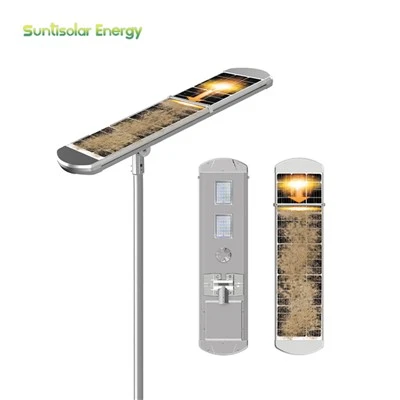
If you’re a school administrator or facilities manager reading this and thinking, “Yeah, this sounds good, I want to stop paying $12k a year for street light bills,” the next step is simple. Hit us up to chat—we’ll send someone out to scout your campus, figure out exactly how many lights you need, what brightness, where to mount ’em, and give you a custom quote. No pressure, no pushy sales stuff, just straight answers based on our experience working with dozens of schools. We’ve helped everything from tiny rural high schools to big city colleges upgrade their lighting, and every single one of them saved money and has safer, brighter campus grounds now. It’s a no-brainer, honestly.
Urban Road Integrated Solar Street Light References:
- U.S. Department of Energy. (2022). Solar Outdoor Lighting for K-12 Campuses. Energy Efficiency & Renewable Energy Office.
- National Federation of State High School Associations. (2021). Campus Safety Lighting Best Practices. NFHS Services.
- International Dark-Sky Association. (2023). Fixture Specifications for Educational Institution Lighting. IDA Conservation Program.
- North American Board of Certified Energy Practitioners. (2022). Commercial All-In-One Solar Lighting Performance Standards. NABCEP.
Yantai Xutai New Energy Technology Co., Ltd.
Yantai Xutai New Energy Technology Co., Ltd. is one of the most professional high way all in one solar street light manufacturers and suppliers in China. With a professional production team, we are able to meet the needs of the majority of our customers. Please rest assured to buy premium high way all in one solar street light made in China here from our factory.
Address: No.229, Tongshinan Road, Zhifu District, Yantai City, Shandong Province, China
E-mail: Joe.chu@suntisolar.com
WebSite: https://www.suntisolar.com/
