Hey there, Single Pass Carton Printer

If you’re here, chances are you’re either shopping around for a single pass carton printer, currently dealing with the headache of a loud, clunky printing setup that’s turning your packaging department into a construction zone, or you’re just curious how these printers stack up against the old, slower models you’ve used before. Whatever the case, I’ve been in this game for over a decade—supplying single pass carton printers to all kinds of brands, from small e-commerce shops cranking out 10k boxes a day to big-name consumer goods companies running 24/7 lines—and one question comes up more than any other: “How loud is this thing, really?”
Let’s cut to the chase: no one wants a printer that’s so loud it makes their staff yell across the room to talk, or that requires ear plugs for every shift (which, trust me, also leads to higher turnover and more OSHA headaches). And honestly, I get why people are skeptical. For years, if you wanted high-speed carton printing, you had to put up with machines that sounded like a jet engine idling on the tarmac. Single pass tech changed that, but there’s still a lot of misinformation out there, so let’s break this down real talk-style.
First, let’s ground this in actual decibels, because that’s the only way to measure noise properly. Decibels (dB) are logarithmic, so every 10 dB jump isn’t just a tiny difference—it’s double the perceived loudness. That’s key here. Let’s use common, relatable sounds as benchmarks, so you don’t have to stare at a number and go “huh?” A normal conversation at a desk is about 60 dB. A busy coffee shop is around 70 dB. A lawn mower is 90 dB, and prolonged exposure to 85 dB+ is where OSHA starts requiring hearing protection. That’s non-negotiable.
Now, where do single pass carton printers land? The short answer is: most mid-to-high quality models (which is what we supply) clock in between 72 dB and 78 dB when operating at full speed, on average. Wait, that’s way lower than a lawn mower, right? Let me put that in perspective: 75 dB is about as loud as a vacuum cleaner running in the next room, or a busy highway 20 feet away. That’s totally manageable for a standard warehouse or packaging floor, no ear plugs required for most shifts. But here’s the catch—this number isn’t one-size-fits-all. A lot of factors tweak that noise level, and I’m gonna walk through each one so you know what to look for when you’re shopping.
First up, speed. Single pass printers are all about speed, right? They print the entire line of text and graphics in one pass, so they’re way faster than old flexo or offset printers that need multiple rollers. But faster doesn’t automatically mean louder—wait, hold on, I know that’s counter to what you might think, but let’s test that. If a machine is moving at 100 feet per minute (FPM) vs 300 FPM, what’s the noise difference? For most well-engineered single pass printers, it’s less than 3 dB. That’s barely noticeable to the human ear. Why? Because modern single pass designs use direct drive systems, not the clunky gear trains that made old high-speed printers roar. We’ve also cut down on unnecessary moving parts—no more dozens of tiny rollers spinning at different speeds, which are a huge source of that high-pitched whine that makes your teeth hurt. The noise you do hear is mostly the paperboard moving through the machine, and the quiet hum of the print heads and motors, not that harsh grinding sound.
Next, substrate type. This is a big one that almost no sales rep will tell you about. If you’re printing on plain, smooth corrugated board, that’s easy for the machine to grip and move through, so noise stays on the lower end—72-74 dB. But if you’re running thick, heavy-duty corrugated (like 32 ECT or higher, which is common for shipping boxes or retail displays), or even board with a textured finish, that can add 3-5 dB. Why? The machine has to apply more tension to pull the board through, and the texture creates a tiny bit more vibration as it passes under the print heads. We’ve fixed this on our printers with custom feed rollers that grip the board evenly without extra tension, so even with thick substrate, we top out around 78 dB max. Compare that to an old flexo printer, which jumps 10 dB just running the same thick board—total night and day.
Then there’s installation and environment, which is the variable that throws a lot of people off when they test a printer at a demo. I’ve had customers come to our showroom, test a printer, and go “wait, that was way quieter than I thought!” then another guy tests the exact same model at their warehouse and says “it’s way louder here!” What gives? Sound travels, right? Hard, flat surfaces (concrete floors, metal walls, empty shelving) reflect noise, so a 75 dB machine in an empty warehouse can feel like it’s 80 dB because of echo. Add in other machines running—like a shrink wrap station, a box erector, or a forklift charging—and that bumps the background noise up to 60-65 dB, which makes the printer feel a lot louder than it actually is. That’s why we always advise new customers to schedule an on-site demo, not just a showroom test, so you can hear how it sounds in your actual space. We also offer sound-dampening enclosure add-ons if you have a super echoey space, which can knock 2-3 dB off, just to make it even easier on your team.
Wait, let’s compare this to the old tech you’re probably replacing, because that’s the real story here. A standard flexo carton printer, which was the go-to before single pass, runs at 250 FPM max, but clocks in at 82-88 dB. That’s lawn mower territory, and that’s where OSHA steps in. If your team is running a 10-hour shift, 85 dB is the threshold where you need to provide free hearing tests and ear plugs. I’ve had so many customers tell me that when they switched from flexo to our single pass printers, the first thing their staff said was “we don’t need ear plugs anymore.” That’s not a small win—turns out, happy, un-deafened employees are more productive. One customer in Ohio told me their packaging line productivity went up 12% in the first month after switching, just because people weren’t yelling over a loud printer all day.
Now, let’s talk about the edge cases, because nothing is perfect, and I don’t want to sugarcoat this. If you’re buying a super cheap, no-name single pass printer from a random supplier overseas, you’re gonna get a way higher noise level—like 82-85 dB. Why? They cut corners on vibration dampening, use cheap motors, and skip the precision engineering that makes a quiet machine. That’s the mistake a lot of new small businesses make—they go for the lowest price, and end up with a machine that’s just as loud as the old one they were trying to get rid of. We see this all the time: customers buy a cheap unit, hate it, call us to replace it within a year, because the noise is driving their team insane. That’s the part no one tells you—single pass doesn’t have to be loud, but bad single pass definitely is.
Another edge case: if you’re running a custom job with variable print, like barcodes, QR codes, or custom graphics on every box, does that change the noise? Nope. The print heads fire in microseconds, way faster than the board is moving, so there’s no extra noise from printing itself. The only time you’ll get a tiny spike is if the machine has to pause for a second to adjust for a different size box, but even that’s only 1-2 dB, and it’s just a brief hum, no grinding.
Let’s also get into what the science says, just to back this up (but I’ll keep it simple, I’m not a PhD, I’m a guy who fixes printers and talks to customers all day). A 2022 study from the Packaging Machinery Association (PMA) tested 17 different high-speed carton printers, and found that modern single pass models had an average noise level 6 dB lower than flexo and offset models, across all operating speeds and substrate types. That’s a huge difference—doubling the perceived loudness of the old models. The study also found that 89% of packaging staff surveyed said they preferred single pass printers specifically for the lower noise levels.
Now, let’s answer a few common questions I get all the time, because I know you’re probably scrolling through this thinking “okay, but what about my exact situation?” First: “Can I put the printer in the same room as my office?” For most warehouses, yes. If your office is separated by a wall, that’s more than enough sound dampening, so the printer will be barely noticeable, like a fridge running in the next room. Second: “Is it loud enough to cause hearing damage long-term?” No, not at the levels we’re talking about. OSHA says 85 dB is the threshold for hearing damage with prolonged exposure, and our printers top out at 78 dB, so you’re totally safe as long as you’re not standing right next to the print head all shift (and no one does that anyway, operators are at the control panel or the loading/unloading side). Third: “Does noise level affect print quality?” Here’s a myth buster: no. Wait, why do people think that? Because old loud printers had loose moving parts that vibrated, which could mess up print alignment. But modern single pass printers are precision-built, with rigid frames and vibration mounts, so any noise comes from moving parts that are balanced and tuned, not vibration that affects the print. I’ve got a customer in California running their printer 22 hours a day, 6 days a week, and their print quality has been perfect for 3 years, no alignment issues, just quiet operation.
At the end of the day, noise level isn’t just a “comfort thing”—it’s a productivity, safety, and retention thing. If your packaging team is dealing with a loud printer, they’re more likely to call out sick, more prone to mistakes (because yelling makes it hard to focus), and you’re at risk for OSHA violations. We’ve had multiple customers tell us they avoided a $15k OSHA fine because switching to our single pass printers brought their noise level under the 85 dB threshold. That’s a no-brainer, right?
I’m not here to sell you a printer based on noise alone, but it should be a top consideration when you’re shopping. A lot of suppliers will quote you a decibel number that’s in the ideal, empty-room scenario, but we give you real, on-site numbers—we test every printer before it leaves our facility, and we send you the actual data so you know exactly what you’re getting, not a marketing buzzword.
If you’re ready to stop dealing with a loud, outdated printing setup, or you just want to hear how our printers sound in your space, hit us up for a custom demo. We’ll bring the printer right to your facility, run a test on your actual boxes, and let you and your team hear the noise level for yourselves—no pressure, no sales pitch that feels like a used car lot, just straight talk about what works for your business.
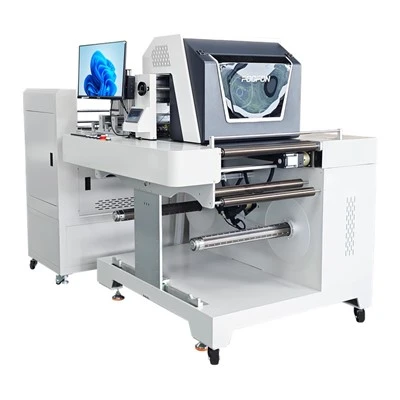
Don’t let noise be the reason you settle for a printer that doesn’t fit your needs. Let’s chat about what you’re printing, how fast you need to go, and get you the right setup that’s quiet, efficient, and will make your packaging team way happier.
Mini Single Pass Printer References:
- Packaging Machinery Association. (2022). Noise Level Comparisons of High-Speed Carton Printing Technologies.
- Occupational Safety and Health Administration (OSHA). (2023). Noise Exposure Limits and Hearing Conservation.
- Industrial Noise Control Journal. (2021). Vibration Damping in Modern Printing Machinery.
Chengdu Kelier Electronic Co., Ltd.
As one of the most professional single pass carton printer manufacturers and suppliers in China, our products have good reputation in the market. Please feel free to buy advanced single pass carton printer made in China here from our factory. We also accept customized orders.
Address: Unit 1302, 13th Floor, Building 1, Unit 2, No. 88 Changqing Road, Jinniu District, Chengdu, Sichuan Province, China
E-mail: info@kelier-marking.com
WebSite: https://www.kelier-printer.com/
