If you’ve ever walked through a spinning mill, you’ve probably heard the hum of large machinery moving raw cotton from bales to finished yarn—one of the most critical, and often most underrated, pieces of that entire process is the lap forming machine in the blow room. As a blow room machine supplier who’s been working alongside spinning mills in North America and Southeast Asia for over a decade, I’ve seen firsthand how this single piece of equipment can make or break a mill’s efficiency, yarn quality, and bottom line. A lot of mill operators I talk to, especially newer ones, mix up lap forming machines with other blow room equipment like bale openers or mixers, so today I want to break down exactly what a lap forming machine is, why it matters, and how to tell if it’s working as hard as it should be for your operation. Blow Room Machine
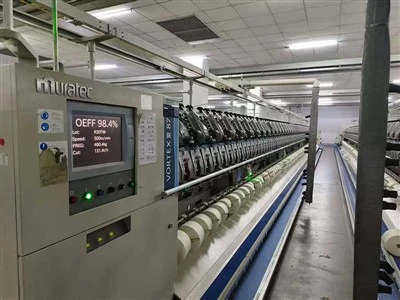
First, let’s start with what the blow room even does, to set the context. When raw cotton (or man-made fiber, for mills that blend) arrives at a spinning mill, it comes in dense, tightly packed bales weighing 500 to 1,000 pounds each. Those bales are full of impurities: dirt, stems, leaf bits, even small pieces of polypropylene wrap from the bale itself. The blow room’s job is to take that raw, uneven bale fiber, open it up into individual tufts, remove the impurities, and prepare a consistent, uniform mass of fiber to move to the next stage—carding. If the fiber leaving the blow room is messy or inconsistent, the carding machine will struggle, leading to broken ends, uneven yarn, and more waste. That’s where the lap forming machine comes in.
A lap forming machine is the final piece of equipment in the blow room line. Its core function is simple in theory: it takes the cleaned, opened, blended fiber from the previous blow room stages (usually a line of bale pluckers, opencers, cleaners, and a condenser) and forms it into a uniform, dense, continuous sheet of fiber called a lap. But the details are where the magic happens, because a bad lap will cause problems all the way down the line. Let’s break down how it works, step by step.
First, the fiber from the blow room’s condenser is fed into the lap forming machine’s feed mechanism. Most modern lap formers use an apron or a lattice feed that pulls the fiber sheet evenly into the machine, ensuring there are no thick or thin spots as it moves forward. Next, the fiber goes through a series of calendar rollers—heavy, polished steel rollers that squeeze the sheet gently, compacting it into a uniform thickness. This is not a tight squeeze; it’s just enough to hold the fiber together without damaging it, which is key. If the rollers are too tight, you get a dense lap that’s hard to process in carding; too loose, and the lap falls apart before it even gets to the next machine.
After calendaring, the lap is wound onto a large, cylindrical tube called a lap tube. The winding mechanism is the most important part of the lap forming machine, and it’s where a lot of older models fall short. The winding has to be uniform across the entire lap, which can be 40 to 50 inches long and weigh 70 to 80 pounds. If the lap is wound unevenly—meaning some parts are tighter and some are looser—the carding machine will feed inconsistent amounts of fiber, leading to yarn with uneven strength, thin spots, and even breakage during spinning. That’s why modern lap formers use a cross-lapper or a progressive winding system that adjusts the speed and tension of the lap tube as it spins, so every layer is evenly placed.
I still remember a conversation I had with a mill manager in Georgia a few years back. They were running a 40,000-spindle ring spinning line, but they were losing 15% of their production to yarn breaks, and their waste rate was 8%. They thought the problem was their carding machines, which were 10 years old, until we did a full audit of their blow room. We found their lap forming machine was 20 years old, no automation, and the winding mechanism was off by 1/8 of an inch across the lap. That might sound small, but it was enough to cause the carder’s feed rollers to slip 10 times per minute, leading to inconsistent fiber input. We upgraded their lap forming machine, and within three months their waste dropped to 3% and their production went up 12%. That’s the kind of impact this equipment has—something mill operators often overlook until it’s too late.
Now, let’s talk about the different types of lap forming machines, because not all are built the same. There are two main categories for spinning mills: conventional lap formers and compact lap formers. Conventional lap formers are the older, more traditional models, still used in smaller mills or those processing coarser fibers like 100% cotton for denim or terry cloth. They’re less expensive upfront, but they have lower production rates and higher waste, so they’re not ideal for high-volume mills.
Compact lap formers, on the other hand, are the standard for modern, high-efficiency spinning mills, especially those processing finer fibers like combed cotton for t-shirts or apparel yarn. They have higher production rates (up to 10 laps per hour, compared to 6 or 7 for conventional models), more precise tension control, and automation features like lap length counting, automatic stop if the lap is wound unevenly, and even built-in moisture sensors. Moisture is a big deal, by the way—fiber that’s too dry is prone to static, which leads to fly and waste; too wet can cause mildew in the lap, which ruins the fiber before it even gets to spinning. Good lap formers have built-in drying or humidifying systems to keep moisture levels consistent between 7% and 8% for most cotton, which is ideal for processing.
Another key feature to look for in a lap forming machine is compatibility with fiber blends. More and more mills are blending cotton with polyester, viscose, or even recycled fibers these days, to cut costs or meet sustainability goals. A good lap former can handle uniform blending of these different fibers, ensuring that every lap has the same ratio of cotton to polyester, for example. If your lap former can’t handle blends, you’ll end up with laps that have patches of all cotton and patches of all polyester, leading to inconsistent yarn quality that’s hard to sell to brands.
Now, let’s get into what to look for when your lap forming machine isn’t working right. I’ve seen mill operators ignore small issues with lap formers for months, thinking it’s not a big deal, but those small issues add up. Here are the red flags to watch for: first, uneven lap thickness. If when you unwrap a new lap, you notice it has bulges or thin spots across the length, that’s a sign the winding mechanism or feed rollers are worn. Second, fiber breakage. If your blow room is producing more waste than usual, and it’s not due to impurities, check if the lap has broken fibers. That usually means the calendar rollers are too tight, or the feed mechanism is pulling too hard. Third, inconsistent lap length. If your laps are coming out 2 or 3 inches shorter than they’re supposed to, that’s a sign the length sensor on the lap former is malfunctioning, which can mess up scheduling on the carding line.
As a supplier of blow room machines, I tell every mill I work with that the lap forming machine is not a piece of equipment you want to cut corners on when you’re setting up a new line or upgrading an old one. A lot of mill managers will spend $500,000 on new carding machines, but skimp $100,000 on a new lap forming machine, and wonder why they’re not getting the full benefit of the carders. It’s like buying a high-performance sports car but using cheap, low-octane gas—you’re not going to get the power you paid for.
That’s why when I work with a new mill, I don’t just sell them a lap forming machine and walk away. I offer on-site installation, operator training, and ongoing maintenance support, because even the best lap forming machine will break down if your team doesn’t know how to run it properly. I also recommend scheduling annual inspections of the lap forming machine, especially the winding gears and calendar rollers, to catch wear before it causes downtime. Last year, we worked with a mill in Vietnam that had a lap forming machine that was 15 years old, and they were running it 24/7 with no inspections. We found that the winding gears were 80% worn, and replacing them cost a fraction of what it would have cost if the machine had failed mid-shift, leading to 12 hours of downtime and lost production.
Sustainability is another big topic these days, and lap forming machines play a role there too. Because they reduce waste by creating a uniform lap, they help mills cut down on fiber that’s thrown away during processing. Modern lap formers also have energy-efficient motors, which use less power than older models, lowering a mill’s carbon footprint and utility bills. For mills targeting certification like GOTS (Global Organic Textile Standard) or bluesign®, a good lap forming machine that keeps fiber clean and consistent is a must, because these certifications require strict controls on fiber quality and waste.
If you’re a mill operator reading this, and you’re wondering if your lap forming machine is up to par, here’s a quick test: pull up your production data for the last three months. Look at your waste rate, yarn breakage rate, and carding line downtime. If your waste is over 5% for cotton, or your yarn breaks are over 10 per 1,000 spindles, chances are your lap forming machine is a bottleneck. I’ve seen this play out so many times—mills blame the carders, the ring frames, even the raw cotton, when the real problem is a lap that’s not uniform.
As someone who’s been in this industry for years, I know that choosing the right blow room equipment, including a reliable lap forming machine, is a big decision. It’s not just about buying a machine—it’s about partnering with someone who understands your specific needs, whether you’re a small mill processing 10,000 spindles or a large mill with 100,000 spindles. A good lap forming machine will not only improve your product quality, but also lower your operational costs, reduce downtime, and help you meet your production goals.
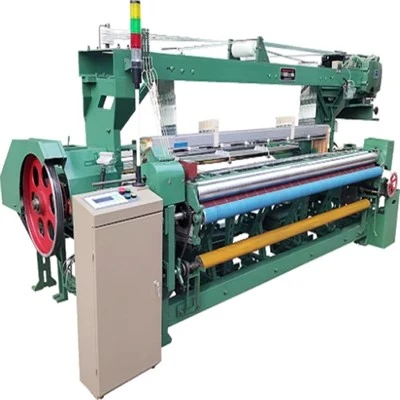
If you’re currently looking to upgrade your blow room line, or you’re experiencing issues with your current lap forming machine, don’t hesitate to reach out. We specialize in designing and supplying lap forming machines tailored to your fiber type, production volume, and budget, with the support you need to keep your line running smoothly. Investing in the right lap forming machine is one of the best decisions you can make for your spinning operation, and I’m here to help you make that decision.
Textile Testing Instruments References
- Textile Institute. (2019). Blow Room Technology: Principles and Applications. Textile Institute Book Series.
- Goswami, B. C. (2018). Textile Processing: Blow Room to Finishing. Woodhead Publishing India.
- International Fiber Association. (2021). Modern Developments in Blow Room Equipment for Spinning Mills. Journal of Textile Science and Technology.
- ASTM International. (2020). Standard Practice for Testing Lap Uniformity in Cotton Spinning. ASTM D4974-20.
- Kumar, A., & Singh, R. (2022). Energy Efficiency in Textile Blow Room Machinery: A Case Study of High-Speed Lap Formers. Journal of Cleaner Production.
Shandong Hongye Machinery Co., Ltd.
Shandong Hongye Machinery Co., Ltd. is one of the most professional blow room machine manufacturers and suppliers in China, featured by quality products and low price. Please rest assured to buy advanced blow room machine in stock here and get quotation from our factory. Also, 1 year warranty is available.
Address: Room 1104, Building No.2, Haier Yunjie, No.99 Chongqing South Road, Qingdao, China
E-mail: sales@seavincn.com
WebSite: https://www.sdhymachinery.com/
