As someone who’s spent the better part of a decade building and supplying welding machines for fabricators, auto body shops, and industrial plant managers, I’ve lost count of how many times a new customer walks through my door (or messages me on our trade platform, since most folks prefer virtual chats these days) and asks a question that sounds simple on the surface: “Why does my welding machine overheat mid-job?” More often than not, the answer ties back to a part of the machine most people don’t think about until it breaks: its cooling system. It’s not the flash of the arc or the strength of the weld that keeps your line moving—it’s the quiet, often unassuming cooling system that lets you weld 10, 20, even 40 electrodes in a shift without shutting down to wait for a unit to cool. Today, I want to break down exactly what a welding machine’s cooling system is, how it works, and why it matters for your work—plus, why when you’re picking a supplier, the cooling system isn’t something you should cut corners on. Welding Machine
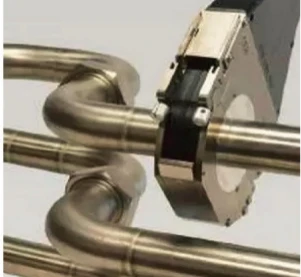
Let’s start with the basics: Welding, whether it’s MIG, TIG, stick, or plasma, generates intense heat. When that arc strikes, temperatures can hit 10,000 degrees Fahrenheit—hotter than the surface of the sun. That heat doesn’t just go into the weld pool, though. A huge portion of it radiates into the machine’s internal components: the power transformer, the insulated gate bipolar transistors (IGBTs), the contact tips, and even the feeder mechanism in MIG setups. If left unregulated, that heat will warp wiring, fry semiconductors, or cause the contact tip to wear out faster, leading to inconsistent welds, downtime, and expensive repairs. The cooling system’s entire job is to pull that excess heat away from those critical parts, keeping your machine running within a safe, consistent temperature range—usually between 120 and 140 degrees Fahrenheit, depending on the model.
Now, there are two main types of cooling systems you’ll find on modern welding machines, and I’ve seen every edge case of both over the years. The first is air cooling, which is the most common for entry-level and light industrial machines, like the ones we supply for small auto body shops or hobbyist welders. Air-cooled systems are simple: they use a series of fans, heat sinks, and vents to blow ambient air directly over the machine’s internal heat sources. The fans pull in cool room air, which flows over the heat sinks attached to the transformer and IGBTs, absorbs heat, and then blows out of the machine’s exhaust vents. It’s low-cost, low-maintenance, and light—perfect for jobs that don’t require non-stop, high-amperage welding, like repairing farm equipment or fixing a car frame over the course of a weekend. That said, air cooling has a limit. If you’re running high-amperage welds (say, 300 amps or more) for hours on end, ambient air can get hot and humid, which makes the fan work harder and less efficiently. Over time, dust and debris can clog the vents and heat sinks, trapping heat inside instead of pulling it away. I once had a customer who ran an air-cooled MIG welder for 12 hours a day fabricating steel railings; by month three, the vents were caked with metal dust, and the machine kept triggering its overheat shutdown halfway through each shift. A quick deep clean fixed it, but it was a reminder that air cooling has real limits for heavy use.
The second type is liquid cooling, which is what we supply for mid-range and heavy industrial machines, and it’s the unsung hero for high-volume, continuous welding jobs. Liquid cooling systems use a closed loop: a pump circulates a specialized coolant (usually a mix of water and ethylene glycol, sometimes with corrosion inhibitors to protect metal parts) through passages built directly into the machine’s heat-sensitive components. That coolant absorbs heat as it flows, then travels to a radiator (or a heat exchanger) where a small fan blows cool air over it to dissipate the heat. The cooled coolant cycles back, and the process repeats. The big advantage here is that liquid cooling is way more efficient at transferring heat than air—up to 10 times more, in some cases. That means liquid-cooled machines can run at full amperage for hours without overheating, even in hot factory floors or enclosed spaces. I’ve got a customer at a structural steel shop who runs our liquid-cooled TIG welder 8 hours a day, 5 days a week, welding 1-inch thick steel beams; he’s only ever had the cooling system need a coolant top-off once a year, and he’s gone two years without an unplanned shutdown from overheating. Liquid cooling also reduces wear on internal components, since they don’t cycle through extreme heat spikes, so the machine lasts longer and requires fewer repairs.
But wait—there’s a third, less talked-about component that’s critical to every welding cooling system, no matter the type: the temperature sensor and control module. A cooling system is useless if it doesn’t know when to turn on, how hard to run, or when to trigger a shutdown to protect the machine. Most modern welders have multiple sensors scattered around the transformer, IGBTs, and even the coolant line (for liquid-cooled models) that feed data to a control board. If the temperature hits a pre-set threshold, the control board tells the fan (or pump, for liquid) to speed up; if it gets too high, it will pause the welding arc until the machine cools down. I’ve seen cheap off-brand welding machines skip this part, leading to either a fan that runs too slow (overheating the machine) or too fast (wasting energy and wearing out the fan faster). That’s one of the biggest reasons we test every single cooling system on our machines before they leave the warehouse—we run them through 10-hour continuous weld cycles, simulating the heat your shop will generate, to make sure the sensors and control module work consistently.
Let’s get into a few common mistakes I see welders make with cooling systems, because even the best system won’t work if you don’t maintain it. For air-cooled machines, the number one mistake is ignoring vent cleaning. I tell all our customers to turn their machine off and unplug it once a month, then use compressed air (on low pressure, so you don’t bend the heat fins) to blow out dust and debris from the vents and heat sinks. Metal dust, especially from steel or aluminum, is conductive—if it builds up too much, it can cause short circuits, not just overheating. For liquid-cooled machines, the mistake is skipping coolant flushes and top-offs. The coolant isn’t just water; over time, it breaks down, becomes acidic, and can corrode the pump or radiator. We recommend flushing the system every 12 months, or 500 hours of use, whichever comes first. And never, ever use tap water in a liquid-cooled system—minerals in tap water will build up and clog the passages in a matter of months. I had a customer who tried to save $10 on coolant once, used tap water, and within 6 months his liquid-cooled welder’s pump seized up; the repair cost him $800, which was way more than the coolant would have cost.
Another common misconception: you don’t need a cooling system if you only weld occasionally. That’s half true—if you’re a hobbyist who welds once a week, for an hour or two, you can get away with a basic air-cooled machine. But even occasional welders benefit from a good cooling system. I’ve had a hobbyist customer who welds his own custom car parts; he told me he used to skip letting his air-cooled welder cool down between welds, and his machine died after three years. A better cooling system would have let him run those welds without stressing the parts. For anyone who runs a business, though, the cooling system is a direct investment in your bottom line. A reliable cooling system means less downtime, fewer repairs, and longer machine life. I often tell new shop owners: when you’re comparing welding machine prices, don’t just look at the upfront cost. Figure out how much downtime costs you—if you miss a job because your machine overheats, that’s $500, $1,000, even $2,000 in lost revenue. A slightly more expensive machine with a well-built cooling system will pay for itself in months.
Now, let’s talk about how our team approaches cooling systems, since I know most of you reading this care about what a reputable supplier will offer. We don’t cut corners on cooling components. For our air-cooled models, we use heavy-duty brushless fans that last 50,000 hours (that’s about 10 years of daily use) instead of cheap brush fans that die after 10,000 hours. Our heat sinks are made from high-grade aluminum, which is better at conducting heat than the plastic or thinner aluminum you’ll find on budget machines. For liquid-cooled models, we use closed-loop systems, which means the coolant never touches the outside air, so it’s less likely to get contaminated. Our pumps are industrial-grade, designed for continuous use, and we include a 50/50 coolant mix with every new machine, so you don’t have to run to the store right out of the box. We also add a redundant temperature sensor on all our models—if one sensor fails, the second one takes over, so you never risk a machine overheating with no warning.
I’ll be honest: I’ve seen so many suppliers treat the cooling system like an afterthought, a box that can be checked to sell a machine. But at the end of the day, welding is a hands-on job, and downtime is the worst enemy. If your machine is halfway through a structural weld on a job that’s due in three days, the last thing you want is it to shut down because the cooling system was too cheap. That’s why we make every part of our cooling system visible, test every unit twice before shipment, and have a team on call to walk you through maintenance, even years after you buy your machine.
If you’re in the market for a new welding machine, whether it’s for a small hobby shop, a mid-sized fabricating business, or a heavy industrial plant, you owe it to yourself to ask about the cooling system. Don’t just ask “does it have a cooling system?”—ask what type it is, what components it uses, how long the fans or pumps last, and what maintenance it requires. At the end of the day, the best welding machine isn’t the one with the highest amperage rating or the shiniest exterior—it’s the one that will keep running when you need it most.

If you’d like to discuss your specific welding needs, whether it’s a MIG, TIG, stick, or plasma welder, we’re here to help. Reach out to our team to talk through your requirements, compare models, and get guidance on which cooling system setup will work best for your workflow.
TIG Welding Machine References
- Welding Cooling Systems: Design and Application Guidelines, American Welding Society, 2021
- Industrial Cooling for Welding Equipment, Machinery Lubrication Magazine, Vol. 29, No. 4, 2020
- Maintenance Best Practices for Welding Machine Cooling Systems, Journal of Manufacturing Processes, Vol. 35, 2018
EMI Pipeline Tech. Co., Ltd.
We’re well-known as one of the leading welding machine manufacturers and suppliers in China. We warmly welcome you to buy advanced welding machine made in China here from our factory. If you have any enquiry about cooperation, please feel free to email us.
Address: Building31,No.511,Huangpujiang North Road, Zhoushi Town, Kunshan City, Jiangsu Province,China
E-mail: zhaoqiang@emipipeline.com
WebSite: https://www.emiwelding.com/
