If you’re a pipeline, pressure vessel, or industrial equipment operator, you’ve definitely run into DIN flanges—they’re the backbone of so many industrial connections, right? I’ve been a DIN flange supplier for over 8 years now, and one question I get all the time from new customers is: “Are there international certifications for DIN flanges?” It makes total sense, too. When you’re dropping tens of thousands on parts that hold high-pressure steam, toxic chemicals, or tons of crude oil, you don’t want to guess if the flange you’re slapping together is actually safe. Let’s break this down straight, no jargon, no fluff. Din Flange
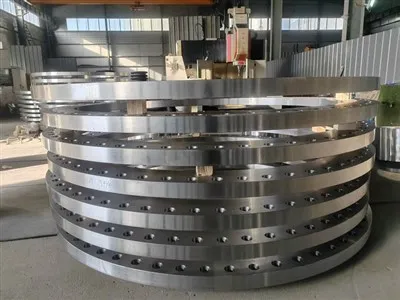
First, let’s clear up a tiny, easy mix-up: DIN flanges aren’t a “one-size-fits-all” part, and certifications here aren’t like a random online course you sign up for. DIN itself is the Deutsches Institut für Normung—Germany’s standards body that invented those flange dimensions back in the day. But international use means we’re not just sticking to German rules; global industrial players need cross-border trust, so we have to layer on certifications that work everywhere, not just in Berlin.
Let’s start with the most common ones I see in my shop every single day. The first one is ISO 9001. Wait, you’ve heard of ISO 9001 before, right? It’s not specific to flanges, but it’s the baseline for any manufacturer that wants to prove they don’t just toss parts together. Here’s how it works for flanges: when I say my DIN flange is ISO 9001-certified, that means every step of my process—from raw material (carbon steel, stainless steel, whatever) to machining, testing, and packaging—has to follow a strict set of rules. No cutting corners, no swapping cheaper steel mid-run, no skipping a pressure check. I don’t just say that; third-party auditors show up unannounced every year to make sure I’m not lying. That’s the stuff that matters because it means when my customer in Texas buys a DN100 PN16 DIN flange from me, they know it’s not going to crack mid-shift.
Next up, the big one for pressure equipment: PED, which is the Pressure Equipment Directive—it’s the EU’s rulebook for anything that holds pressure, and it’s basically a non-negotiable if you’re shipping to Europe. Wait, but is PED international? Sort of—lots of countries outside the EU reference it, even if they’re not in the bloc. Here’s the thing: DIN flanges fall under PED because they’re part of pressure systems. If my flanges are PED-certified, that means they’ve been tested to withstand the pressure, temperature, and corrosion they’re rated for. I have to keep records of every batch I make, and every batch gets a unique marking so you can trace it back to my shop. I can’t stress this enough—if you’re a refinery in France or a food processing plant in the Netherlands, your inspector will flat-out ask for PED certification. No exceptions.
Then there’s ASME U Stamp. Now, this one’s US-focused, but it’s massive because a ton of global industrial work is tied to US standards. ASME is the American Society of Mechanical Engineers, and their U Stamp is the gold seal for pressure vessels. A DIN flange with an ASME U Stamp means it’s been tested to meet ASME’s B16.5 standard, which aligns with DIN’s dimensions so you can bolt them together without a headache. I get a lot of requests for this from customers in the Middle East and Southeast Asia, too—they use ASME rules for their power plants, so they want that U Stamp to avoid inspection headaches. It’s not easy to get; ASME audits every step, from material testing to final hydrostatic pressure checks. If a flange has that U Stamp, you know it’s going to hold when you crank up the pressure to 150 psi or 300 psi.
Wait, should I mention EN 1092? That’s the modern DIN flange standard, right? Yeah, DIN’s old flange specs have mostly been updated to EN 1092, which is the European standard for flanges, and it’s widely accepted outside Europe too. Is EN 1092 a certification? No, it’s a standard, but when a flange is made to EN 1092 and paired with a third-party cert that confirms it meets that standard, that’s a big deal. For example, if a customer asks for a DIN flange that’s “made to EN 1092-1 type 11”, that’s just the flatface slip-on flange spec, but pairing that with a material cert like EN 10204 3.1 makes it official. Oh, right—EN 10204 is a key one I almost forgot. That’s the material test certificate for the actual steel the flange is made from. So when I send a customer a batch of 50 DN50 PN10 stainless steel DIN flanges, the mill that rolled the steel sends me a test report, and I pass that along. That’s EN 10204 3.1—no faking that, because the test report has the exact chemical composition, tensile strength, and hardness numbers. If your inspector asks for that, it’s non-negotiable. No 3.2 here, unless you need a extra level of verification, but 3.1 is the standard for most industrial jobs.
Now, let’s talk about what isn’t a certification for DIN flanges. A lot of people think “DIN-certified” is a thing, but it’s not. DIN itself doesn’t hand out certifications for flanges—they set the dimensions and specs, but the certs come from third-party bodies like TÜV, Bureau Veritas, or DNV. That’s a common mistake, especially for small operators just getting into the game. If a supplier says their flanges are “DIN-certified”, they’re either lying or mixing up the standard with the certification. The real value is in the third-party testing that proves the flange matches DIN’s specs and holds pressure.
I should also mention DNV certification, which is big for offshore and marine work. If a customer is building an oil rig in the North Sea or a ship’s piping system, DNV is the go-to cert. DNV tests the flanges to make sure they can handle saltwater corrosion, extreme temperatures, and the vibration from a rig’s engines. I’ve had a few clients in the offshore space ask for DNV-certified DIN flanges, and it’s a whole extra layer of testing, but it’s worth it—those guys can’t afford a flange leak 100 miles out at sea.
Wait, let’s make this real for you. Let’s say you’re a plant manager in Brazil, and you need 200 DIN flanges for a new chemical processing line. What certs do you need? First, EN 1092 compliance (since it’s aligned with DIN), a material test cert (EN 10204 3.1), and probably PED or ASME depending on where you source the equipment. If you’re buying from me, I make sure every single batch comes with all that—no hidden stuff, no cutting corners. I’ve had a customer once try to skip the third-party certs to save a buck, and guess what? Their inspector rejected the whole shipment, and they had to pay a restocking fee and rush order from a supplier with proper certs. That cost them way more than the certs would have in the first place.
Another thing: some people confuse DIN flanges with other flange types, like ANSI flanges. DIN and ANSI have different dimensions, so a lot of the certs I mentioned align, but the key is making sure the certs confirm the part is actually a DIN flange, not an ANSI flange that just happens to be 4 inches. That’s why when you place an order, you have to specify the DIN number (like DN100, PN16, type 11) and the required certifications—so I don’t send you the wrong part.
Now, let’s address the “international” part. The certifications I talked about—ISO 9001, PED, ASME U Stamp, DNV, EN 10204—these are all recognized globally. You can ship a DIN flange with an ASME U Stamp to Singapore, and their inspectors will accept it. You can ship one with PED certification to Mexico, and their regulator will acknowledge it. That’s what makes these international: they’re not just for one country, they’re cross-border trust markers.
Wait, are there any other certifications? Yeah, API certification for flanges used in the oil and gas industry. API is the American Petroleum Institute, and their API 6A spec is for flanges that handle high-pressure oil and gas. That’s another big one for me—if a customer is working with oil or gas, they often ask for API 6A-certified DIN flanges. That makes sense, because oil and gas equipment has to meet super strict standards to prevent leaks and explosions.
Let me wrap this up straight. The short answer is: yes, there are international certifications for DIN flanges, but they’re not a single “DIN certification”—they’re a mix of third-party certifications that prove the flange meets DIN’s dimension standards, plus industry-specific certs for pressure, marine, or oil and gas use. If you’re buying flanges, don’t just ask for “DIN flanges”—ask for the specific certifications you need for your application. That’s how you avoid headaches, rejected shipments, and safety issues.
I’ve been supplying DIN flanges for years, and I can tell you from experience that the customers who take the time to confirm the right certifications end up saving a lot of money and stress in the long run. If you’re in the market for DIN flanges, and you have questions about which certifications you need for your project, or you want to check if my flanges meet your requirements, reach out to me. I can walk you through the specs, send over copies of our certification docs, and help you pick the right flanges for your job. No sales pitch, no pressure—just straight talk about what works.
Asme(ansi) B16.5 Flange References:
- International Organization for Standardization. ISO 9001:2015 Quality Management Systems Requirements.
- European Committee for Standardization. EN 1092-1:2021 Flanges and Their Joints Circular Flanges for Pipes PN Designation.
- American Society of Mechanical Engineers. ASME B16.5 Pipe Flanges and Flanged Fittings.
- Deutsches Institut für Normung. DIN 2501 Flanges for Pipes Nominal Pressures 1 to 400 Dimensions.
- Pressure Equipment Directive (PED) 2014/68/EU.
- American Petroleum Institute. API 6A Wellhead Equipment.
- Det Norske Veritas. DNV-OS-F101 Offshore Petroleum Pipeline Systems.
Shanxi Xinshunda Flange Manufacturing Co., Ltd.
As one of the most professional din flange manufacturers and suppliers in China, we also support customized service with competitive price. We warmly welcome you to wholesale high quality din flange for sale here from our factory. For quotation, contact us now.
Address: Zhunagli Industrial Zone,jinchang Town,dingxiang,shanxi,china
E-mail: sales01@xinflange.com
WebSite: https://www.xinflange.com/
