Let’s cut to the chase—if you’re in a industry where explosions are an actual risk (think chemical plants, grain elevators, fuel depots, or even some industrial manufacturing shops), you don’t just buy an explosion proof door and slap it on a frame like a backyard shed door. I’ve been selling these bad boys for over a decade, and one question I get asked at least twice a week is: “Do these things need a pro to install, or can my in-house handyman handle it?” Spoiler alert: If you skip the pro install, you’re basically wasting your money on a door that might as well be a regular hollow-core interior one. Here’s the real tea on why that’s the case, and why cutting corners here is never worth it. Explosion Proof Door
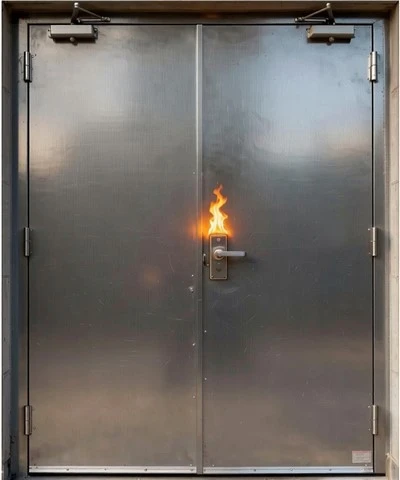
First, let’s get on the same page about what an explosion proof door actually does. It’s not just a sturdy door that looks tough. These doors are engineered to withstand a specific overpressure from an explosion—like, say, a 10 psi blast, or whatever your facility’s hazard assessment says is the max for your space. They have reinforced steel frames, blast-resistant cores (think reinforced concrete or fiber composites), pressure seals that don’t fail even when the whole room shakes, and hinges, latches, and locking mechanisms that are calibrated to hold tight instead of tearing off when the blast hits. If the install’s off by even a quarter of an inch? All that engineering goes out the window.
Wait, let’s make that concrete (pun intended) with an example. Last year, we had a client who tried to skip our install team. They’re a grain elevator in the Midwest—grain dust is a huge explosion risk, right? They’d bought a 3’x8’ explosion proof door from another supplier, hired their maintenance guy who’d done a few door installs for break rooms, and threw it up themselves. A month later, a small dust ignition test (they do routine ones, don’t worry) went wrong, and a blast hit that door. The frame had been bolted unevenly—one side was ¼ inch too far out from the wall, so when the blast pushed, the door bent enough that the top latch ripped right through the frame. They ended up with a $12k repair bill for a new door, plus structural fixes, and shut down that section for three days. That’s the kind of mess you avoid when you get a pro on the job.
So what do pros bring to the table that a regular handyman doesn’t? For starters, they know the specific codes and standards that explosion proof doors have to meet. Not just the general OSHA stuff, but the industry-specific ones—like NFPA 61 for grain facilities, NFPA 70 (NEC) for electrical areas, or API standards for oil and gas sites. These codes aren’t arbitrary. They’re based on real blast test data from labs like Underwriters Laboratories (UL) or the Factory Mutual (FM) Global labs. A pro install team doesn’t just hang the door—they make sure it aligns with every exact spec for your door’s rating, so it’ll pass inspections when OSHA or local fire marshal comes around. And if you cut corners here, you’ll fail that inspection, get fined, and have to redo the install anyway.
Then there’s the precision part. Explosion proof doors aren’t like regular doors that you can shim a little here or there to make it swing right. The pressure seals—those rubber or neoprene strips around the edge—have to be compressed exactly to a specific thickness, usually around ⅛ inch. If they’re too loose, the blast pressure can sneak through the gaps. If they’re too tight, the door won’t swing open fast enough if the blast is coming from inside the room (wait, that’s another thing: some explosion proof doors are designed to swing inward, some outward, depending on which side the explosion is more likely to start on). A pro will measure and adjust every hinge, latch, and seal to get that compression just right. Our install guys carry laser levels and specialized gap gauges—stuff a regular handyman might not even know exists for this kind of job.
Oh, and let’s talk about the structural connection. An explosion proof door isn’t just bolted to a sheetrock wall, y’all. It has to be anchored to the structural framing of your building—concrete beams, steel studs rated for heavy loads. If you just drill into the cinder block wall behind your sheetrock, those bolts will pull right out when the blast hits. A pro will do a load calculation to figure out what kind of anchors you need—whether that’s expansion bolts, embedded steel plates, or even welding the frame to existing steel. That’s not something you can Google and do in an afternoon. I’ve seen so many people skip that step, and it’s the number one reason doors fail blast tests.
Wait, let’s address the counterpoint I always get: “But it’s just a door, how hard can it be?” Yeah, I get it—most industrial jobs look straightforward on paper, but this is a safety critical component. If something goes wrong with a pump or a valve, you fix it, no one gets hurt (hopefully). If something goes wrong with an explosion proof door, it can mean the difference between a small incident and a full-blown explosion that injures workers or kills them. Our install team isn’t just there to hang the door—they also walk through the whole thing with you after they’re done. They show your safety manager how to test the latches, how to check the seal pressure, what signs to look for if the door isn’t working right. They fill out all the paperwork too—certificates that say the door was installed correctly to its UL rating, which you need for your safety files and inspections. That paperwork is gold, by the way. If you skip the pro install, you won’t have that, and you’ll be on your own if something goes wrong.
I’ll also add this: not all explosion proof doors are the same. Some are for small rooms, like chemical storage closets. Some are for whole production areas, with big overhead doors that are 12 feet wide. Each has its own install requirements. For example, a sliding explosion proof door for a warehouse needs specialized track alignment, so it doesn’t jam when the blast hits. A handyman who installs regular overhead doors won’t know the load requirements for that sliding track, and it’ll malfunction when you need it most. Our install team is trained on every type and model we sell, so they know exactly how each one goes in.
Let me wrap this up with another real story—last year, a pharma client called us because they were having issues with their door’s seal. They’d installed it themselves six months prior, and during a routine pressure test, it was leaking air. A pro came out, took one look, and saw that the frame was installed ⅜ inch off plumb. That meant the seal was only compressed on one side, so it couldn’t hold pressure. They had to remove the door, reanchor the frame, and reinstall it—costing the client more than if they’d just hired us in the first place. That’s the thing about cutting corners here: it’s not just the cost of the install, it’s the cost of fixing your mistakes, the downtime, the inspection fines, and the biggest one: putting your workers at risk.
If you’re in the market for an explosion proof door, don’t just look at the upfront cost of the door. Factor in the install, because that’s what makes the door actually work. We offer full installation services for all our doors, and our guys are background-checked, trained in all the latest codes, and have years of hands-on experience with every type of industrial space. At the end of the day, this isn’t a purchase you want to cheap out on. You’re not just buying a door—you’re buying safety, compliance, and peace of mind that if the worst happens, your door will hold.

If you’re ready to talk through your needs, whether you’re a small facility needing a storage room door or a big plant needing a blast wall system, hit us up to connect and discuss your specific requirements.
Fire Door References:
- National Fire Protection Association (NFPA) 61, Standard for the Prevention of Dust Explosions in Grain Handling and Processing Facilities
- Underwriters Laboratories (UL) 2077, Standard for Explosion-Resistant Equipment for Hazardous Locations
- Factory Mutual (FM) Global 4500, Standard for Explosion-Resistant Doors and Windows
Hebei Hong’an Fire Door Co. Ltd.
Hebei Hong’an Fire Door Co., Ltd. is one of the most professional explosion proof door manufacturers and suppliers in China, featured by quality products and low price. Please rest assured to wholesale advanced explosion proof door made in China here from our factory. Customized orders are welcome.
Address: Bianbian Industrial Zone, Hejian City, Cangzhou City, Hebei Province, China
E-mail: hongandoor@outlook.com
WebSite: https://www.honganfd.com/
