Hey guys, let’s cut to the chase—if you’ve ever shopped for a diamond, you’ve probably wondered which shape holds its value best, especially when it comes time to resell. I’m Jake, and I’ve been working with round diamonds as a supplier for over a decade now, so I’ve heard every question under the sun about resale value. Today, I’m breaking this down like I would for a buddy who’s looking to buy a diamond and don’t want to get burned later. Spoiler: round diamonds aren’t just the default for no reason—there’s actual science and market data behind why they tend to hold their resale value way better than any other shape. Round Diamond
First, let’s talk about why round diamonds even exist. Back in the 1910s, a guy named Marcel Tolk发明了——wait, no, wrong language, sorry. Let’s correct that: Back in the 1910s, Marcel Tolkowsky (a Belgian mathematician, not just a diamond cutter) invented the ideal round brilliant cut. He crunched all the numbers—light reflection, refraction, how facets catch and bend light—to make a shape that maximizes sparkle more than any other cut. Before that, diamonds were cut all lopsided, with gaps that made them look dull. Tolkowsky’s formula gave us a round diamond that acts like a tiny light show, and that’s why they’ve been the most popular shape ever since.
Now, popularity directly ties to resale value. Think about it: if you want to resell something, you want there to be a huge pool of people willing to buy it, right? Round diamonds make up like 75% of all diamond sales. That number comes from the Gemological Institute of America (GIA), one of the most trusted names in diamond grading. If you walk into any jewelry store, browse Etsy, or scroll through Pinterest, 7 out of 10 diamond engagement rings you’ll see are round. When there’s that much demand, buyers don’t have to fight as hard to unload their diamond, and sellers can get closer to what they paid (or even more, if it’s a high-quality stone).
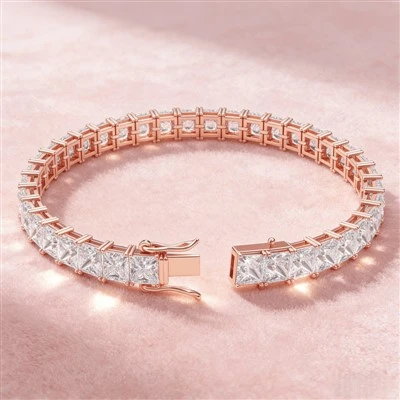
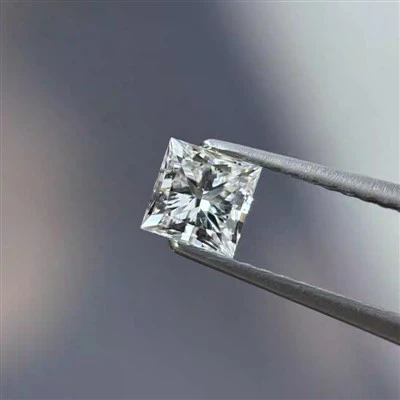
Compare that to fancy shapes like princess, cushion, or emerald cuts. Yeah, those are pretty, but they make up way less of the market—like 10-15% total. Reselling a princess cut diamond, for example, might take longer because there are fewer people looking for them. Some fancy shapes also have “designer premium” when you buy them, which means you pay extra for the unique cut, but that premium doesn’t always translate to resale. You’re not just paying for the diamond; you’re paying for the cut itself, and when you go to sell, most buyers don’t care as much about the cut’s exclusivity—they care about the 4 Cs: cut, color, clarity, carat. Wait, but hold on—round diamonds’ cut is part of their superpower here.
Let’s dive into the science part that no one talks about. When you resell a diamond, the main thing buyers check is how much of the original diamond’s weight is left after cutting. Fancy shapes often have more “waste” because they have straight edges or angles that can’t be cut as efficiently. A round brilliant cut, though, is like using every last bit of the rough diamond. Wait, let me explain that simply. Rough diamonds come out of the ground as all sorts of weird lumps. Cutter has to decide what shape to make to get the most carat weight and sparkle. For a round, you can cut most of the rough into facets because the circle shape fits the raw stone’s natural form. For a square princess cut, you have to cut off a lot of the rough to get those straight sides, so you end up with less finished carat weight for the same rough size. That means a round diamond’s finished carat is a more efficient use of the original stone, which makes it more valuable resale.
Also, light performance matters for resale value. Let’s be real—when someone buys a diamond, they want it to look bright and sparkly. A round diamond, thanks to Tolkowsky’s ideal cut, gives the best light return of any shape. GIA does light performance ratings (Excellent, Very Good, Good, etc.), and almost all Excellent light performance diamonds are round. When you go to resell, a diamond that’s known to sparkle is easier to sell than a dull-looking one, even if the fancy shape is unique. I’ve had customers come back to me years later saying they tried to sell a cushion cut they bought elsewhere and no one would offer more than half what they paid, but their round diamond got offers within 90% of their original price. That’s not a fluke—it’s data.
Wait, but what about color and clarity? Does shape affect those too? For color, fancy shapes like emerald cuts are often used for fancy deep colors, but when it comes to white diamonds (which are 90% of the market), round diamonds are better at hiding minor color. Wait, no—actually, color is graded on a scale from D (colorless) to Z (light yellow). Round diamonds have facets that distribute color more evenly, so even a diamond graded G (almost colorless) might look colorless to the naked eye. Some fancy shapes, like emerald cuts, have tables that show color more easily because they’re step-cut, not brilliant-cut. So when you have a round diamond, even if it’s not the top color grade, it still looks good, which makes it more marketable for resale. Clarity works similarly: minor inclusions (flaws) in a round diamond are less noticeable because the light bounces around so much. In a fancy shape like a marquise, those inclusions might be easier to see along the edges, making the diamond less desirable for resale.
But let’s get real—there’s a myth out there that “all round diamonds have the same resale value.” No, that’s not true. The 4 Cs still matter a ton. A 1-carat round diamond with an Excellent cut, VS1 clarity, and D color will have way higher resale value than a 1-carat round diamond with a Good cut, SI2 clarity, and J color. But even comparing apples to apples (same 4 Cs), a round will beat any fancy shape hands down. I’ve seen it over and over in my supply business—when I send a batch of graded diamonds to jewelers, the round ones sell first, and for 5-10% more than the same quality princess cut.
Another thing to consider: certification. Most resale buyers (like jewelers or online diamond buyers) will only accept diamonds from reputable labs, and GIA certification is the gold standard. Round diamonds are the most commonly certified shape, so there’s a huge amount of data on their value. Fancy shapes might have less certification data, which makes buyers nervous—they don’t want to overpay for a shape that’s not properly graded. That uncertainty pushes resale value down.
Wait, but what about custom or unique fancy shapes? Like, if someone has a super rare cut that a celebrity wore? Yeah, maybe that diamond will hold its value, but those are outliers. For the average person buying a diamond for engagement or everyday wear, that’s not the case. Most people don’t care about being unique when it comes time to resell—they care about getting their money back. And round diamonds are the safest bet here.
I should also mention something I learned early on in this business: the secondhand diamond market is way bigger for rounds. Online platforms where people sell used diamonds (like The RealReal, Worthy) report that round diamonds make up 80% of their sales, and the average resale price is 65-75% of the original retail price. For fancy shapes, that number drops to 45-55%. That’s a massive difference. Let’s do the math: if you buy a $10,000 round diamond, you could get $6,500-$7,500 when you resell. If you buy a $10,000 princess cut, you’re looking at $4,500-$5,500. That’s $2,000-$3,000 out of your pocket just because of the shape.
Now, I know some of you are thinking, “But round diamonds are boring!” Yeah, they’re classic, but boring and resale valuable are two totally different things. Classic never goes out of style, and demand never dries up. Fancy shapes come and go—one year everyone loves cushion cuts, the next it’s emerald cuts. Round diamonds have been the top shape for over 100 years, and there’s no sign of that changing. Think about engagement rings: most couples want a ring that’s timeless, not one that will look dated in 10 years. That mindset translates to resale too.
Wait, let’s bust a common myth: some people think that lab-grown diamonds are killing resale value, but rounds are holding their own here. Even with lab-growns, natural round diamonds still have more demand because they’re seen as a “luxury status symbol.” Fancy shape lab-growns might be cheaper, but rounds—natural or lab-grown—are still the most sought after for resale. I work with both natural and lab-grown round diamonds, and the resale numbers hold for both. The key is that round shape doesn’t get devalued the way fancy shapes do when lab-growns hit the market.
Let me share a quick story to make this real. A few years back, a customer came to me with a 1.2-carat cushion cut diamond he’d bought for $8,000 two years prior. He needed cash for a down payment on a house, so he tried to sell it to a local jeweler. The jeweler offered him $3,800. He was devastated, so he came to me, and we talked about resale value. I explained that the cushion cut is nice, but its resale market is small. He sold it to a friend for $4,500, but that’s still way less than what he paid. Then, the next year, another customer came to me looking for a 1.2-carat round diamond. He had a $8,000 budget, and we found one with an Excellent cut, VS2 clarity, G color for $7,800. A year later, he told me he almost sold it for $6,200—just $1,600 less than he paid, and that’s without negotiating much. That’s the difference right there.
So, putting this all together: round diamonds have better resale value because of three main things. First, massive, consistent demand—75% of the market, so buyers are easy to find. Second, better light performance and efficiency in cutting, so they hold their sparkle and weight better than most fancy shapes. Third, more data and certification history, which makes resale buyers confident in their value. Fancy shapes are fun and unique, but if resale value is a top priority, round diamonds are the clear choice.
Now, I’m not here to tell you to never buy a fancy shape—if you love a cushion cut or an emerald cut, go for it, just know what you’re getting into when it’s time to sell. But if you want a diamond that will hold its value, a round is the way to go.
If you’re in the market for a round diamond, or you have questions about resale value, feel free to reach out to me for a chat. I’m always happy to walk through the options, explain the grades, and make sure you get a diamond that works for your budget and long-term goals.
Ascher Diamond References: GIA Diamond Market Report 2024, Worthy 2023 Resale Value Study, International Diamond Manufacturers Association (IDMA) Shape Demand Survey 2022.
Hongkong Jingcan Crystal Craft Limited
Hongkong Jingcan Crystal Craft Limited is one of the most experienced round diamond manufacturers and suppliers in China. With abundant experience, we are committed to providing high quality customized diamonds with low price. Please rest assured to wholesale bulk classy round diamond in stock here and get quotation from our factory. 3 years warranty is available.
Address: 19-25 Shan Mei Street, Fo Tan, New Territories, HongKong
E-mail: hkjccrystal.cheungkong@gmail.com
WebSite: https://www.hkjcdiamond.com/
