If you’ve ever walked through a mobile home park, you know the vibe—those cozy, tight-knit communities where people turn their single-wide or double-wide into actual homes, not just temporary spaces. As someone who’s been selling general thermal insulation products for over 12 years, I get so many questions from these folks: “Can I just grab the same insulation I used in my stick-built house for my mobile home?” It’s a totally fair ask, and honestly, it’s one I’ve spent a lot of time thinking about because so many people skip the little details that make mobile home insulation different. General Thermal Insulation Products

Let’s start with what makes mobile homes unique. Unlike stick-built homes, which have a foundation sitting on concrete or a full crawl space, most mobile homes are built on a steel chassis that runs the entire length of the unit. That chassis isn’t just for transport—it creates gaps between the bottom of the home and the ground, and those gaps are way bigger than a standard crawl space? No, wait, actually, they’re smaller and more enclosed, right? Yeah, that’s the first big thing. The underbelly of a mobile home is usually a thin, vinyl or aluminum membrane that’s super easy to tear, and any gap there means air (cold in winter, hot in summer) is sneaking right in. Then there are the walls and ceilings: mobile home walls are thinner, with smaller stud spacing (usually 16 inches on center instead of 24) and often less space for insulation than a stick-built wall. Ceilings might have those low, drop-down vents too, which can be major air leaks if not sealed right.
Now, general thermal insulation products—think fiberglass batts, foam boards, spray foam, even loose-fill cellulose. Are they usable here? The short answer is: mostly, but you can’t just wing it. Let’s break it down by type, because that’s where most people mess up.
Fiberglass batts are probably the most common general insulation out there, and they work for mobile homes… but with a catch. Standard fiberglass batts for stick-built homes are sized for 2×4 or 2×6 walls, but mobile home walls are often only 2×3 (3.5 inches deep) or even 2×2. Wait, no, double-wide mobile homes might have 2×4 walls, but singles are usually thinner. If you stuff a 3.5-inch batt into a 2.5-inch wall, there’s gaps everywhere, which kills R-value. R-value is that number you see on insulation packaging, right? It’s how well it resists heat transfer. For mobile homes, the Department of Energy (DOE) recommends R-13 to R-21 for walls and R-19 to R-30 for ceilings, depending on where you live. If you use the wrong-sized batt, you’re not hitting that R-value at all. I’ve seen customers buy a $50 bundle of stick-built batts, cut them down, and wonder why their energy bills are still through the roof. The problem is, cutting fiberglass creates tiny fibers that get everywhere—on your clothes, in your lungs, and if you don’t seal the cuts tightly, those gaps are just as bad as no insulation.
Then there’s foam board, which is a general insulation product too. Rigid foam boards (like extruded polystyrene, or XPS) are great for mobile homes because they’re easy to cut to fit, they don’t off-gas too much (unlike some spray foam), and they have a high R-value per inch. For example, XPS has an R-value of about 5 per inch, so a 1-inch board gives you R-5, 2 inches is R-10, etc. That’s perfect for those thin mobile home walls, where you can’t stuff in a thick fiberglass batt. The big plus here is that foam board is a vapor barrier too, which is key for mobile homes—since the chassis creates that enclosed underbelly, moisture can get trapped easily, leading to mold or rot. Wait, but you have to make sure you’re using the right type. Expanded polystyrene (EPS) is cheaper, but it’s not as good at resisting moisture, so for the underbelly, XPS is better. I’ve had a few customers tell me they used EPS under their home and had water build up because it absorbed moisture—so that’s a case where “general” doesn’t mean “one-size-fits-all.”
Spray foam is another general insulation product that works, but again, caveats. Open-cell spray foam is cheap and easy to apply, but it’s less dense, so it has a lower R-value (around R-3.5 to R-4 per inch). Closed-cell is more expensive, higher R-value (R-6 to R-7 per inch), and it acts as an air and vapor barrier. For mobile homes, closed-cell spray foam on the walls and ceiling is awesome because it fills every tiny gap around windows, doors, and vents—something fiberglass can’t do. But here’s the thing: spray foam expands a lot when it’s applied. If you’re using it in a mobile home’s wall cavity, you have to make sure you don’t over-apply it, because it can push on the interior walls and cause them to buckle. I’ve seen a single-wide where the homeowner tried to spray foam themselves and ended up with $800 in wall repairs because they didn’t account for expansion. So spray foam is doable, but it’s not a DIY job for most people—you need to hire someone who’s worked on mobile homes specifically.
Loose-fill insulation, like cellulose or fiberglass loose fill, is also a general product. It’s great for ceilings, because you can just blow it in without worrying about fitting batts or boards into stud spaces. Mobile home ceilings are often unfinished, so blowing loose fill is easy. But again, gaps are the enemy. If the ceiling has any holes or vents, you have to seal them first, otherwise the loose fill will fall through, or air will leak right past it. Also, loose fill under the home—wait, some people think just adding more insulation under the chassis is the fix. But if you have a tear in the underbelly, loose fill will get wet from ground moisture, clump up, and lose all its R-value. I always tell customers: fix the underbelly first before adding insulation. That’s the number one mistake I see. A lot of mobile home owners skip sealing the gaps in the floor (around pipe penetrations, for example) and wonder why even with thick insulation, their feet are cold in winter. Air leaks are way more impactful than insulation thickness, especially in these homes.
Now, let’s talk about something that’s super important for mobile homes but often overlooked: compatibility with the home’s structure. Mobile homes are built to be transported, so they’re lighter than stick-built homes. That means insulation can’t be too heavy, right? If you use dense spray foam or thick foam boards on the walls, you might add too much weight, which can put stress on the chassis. Wait, is that true? Let me confirm—yeah, the DOE has a guide that says mobile home manufacturers recommend staying under a certain weight load for walls, so you can’t just load them up with the thickest insulation available. General insulation products for stick-built homes are often denser, so they might not be the best fit weight-wise. For example, 2×6 stick-built walls can handle more dense fiberglass, but a 2×3 mobile home wall can’t, because the studs are smaller and the wall is thinner. So that’s another reason why you can’t just grab the same insulation you use in your house.
I get a lot of comments from customers who say, “Well, the big box store sells insulation for mobile homes, so why can’t I use general stuff?” The thing is, mobile home-specific insulation is just general insulation that’s sized to fit the smaller cavities, or made to be lighter. But it’s not a different type of product—it’s the same fiberglass, foam board, or loose fill I sell here. The markup is usually higher for the mobile home-branded stuff, so why not just get the same product I have, cut it to fit, and save a few hundred bucks? That’s where I come in—my team has been helping mobile home owners do this for years, so we know exactly how to size, cut, and install general insulation products safely without messing up the structure.
Wait, but what about energy efficiency? A lot of people think mobile homes are inherently less efficient, and that’s true, but you can get them up to par with stick-built homes if you do the insulation right. Let’s do a quick example: a single-wide mobile home in Ohio, where winter temps drop to 20°F. If the walls have no insulation, the R-value is like R-2, which means you’re losing so much heat. If you use R-13 fiberglass batts, that jumps to R-13, and if you add a foam board to the outside of the floor (under the home’s underbelly), you get another R-5. That cuts your heating bill by almost 30%, according to local utility data. I’ve had customers tell me their winter bills went from $250 a month to $170 after upgrading—no new furnace, just better insulation. That’s the power of getting it right.
Another thing: moisture. Mobile homes are more prone to moisture issues because they’re sealed tighter (to keep transport easy) and the underbelly is so enclosed. If you use insulation that traps moisture—like some types of fiberglass if it gets wet—you’ll get mold, which is a health hazard. General insulation products like XPS foam board and closed-cell spray foam are moisture-resistant, so they’re way better for this. I always tell customers to check the R-value’s moisture resistance on the product label. If it doesn’t say anything about resisting moisture, it’s not a good fit for mobile home underbellies or walls.
Let’s also talk about installation, because even the best insulation is useless if it’s installed wrong. For fiberglass batts, you need to make sure they’re fitting snugly between the studs, no gaps around the edges, and that you’re not compressing them—compressing fiberglass cuts its R-value in half. I’ve seen people stuff batts too tight into wall cavities, and then wonder why it’s not working. For foam board, you need to glue it to the underbelly (not just tape it) because the steel chassis vibrates a bit, and tape will come loose over time. For loose-fill, you need to make sure it’s evenly distributed—blow it in 2 inches at a time, and check the depth with a ruler to make sure you hit the R-value you’re going for.
Wait, should I mention common mistakes? Yeah, because that’s what my customers ask me most. The top three mistakes are: 1) Using the wrong size insulation for the cavities, so gaps are everywhere; 2) Skipping sealing air leaks (around windows, doors, pipes) before adding insulation; 3) Not fixing the underbelly first, so moisture gets trapped and ruins the insulation. I can’t tell you how many times I’ve had a customer call me saying their insulation is “not working” only to find out they had a 2-foot tear in the underbelly, and loose fill was getting wet. Fix that tear, add a foam board patch, and suddenly it works.
Now, let’s circle back to the original question: Can general thermal insulation products be used in mobile homes? Yes, absolutely—you just can’t treat them the same way you would for a stick-built home. It’s all about matching the product to the specific needs of the mobile home: fitting the smaller cavities, accounting for the steel chassis and enclosed underbelly, making sure it’s not too heavy, and avoiding products that trap moisture.
If you’re a mobile home owner thinking about upgrading your insulation, don’t waste money on overpriced “mobile home-specific” insulation at the big box store. General products work—you just need to know which ones, and how to install them right. My team has over a decade of experience working with mobile homes, so we can help you pick the right insulation, size it correctly, and even give you tips on DIY installation if you’re handy.
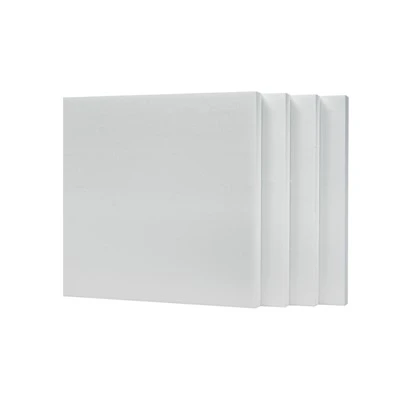
If you’re ready to stop throwing money away on high energy bills and make your mobile home warmer in winter and cooler in summer, reach out to us to talk through your project. We’ll answer all your questions, no pressure—just straight talk about what works for your specific home.
Extruded Polystyrene XPS Boards References
- U.S. Department of Energy. (2022). Mobile Home Insulation Guidelines. Energy Efficiency and Renewable Energy Office.
- Portable Building Industry Association. (2021). Structural Load Considerations for Insulation in Manufactured Homes.
- American Society of Heating, Refrigerating and Air-Conditioning Engineers. (2020). Moisture Control in Manufactured Housing.
Wenzhou Lejia Energy-saving Material Co., Ltd.
As one of the leading manufacturers and suppliers of general thermal insulation products in China, we’re featured by quality products and good service. Please rest assured to buy advanced general thermal insulation products for sale here from our factory. We also accept customized orders.
Address: Block A, No. 128 Changxiu Road, Lingkun Subdistrict, Wenzhou Marine Economy Development Demonstration Zone, Zhejiang Province, China.
E-mail: luckyfoam@vip.163.com
WebSite: https://www.lfxps.com/
