If you’re in industrial lifting, you know weldable lifting lugs are non-negotiable—they’re the tiny workhorses that hold up everything from steel beams to large machinery parts. But here’s the thing: a bad weld on a lug isn’t just a “oops” moment. It’s a safety hazard that can lead to total disasters on job sites, factory floors, or even transport yards. As a supplier who’s been making and selling these lugs for 12 years, I’ve seen my fair share of weld quality slip-ups—both from our own early missteps and from clients who cut corners to save a buck. Today, I’m breaking down exactly how we (and you) can lock in perfect weld quality for these lugs, no shortcuts allowed. Weldable Lifting Lugs
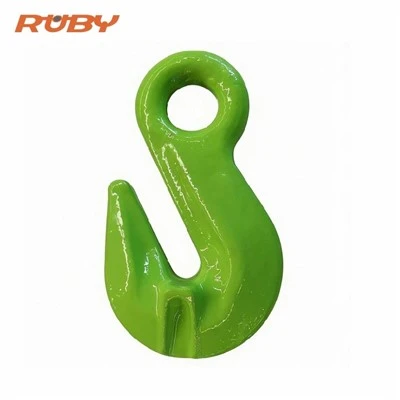
First, let’s get one basic truth out of the way: not all lugs are built to weld equally. I’ve had clients show up to us with generic lugs they bought from a random seller, and half the time, those lugs are made from low-grade steel that’s prone to cracking when heated. That’s step one skipped before the weld even starts. Weldable lifting lugs need to be made from carbon steel (usually A36 or A572 Grade 50) or alloy steel with a minimum tensile strength of 60,000 psi—anything weaker just can’t handle the repeated stress of lifting, swinging, and load shifts. A good supplier (that’s us, obvi) will test every batch of raw steel for chemical composition and hardness before it even touches a welder’s torch. We once had a client who tried to weld a lug made from 1018 steel instead of A36—1018’s too soft, and it warped mid-lift. We had to remake their entire order after they came back with a failed load test. Moral of the story: source your lugs from a supplier that stands behind their material specs, not just their lowest price tag.
Next, fit-up matters more than most people realize. Fit-up is just the fancy welding term for how well the lug sits on the base material you’re welding it to. If there’s a gap of more than 1/16 of an inch between the lug’s base and the plate, that’s a weak point. Too big a gap means the weld can’t penetrate deep enough, so it’ll break under load. Here’s the trick we teach our clients: always use a fixture to clamp the lug in place before welding. We include small, cheap clamping blocks with every order for exactly this reason. I’ve seen guys just tack a lug on with a handheld magnet and call it a day—nine times out of 10, that magnet slips during the weld, creates an uneven gap, and leaves a weld that’s only half as strong as it should be. Another fit-up rule: make sure the lug’s centerline lines up with the load direction. If the load’s pulling straight up and the lug’s tilted 10 degrees, the stress gets concentrated on one side of the weld, leading to premature failure. We mark every lug with a tiny index line to help welders line things up correctly—little thing, but it makes a huge difference.
Now, let’s talk welding process itself. This is where even experienced welders can mess up if they don’t stick to the right parameters. For most lifting lugs, we recommend SMAW (stick welding) or GMAW (MIG welding) over TIG, simply because those processes are faster and more consistent for thick steel. The big numbers here are amperage and voltage—too low, and you get a cold weld that doesn’t fuse properly; too high, and you burn through the lug or the base plate. We include a parameter sheet with every order that lists the exact amps and wire feed speed (for MIG) based on lug thickness. For example, a 1-inch thick A36 lug needs around 140-160 amps with a 0.035-inch steel wire—we’ve tested this hundreds of times, so it’s not guesswork. Another pro tip: never skip preheating. If you’re welding lugs on steel that’s below 32 degrees Fahrenheit, or if the lug is thicker than ½-inch, you need to preheat the base material to 200-300 degrees. Cold steel cracks super easily when you hit it with a hot weld, and that crack is impossible to see with the naked eye—until the load hits. We once had a client in Minnesota ignore the preheat rule during a winter project, and their lugs failed a load test 10 minutes in. That mistake cost them $20k in parts and a week of downtime—way more than the cost of preheating with a torch.
Then comes the weld itself: no half-assed welds. A good weld on a lifting lug should be a full penetration fillet weld, right? Wait, no—actually, for lifting lugs, we need what’s called a “full joint penetration” weld, meaning the weld goes all the way through the gap between the lug and the base plate. Too many welders just do a surface weld—they melt the top of the steel and call it good. But that’s like putting a band-aid on a bullet wound. We require our welders to run two passes on lugs thicker than ½-inch: a root pass to make sure penetration, and a fill pass to build up the weld strength. Also, the weld leg length (the distance from the base plate to the end of the weld) has to be at least equal to the thickness of the thinnest material being joined. If your lug is ½-inch thick, your weld leg has to be ½-inch too—anything smaller is a no-go. We’ve had clients come to us with welds that were ¼-inch on a ½-inch lug, and when we did destructive testing, those welds broke at 60% of their rated load. That’s cutting it way too close.
Don’t forget post-weld treatment, either. Even if you do a perfect weld, there’s a thing called residual stress from the heat of the weld that can weaken the lug over time. The fix here is peening, which is just tapping the weld with a round hammer to release that stress. We teach our welders to peen every weld pass except the final one, and then do a light grind to smooth out any sharp edges. Wait, but grinding too much is bad—you don’t want to grind away the weld’s strength. Another post-weld step: inspection. No lug leaves our shop without a visual check, a dimensional check (we measure leg length and lug size with calipers), and a non-destructive test (NDT) with magnetic particle inspection (MPI) to look for tiny cracks that the eye can’t see. MPI is game-changing here—we use a magnet and iron particles to highlight even a hairline crack, which would be a death sentence for a lifting lug. We offer MPI as an optional add-on for clients, but we’ll never ship a lug to a job site without our own internal inspection.
Now, a common question we get: what about load testing? Do I need to test every weld? The short answer is, not every single one, but you should test a sample of your welds to make sure they hold. We do 100% load testing on 1 out of every 50 lugs we make, pulling them to 2x their rated load to make sure they don’t break. If a sample fails, we go back and check every step of our welding process to find the issue. For clients who are welding lugs themselves, we recommend doing a test weld on scrap material before welding on actual parts. We give our clients free scrap steel when they place a large order specifically for this—little perk, but it saves everyone a lot of headache. I once had a client weld a test lug, test it to 1.5x load, and it broke. Turns out their welder had been using the wrong amperage; they fixed it and their actual lugs passed with flying colors. That test step is worth its weight in gold.
Let’s talk about a few mistakes we see all the time that you can easily avoid. First, using a “wrap-around” weld on lugs that’s too small—some welders will only weld two sides of the lug, leaving the other two sides bare. That creates a weak point where stress is concentrated. We always specify full 360-degree fillet welds for lugs used for heavy lifting (over 10,000 lbs). Second, ignoring the lug’s rated capacity. A ½-inch lug might be rated for 5,000 lbs, but if you weld it to a flimsy ¼-inch plate, even a perfect weld will fail because the base plate can’t handle the load. Third, storing lugs wrong—if you leave lugs out in the rain or corrosive environments, they’ll develop rust, which weakens the material before you even weld them. We recommend storing lugs in a dry, climate-controlled space until you’re ready to use them.
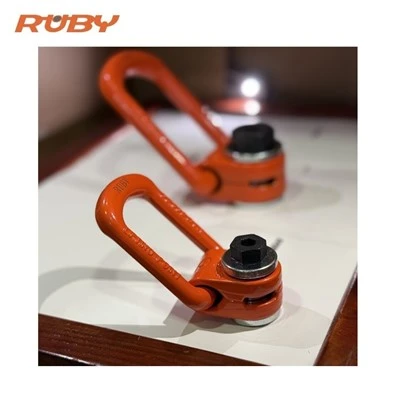
As a supplier, our job isn’t just to sell lugs—it’s to make sure our clients’ lugs are safe and strong. That’s why we include a full set of guidelines with every order, from material specs to welding steps, and we’re always on call to answer questions. We don’t cut corners on materials, we don’t skip inspections, and we stand behind every lug we ship. If you’re someone who’s been struggling with weld quality on your lifting lugs, or if you just need reliable, tested lugs for your next project, we’re here to help. Whether you’re a general contractor, a factory manager, or a rigging specialist, we can walk you through every step of the process to make sure your lugs are weld-ready and safe. Don’t wait until a small mistake turns into a big problem—reach out to us to chat about your lifting lug needs, and we’ll make sure you get exactly what you need.
Weldable Lifting Lugs References:
- AWS D1.1: Structural Welding Code – Steel, American Welding Society, 2020.
- ASME BTH-1: Design of Below-The-Hook Lifting Devices, American Society of Mechanical Engineers, 2019.
- Practical Welding Technology for Industrial Applications, Lincoln Electric Company, 2018.
- Metallurgy of Weldable Steels, ASM International, 2021.
Hangzhou Ruby Imp. & Exp. Co., Ltd.
As one of the most experienced weldable lifting lugs manufacturers and suppliers in China, we offer a wide range of products with superior quality. We warmly welcome you to wholesale custom made weldable lifting lugs at competitive price from our factory.
Address: Taoyuan Industrial Park, Puyang Town, Xiaoshan, Hangzhou, Zhejiang, China.
E-mail: Sales5@z2lifting.com
WebSite: https://www.rubylifting.com/
