Hey everyone, if you’ve ever stood next to a supercar at a show, you’ve probably stared at those sharp, lightweight bumpers or aerodynamic body panels and thought, “Wow, that looks expensive and totally metal.” For years, that’s been the assumption for sports car exterior parts: metal or carbon fiber, end of story. But lately, as a plastic front and rear exterior parts supplier, I get so many car builders and tuners hitting me up asking, “Can plastic actually hold up in a sports car? Isn’t that just for econo-box bumpers?” Let’s cut through the noise here—this isn’t your grandma’s kitchenware plastic. We’re talking high-performance polymers, and they’re not just a stopgap; they’re game-changing for sports cars. Plastic Front and Rear Exterior Parts
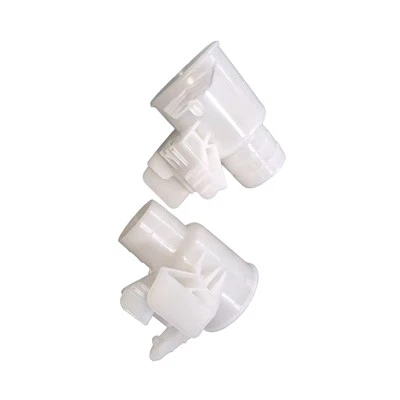
First, let’s get one basic myth out of the way: plastic exterior parts for sports cars aren’t the cheap, brittle stuff that cracks if you kiss a parking block at 2 mph. The materials we work with now are engineered for exactly the demands of high-horsepower rides: speed, impact resistance, heat, and even weight. For context, a typical steel front bumper is around 15-20 lbs, while a high-performance thermoplastic polyolefin (TPO) or glass-fiber reinforced polymer (GFRP) equivalent is 5-8 lbs. That might not sound like a big number, but sports car builders know every pound shaved off cuts 10 lbs of unsprung weight (the weight not supported by the suspension, like wheels and parts attached directly to them) translates to faster acceleration, better cornering, and lower fuel use. We’re not just talking about “lighter”—we’re talking about gaining hundredths of a second on lap times, which is huge for track-day junkies and race teams.
Wait, but what about heat? Sports car engines crank out way more heat than a regular commuter car. Back in the day, plastic would warp or melt near engine bays, but modern materials have heat deflection temperatures (HDT) that hit 180-250°C. That’s more than enough to handle the heat from a turbocharged V8 or a hybrid sports car’s powertrain. We’ve supplied parts for a few track-focused builds that ran 24-hour endurance races, and those plastic bumpers and undertrays came out just fine—no warping, no fading, even after hours of full-throttle runs on hot days.
Another big win is impact resistance and repairability. Let’s be real: sports cars get banged up. Whether it’s a near-miss with a curb during track practice or a tiny fender bender on the street, plastic parts bend, don’t crack or bend. A scratched plastic bumper? You can sand it, heat it back into shape (yes, really—thermoplastics can be reheated and reformed without ruining the material), and respray it for a fraction of the cost and time it takes to fix a metal or carbon fiber part. Last year, a client brought in a rear diffuser they’d clipped a barrier with; their mechanic heated the plastic with a heat gun, pushed the dent out, and it looked good as new in 20 minutes. If that had been carbon fiber, they’d have had to pay $2,000+ for a replacement and wait 3 weeks. For someone who uses their sports car for daily drives and track days, that’s a no-brainer.
Now, let’s talk design—something sports car fanatics care way too much about. Plastic parts don’t have the same limitations as metal or carbon fiber. You can mold complex aerodynamic shapes into plastic that would require multiple pieces and extra welding for metal, or that are way too delicate for carbon fiber. Think about those widebody kits that are all the rage right now. Molding a wide fender flare out of plastic means it’s lighter, more consistent in shape, and you don’t have to worry about it cracking when you’re stretching it over a wider wheel. We even do custom aerodynamic pieces—front splitters, side skirts, rear valences—for builds that need exact, intricate shapes to cut through air. That’s the kind of flexibility metal just can’t match without adding bulk.
But wait, I know what some purists are thinking: “Plastic doesn’t look as good as carbon fiber or metal.” Fair point—kind of. But here’s the thing: modern plastic can be finished to look exactly like carbon fiber, or it can be painted to match any color, even the matte finishes that are super popular. And if you want that carbon fiber look without the cost and fragility, we can infuse carbon fiber flakes into the plastic during molding to get that woven texture for a fraction of the price. For many builders, that’s a way to get the high-end aesthetic without the high-end risk. Plus, if you scratch it, you don’t have to buff out a clear coat that’s only on carbon fiber—just touch up the paint and go.
Of course, no material is perfect, and we’re not here to say plastic replaces every part on a sports car. For things like the roof panel, where stiffness and ultra-low weight are top priority, carbon fiber still leads. But the front and rear exterior parts—bumpers, splitters, diffusers, fenders, hoods? That’s where plastic shines. It’s worth noting that a lot of major sports car brands have already caught on. Wait, have you seen the new Porsche 718 Cayman GT4 RS? Its front bumper and rear diffuser use a lot of plastic composite parts, and even McLaren has used thermoplastic components on their entry-level supercars to keep weight down. Even race series, like GT4 and Touring Car championships, are allowing plastic exterior parts now because they’re proven to hold up to the punishment.
Let me also address a big concern people have: durability over time. If you park your car outside in the sun all year, will plastic fade or get brittle? Back in the day, that was a problem, but modern plastics have UV stabilizers built right into the material. We add those during manufacturing, so the part doesn’t need a special clear coat to protect it from sun damage. We test our parts in accelerated weathering chambers that simulate 10 years of sun exposure in 6 months, and they still look brand new, no fading, no cracking. For someone who keeps their sports car as a daily driver, that’s way better than old plastic that would turn chalky after a couple seasons.
As a supplier, I’ve seen this first-hand over the last 10 years. When I started, almost no one in the sports car space wanted to touch plastic parts. Now, half the inquiries we get are from sports car builders, tuners, and even small manufacturers looking to cut costs and improve performance. The shift isn’t just about saving money—it’s about realizing that performance and practicality don’t have to be mutually exclusive. A sports car doesn’t have to be a fragile, track-only machine that you can’t drive to the grocery store; plastic parts let you have a car that’s fast, looks great, and is easy to fix when you mess up.
At the end of the day, the question isn’t “can plastic front and rear exterior parts be used in sports cars?” It’s “why wouldn’t they be?” The technology has come so far, the benefits are undeniable, and the big brands are already incorporating them. If you’re building a custom sports car, a track-day machine, or even just looking to upgrade your daily driver’s exterior, don’t sleep on plastic. It’s not the cheap stuff anymore—it’s a high-performance material that’s here to stay.

If you’re interested in learning more about our plastic front and rear exterior parts, want to get a quote for a build, or just have questions about materials and fitment, reach out to our team. We work with all types of builds, from project cars to high-volume production runs, and we’re happy to help you figure out what works best for your car. Don’t overcomplicate it—let’s make your sports car both fast and practical.
Automotive Plastic Air Vent Housing References:
- Society of Plastics Engineers. (2022). High-performance thermoplastics in automotive applications. Retrieved from industry technical databases.
- SAE International. (2021). Lightweighting strategies for sports and performance vehicles. Journal of Materials Engineering and Performance.
- Porsche AG. (2023). 718 Cayman GT4 RS technical specifications: exterior components. Retrieved from official OEM technical documents.
- International Organization for Standardization. (2020). UV stability testing for automotive polymers. ISO 4892-2 standard.
- Motor Trend. (2022). Lightweighting deep dive: how thermoplastics changed modern sports cars. Retrieved from automotive industry publications.
Ningbo Xiaohua Plastic Industry Co., Ltd.
We are one of the most experienced plastic front and rear exterior parts manufacturers and suppliers in China, specialized in providing high quality customized service to global clients. We warmly welcome you to wholesale durable plastic front and rear exterior parts in stock here from our factory.
Address: No. 878, Gulin Section, Yinxian Avenue, Haishu District, Ningbo City, Zhejiang Province
E-mail: 13736009355@163.com
WebSite: https://www.cnxiaohua.com/
