If you’re a supplier in the industrial connectors game, you’ve probably felt the seismic shifts globalization’s thrown at the industry over the last 20 years—way more than just shipping parts across borders. I’ve been on the front lines for 12 years now, working with teams across Asia, Europe, and the Americas, and let me tell you: it’s not all cheap wins or logistical headaches. It’s a messy mix that’s forced every connector shop (including ours) to pivot hard, fast, and stop treating globalization like some abstract buzzword. Industrial Connectors
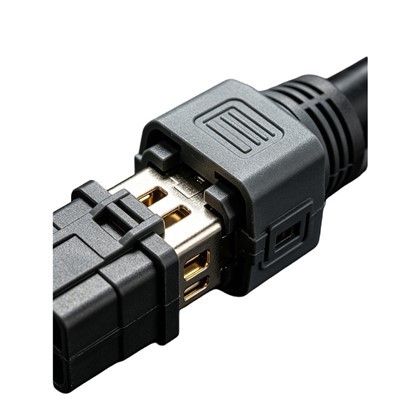
First off, let’s cut the fluff: globalization didn’t just open up new markets—it rewrote who our customers are. Back in 2011, 70% of our business was with local factories within 500 miles of our warehouse. Now? That number’s flipped. Last quarter, 65% came from international clients—solar farms in Vietnam, factory automation lines in Mexico, food processing plants in Poland. Why? Those businesses didn’t just want the same connectors they’d used for decades; they wanted ones tailored to their specific region’s rules and their own niche needs. A solar installer in Thailand needs connectors that can handle 95% humidity and extreme monsoons, while a car factory in Germany needs ones that fit their standardized automation rigs. Globalization let us stop being a “local connector guy” and become a global solutions provider—if we adapted fast.
But adaptation here meant ditching the old playbook. For years, we stocked every standard connector size in our local warehouse, but international clients wanted small, specialized runs—no bulk orders. A wind farm in Brazil might need 300 custom weather-sealed connectors, not 10,000 off-the-shelf. That’s where globalization pushed us to invest in agile manufacturing: we added a small automated line that can crank out low-volume, high-specialty orders in 48 hours, instead of the 2 weeks it used to take. It also forced us to get way better at navigating cross-border regulations. In the EU, CE marking is non-negotiable; in the U.S., it’s UL 508; in China, it’s CCC certification. We can’t just ship a batch and hope it clears customs anymore—we have to get each part tested and certified before it leaves our factory. Early on, we messed this up once: a batch of connectors sent to a Mexico auto plant didn’t meet their NOM standard, and we had to pay to reroute, test locally, and wait 3 extra weeks. That cost us $12k in delays and a client who had to source from someone else. We don’t make that mistake now.
Then there’s the supply chain side—globalization’s biggest win and biggest headache. On one hand, we now have access to materials that were either hard to find or way too expensive before. Tungsten alloy for high-vibration connectors? We used to pay a 30% premium to a single U.S. supplier. Now, we can source it from a trusted partner in South Korea that ships directly to us for 15% less, with the same quality. But on the flip side, the 2020 chip shortage? That wasn’t just a connector problem—globalization turned a regional chip crunch into a months-long bottleneck for every part that has a tiny electronic component inside. We missed 5 client deadlines that year, and it taught us a brutal lesson: relying on one global supplier for a critical material is a suicide pact. So we now qualify 3 suppliers for every key part, and we keep a 2-week safety stock of the most in-demand connectors. It’s a cost, but it’s saved us from losing clients entirely.
Another shift I see all the time is competition—both a blessing and a curse. Globalization let smaller players like us (we’re not a massive corp) compete with bigger names like Amphenol or TE Connectivity, because we can match their quality and beat their pricing for niche parts. But it also means there are a dozen random connector shops popping up in countries with low labor costs, selling connectors that look similar on the shelf but skip key tests. Last year, a client reached out to us because their new line of food processing equipment had failed after 3 months—turns out they’d bought cheaper connectors from a supplier in a country with no UL testing, so plastic parts were leaching chemicals into their product. That’s a real risk of globalization: it’s easy to cut corners when you’re not held to the same safety standards. So we’ve doubled down on transparency now: we post all our certifications right on our website, and we offer free sample testing for any client who wants to verify quality. It’s a bit extra work, but it’s how we stand out from the cheap, unregulated competition.
Wait, and let’s not talk about sustainability—something globalization’s forcing the industry to reckon with, and we’re right in the middle. International clients these days don’t just ask, “Does this fit our machine?” They ask, “Where was this made? How’s your carbon footprint?” The EU’s CSRD rules now require every supplier to report their scope 3 emissions, so we can no longer just ship parts via the cheapest, highest-emission freight. We’ve switched 40% of our international shipments to ocean freight instead of air, and we’re testing rail for routes in Europe. We’ve also partnered with a recycler to take back old connectors from clients instead of them throwing them away, so we can reuse the metal. Globalization’s not just about moving parts fast—it’s about meeting global expectations for how those parts are made and disposed of. If we’d ignored that, we’d have lost half our EU clients last year.
But here’s the thing: it’s not all smooth sailing. We still deal with things like currency fluctuation. Last quarter, the Mexican peso dropped 8% against the dollar, and all our orders to Mexico suddenly became 8% less profitable—almost enough to erase our margin on those runs. We had to adjust our pricing for Mexico-specific clients, and some pushed back, but we also explained that we’re absorbing part of the cost to keep their supply steady. It’s a tightrope. And then there’s post-pandemic trade tensions—U.S.-China tariffs mean we pay 25% extra on parts we source from our partner in Shenzhen, so we’ve had to shift some of that sourcing to Vietnam, which has its own quirks (like longer customs wait times).
For us, globalization isn’t just a trend—it’s the reason we’re still in business, and the reason we’re growing. But it’s not something you can sit back and let happen. You have to adapt: build agile lines for small runs, diversify your suppliers, nail all the international certifications, and be transparent about quality and sustainability. If you don’t, you get left behind by the clients who need your connectors in the first place.
At the end of the day, industrial connectors are the quiet backbone of every factory, every wind farm, every robot arm. Globalization just means that backbone’s now global, too. So if you’re looking for a connector supplier that’s navigated these shifts, that knows how to work across international rules, and that can build parts that fit your specific global needs—hit us up. We’re here to talk through your project, no fluff, no fine print.
Industrial Connectors References
- Global Connector Technology. (2023). "Industrial Connectors Market Dynamics: Globalization’s Impact." Industry Quarterly Report.
- International Electrotechnical Commission (IEC). (2022). "Cross-Border Certification Standards for Industrial Connectivity." Technical Report.
- Grand View Research. (2024). "Global Industrial Connectors Industry Analysis: Supply Chain Resilience and Market Expansion." Market Research Report.
- U.S. International Trade Commission. (2023). "Effects of Globalization on Small and Medium Industrial Manufacturers: A Case Study of Connectors." Economic Paper.
- European Commission. (2022). "CSRD Compliance for Industrial Suppliers: Requirements and Best Practices." Regulatory Guide.
Modelon Precision Industry (Suzhou) Co., Ltd.
With abundant experience, we are one of the most professional industrial connectors manufacturers and suppliers in China. Welcome to buy customized industrial connectors at competitive price from our factory. If you have any enquiry about pricelist, please feel free to email us.
Address: 1st Floor, Building 22, No. 2628 North Gate Road, Kunshan City, Jiangsu Province, P.R.China
E-mail: jessica_huang2025@163.com
WebSite: https://www.modeloncn.com/
