If you’re working in electrical installation, industrial automation, or commercial building wiring, you’ve probably stumbled on tertiary distribution boxes (TDBs) at some point. For anyone not deep in the trade, TDBs are the workhorses of low-voltage power distribution—they sit between the main distribution board (which splits power from the grid or generator) and individual branch circuits that feed things like office outlets, warehouse machinery, or retail lighting. For years, I’ve supplied TDBs, and the question I get asked most often is: do these things even need surge protection? It feels like a straight answer, but it’s way more nuanced than it sounds. Let’s break this down like I would chat with a fellow electrician or facility manager, no stuffy jargon and no sales fluff that makes you zone out. Tertiary Distribution Box
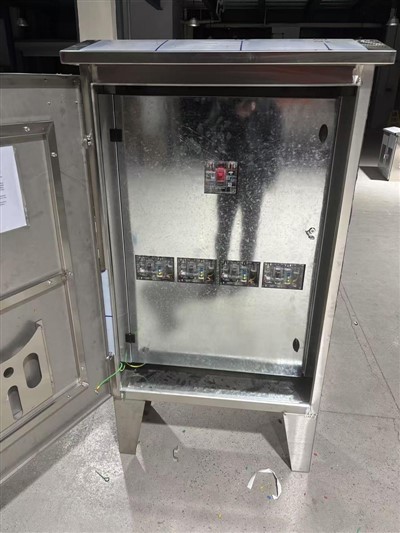
First, let’s ground this in what actually causes power surges to hit TDBs. A lot of people think surges only come from lightning, but that’s only part of the story. Most of the time, surges are internal. Think about it: every time you turn on or off a big piece of equipment—like a factory’s conveyor motor, a chiller unit for a grocery store, or even a large HVAC system—you create a transient voltage spike. That spike might be tiny, but if it happens dozens of times a day, it adds up. Then there are utility-side surges: power companies have to adjust voltage to fix grid issues, and those adjustments can send a surge down the line right to your TDB. And yeah, lightning is a real risk, especially if your facility is in a storm-prone area—even a strike a mile away can induce a surge that travels through power lines and fries sensitive gear.
Now, what happens when a surge hits a TDB without protection? TDBs are built to split power, not absorb spikes. Let’s take a common example: a retail store I supplied TDBs for last year. They had three identical units feeding their checkout lanes, refrigeration cases, and lighting. Halfway through the holiday season, their cash registers started glitching—freezing mid-transaction, randomly rebooting, even losing credit card data. The electrician initially thought it was a faulty register, replaced it, and the problem popped up again a week later. Turned out, the TDB feeding that area had no surge protection. A combination of HVAC startup surges and a couple of summer thunderstorms had built up enough voltage to slowly damage the registers’ internal circuits. The fix? Adding a surge protection device (SPD) to that TDB, and 18 months later, they haven’t had a single repeat issue.
Wait, but hold on—some people will tell you, “We have surge protection at the main distribution board, so that’s enough.” That’s a common mistake, and I hear it all the time. Main board SPDs are great for stopping big, utility-side or lightning-generated surges before they get into the building’s wiring. But here’s the catch: they’re not designed to catch smaller, repeated transients from equipment on branch circuits. Those smaller surges don’t cause a single obvious failure—they’re “slow death” surges that erode component lifespan over months or even years. A main SPD might divert a 10,000-volt lightning spike, but it can’t handle the 500-volt, 10,000 spikes from a forklift motor turning off, or the 1,000-volt surges from office printers powering on. Those end up running right through the main board, down the wires to your TDB, and straight into whatever’s plugged into the branches.
Let’s talk numbers to back this up, not just a random store story. The International Electrotechnical Commission (IEC) has a standard for low-voltage surge protection, IEC 60364-5-53. It splits surge protection into three “zones” in a building: Zone 1 is the main distribution board, Zone 2 is sub-distribution boxes, and Zone 3 is individual equipment. The rule here is that each zone needs its own SPD to catch the smaller surges that make it past the previous one. The National Electrical Manufacturers Association (NEMA) did a study a few years back that found equipment without secondary surge protection has a 2x higher failure rate than equipment that has it, and TDBs themselves? They’re made of metal enclosures, circuit breakers, and bus bars—all of which can degrade from repeated surges, even if you don’t see a spark or a breaker trip. A TDB without protection might still pass power, but the bus bars inside can corrode over time from voltage stress, leading to loose connections or even arc faults down the line. That’s not just an equipment problem—arc faults are a top cause of commercial building fires, per the National Fire Protection Association (NFPA).
Now, let’s get to the counterarguments, because this isn’t a one-size-fits-all. Some smaller setups—like a 100-square-foot tiny office, or a residential garage with a TDB for a workshop—might not need a TDB-level SPD. Why? The only equipment there is maybe a drill, a space heater, and a couple of lights—low-sensitivity devices, and not a lot of equipment that generates its own big surges. But if you’re running a commercial space, industrial workshop, multi-unit apartment building, or any space with sensitive electronics (POS systems, servers, medical devices, refrigeration units), you’re not in that small setup. Another counter: “TDBs are already expensive enough; adding an SPD is just extra cost.” Let’s do quick math. A basic TDB is around $150-$300, and a compatible SPD for it is $50-$100. That’s a 20-30% add-on, but compare that to replacing a single POS system: that’s $1,000-$2,000, or even a full TDB replacement if a surge fries the bus bars. One of my clients, a construction company, told me last year that they saved over $12,000 in equipment repairs in 12 months just by adding SPDs to 12 of their TDBs on job sites. The initial cost was $900 total—hardly a stretch.
Wait, also, let’s address a common misconception: surge protection doesn’t just stop obvious surges. It’s not a lightning rod that blasts a spark out the side of your building. Modern SPDs are compact, fit right inside or on the side of a TDB, and work by clamping voltage spikes to a safe level—so instead of 1,000 volts hitting your circuit, it’s brought down to 120 or 240 volts, the safe level your devices are built for. They also have built-in indicators that let you know if they’ve been triggered by a surge, so you can replace them before they stop working. A lot of newer TDBs I manufacture come with pre-wired SPD options now, which makes installation way easier for electricians—no extra wiring, no guesswork on compatibility.
Another thing people don’t talk about: warranty. If you buy a TDB without surge protection, and a surge damages it, most manufacturers won’t cover it under warranty. They’ll say it’s an external factor, not a manufacturing defect. But if you add a compatible SPD that’s installed correctly, that same TDB’s warranty stays intact, and you’ve got proof you took steps to protect your equipment. For commercial building managers, that’s a big deal when it comes to insurance—many insurance providers offer lower premiums if you have surge protection in key areas like TDBs, because the risk of equipment damage is lower.
I know some of you might be thinking, “I’ve been doing this for 20 years and never had a surge problem with my TDBs.” That’s great, and I’m not saying every TDB needs an SPD. But I’ve seen too many people get burned by ignoring this. A client who ran a metal stamping shop told me about a year ago that a single surge fried 12 hydraulic valves in his stamping machines, costing him $25,000 in downtime and parts. He’d had a main board SPD, but no TDB-level protection. That’s the kind of cost that kills small businesses, and it could have been avoided with a $75 SPD on each of his two TDBs feeding the shop floor.
So, to wrap this up: Tertiary distribution boxes do need surge protection in most commercial, industrial, and multi-residential settings. The key is to match the SPD to the TDB’s voltage rating and current capacity, and to follow the zone rule—main board, sub-distribution, TDB, then individual equipment. It’s not just about big lightning strikes; it’s about the small, repeated surges that slowly wear down your gear, raise your maintenance costs, and even pose a fire risk.

If you’re looking to outfitting your TDBs with the right surge protection, or you’re just not sure if your current setup needs it, feel free to reach out to our team for a no-obligation chat. We can walk you through the right SPD options for your specific setup, no sales pitch, just straight-up advice from folks who’ve been in this business for years.
Distribution Cabinet References
- International Electrotechnical Commission (IEC). (2020). IEC 60364-5-53: Low-voltage electrical installations – Part 5-53: Selection and erection of electrical equipment – Switchgear and controlgear.
- National Electrical Manufacturers Association (NEMA). (2018). Surge Protection for Low-Voltage Distribution Systems: Performance and Application Guidelines.
- National Fire Protection Association (NFPA). (2021). NFPA 70: National Electrical Code, Article 285: Surge Protection for Circuits and Equipment.
Anhui Nanxian Electric Co., Ltd.
With abundant experience, we are one of the most professional tertiary distribution box manufacturers and suppliers in China. We warmly welcome you to buy advanced tertiary distribution box for sale here and get quotation from our factory. All customized products are with high quality and low price.
Address: Factory Unit 03-2, Building 21, Feidong Yinfeng Industrial Park Co., Ltd., Northeast Corner of Manquan Road and Changle Road, Hefei Circular Economy Demonstration Park, Feidong County, Hefei City, Anhui Province.
E-mail: 541580567@qq.com
WebSite: https://www.nxelepower.com/
