Hey there, if you’ve ever stood in a plant control room watching a process line hum, adjusting a valve to tweak flow, pressure, or temperature—chances are you’ve wondered: why pick a globe valve over a gate valve for that exact job? As a globe valve supplier who’s spent years fielding these questions from engineers, maintenance techs, and plant managers, I’m gonna break this down like I would over a coffee, no stuffy jargon that makes your eyes glaze over. Globe Valve
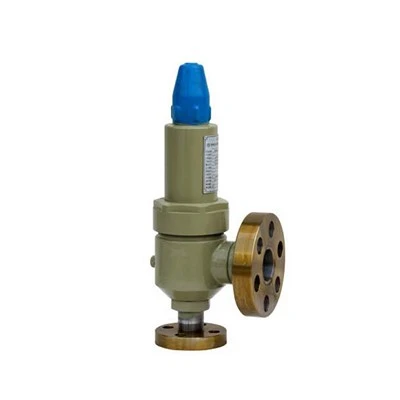
First off, let’s cut through the confusion: a lot of folks mix globe and gate valves up because they both look like basic industrial valves, but they’re built for totally different jobs. Gate valves are like the old barn doors of the valve world—you open ’em all the way or close ’em tight, no in-between. They’re made for on/off service, right? Like, when you just need to let full flow through or shut it off completely, no messing around. Globe valves? They’re the precision tools. They’re built for throttling—adjusting that flow, pressure, or temp just right, like turning a dimmer switch instead of a lightbulb. But why is that the case? Let’s dive into the nitty-gritty that matters to people who actually use these things, not just valve textbooks.
First up, trim design. That’s the internal part of the valve that moves to control flow, and it’s where the whole throttling thing lives. A gate valve’s trim is basically a flat or wedge-shaped gate that slides straight up and down, into a slot, to open or close. When it’s fully open, flow is pretty much straight through, with minimal resistance. But if you try to stop halfway? That gate is sitting right in the middle of the flow path, bouncing around, causing turbulence, and that’s a problem. Because when flow hits that partially open wedge, it creates all this chaos—pressure drops, cavitation (those little vapor bubbles that pop and eat away at metal) becomes a nightmare, and the gate can get damaged fast. I’ve seen gate valves that were only 6 months old and already leaking because someone tried to throttle them, that’s how bad it gets.
Globe valves? Their trim is totally different. The most common is a disc that sits on a seat, and the stem moves the disc up and down at an angle, not straight into the flow path. That angled setup is key for throttling. When you open the disc just a little, it restricts the flow gradually, not all at once. The flow doesn’t crash into a flat surface—it moves through a shaped port, controlled by how high the disc is off the seat. So you can dial in exactly how much flow you want, super precisely. No turbulence, no sudden pressure spikes, no cavitation unless you crank it way too far, which is easy to avoid here. That’s the difference between a sledgehammer and a scalpel, basically.
Next, flow control precision. Let’s talk numbers for a sec, no fancy math I promise. When you throttle a gate valve, the flow rate is pretty much impossible to predict accurately. Because the partially open gate creates inconsistent flow patterns, the relationship between how much you turn the valve handle (or actuator) and how much flow you get is all over the place. You might turn the handle a quarter turn, get 30% flow, turn another quarter, and suddenly get 80%—super inconsistent, hard to tune a process. Globe valves, on the other hand, have a linear (or near-linear) flow characteristic. That means if you open the disc 20% of its total travel, you get roughly 20% flow. That’s game-changing for process control. If you’re running a chemical line that needs to keep a reactant at a specific flow rate to avoid waste, or a water line that needs consistent pressure for a brewery’s brewing process, you can dial a globe valve in exactly where you need it, and it stays there. No guesswork, no constant tweaking. I had a client last year who was using gate valves for their biotech mixing process, and they were wasting 15% of their raw material because the flow was so inconsistent. Switched to globe valves, and that waste dropped to 2%—that’s real money saved.
Then there’s durability for throttling. Let’s get back to that gate valve problem when you throttle it. That partially open gate slams back and forth with every flow change, right? It’s rubbing against the seat, bouncing, causing wear. Over time, that wear makes the gate leak, or it gets stuck, and you have to replace the whole valve way sooner than you should. Globe valves? The disc and seat are designed to wear evenly when you adjust them, not bang around. Even when you’re throttling every day, the angled flow path means the disc moves smoothly against the seat, no sudden impacts. Sure, they’ll wear over time, but they last 2-3 times longer when used for throttling, compared to gate valves. I’ve got clients who run globe valves 12 hours a day, every day, for throttling, and they go 5+ years without any major issues. The gate valves they replaced? They were burning through one every 18 months, easy.
Wait, what about pressure and temperature? I’ve had guys say “but gate valves can handle high pressure too!” Yeah, they can—if you use them for on/off. But when you throttle, pressure drops across the valve (that’s called pressure drop, or delta P) is a big factor. Gate valves have super low delta P when fully open, but when partially open, delta P is all over the place, which leads to that cavitation I mentioned earlier. Globe valves have consistent delta P even when partially open, so cavitation is way less likely. If you’re working with high-pressure steam, for example, cavitation can eat through a gate valve’s gate in weeks. A globe valve with a good trim design will handle that same steam throttling job for years. And for high temps? Same thing—globe valves are designed to handle the gradual flow changes that come with throttling, so thermal expansion and contraction don’t cause nearly as much damage as they do to a partially open gate valve.
Another thing: shutoff capability. Wait, I know we’re talking about throttling, but even if you’re throttling, you might need to shut the line off tight at some point. Globe valves have excellent shutoff too, right? Because the disc sits tight against the seat when fully closed, same as a gate valve, maybe even better in some cases. So you don’t have to sacrifice on shutoff just to get great throttling. Gate valves, when partially worn from bad throttling, often leak when you try to close them tight anyway.
Let’s also talk about ease of adjustment. Globe valves have fine thread stems, right? So each turn of the actuator (or handwheel) moves the disc a small, consistent amount. That means you can make tiny, precise adjustments—like a 1/8 turn, and change flow just a little bit. Gate valves have coarse threads, because they’re built to open fast—one big turn, and the gate is all the way open or closed. You can’t make that small, delicate adjustment. If you’re trying to tweak a flow rate by 5% to hit a setpoint, a gate valve won’t let you do that without either leaving it partially open (which damages it) or guessing wildly.
Now, I know some of you are thinking, “wait, aren’t globe valves more expensive upfront?” Yeah, sometimes. But let’s do the math. A gate valve might cost $100, a globe valve for the same line might cost $150. But the gate valve needs replacement every 18 months, so over 5 years that’s 3 replacements, plus installation and downtime costs—maybe $1000 total. The globe valve lasts 5 years, one installation, no downtime for replacements—so even with the higher upfront cost, you’re saving like $850. And that’s not even counting the process inefficiency, waste, or safety issues that come with throttling a gate valve. Plus, if you’re using a valve for throttling, you can’t use a gate valve long-term anyway—you’ll end up with a line leak, or a valve stuck half-open, which is a huge safety hazard in any industrial setting.
I’ve seen this play out so many times. Last month, I was at a food processing plant that used gate valves for their syrup line, trying to adjust the flow to their bottling line. They were having overflows, inconsistent bottle fills, and had to shut down the line twice a week to fix leaking gate valves. Switched to globe valves, and their downtime dropped by 70%, fill rate consistency went up 25%, and they haven’t had a leak from that line in 2 months. That’s not just valve talk—that’s real, tangible results for the guys on the ground working every day.
Sure, there are cases where gate valves make sense. If you just need a valve to open full and leave open, or shut tight and leave closed, gate valves are fine, they’re simple and cheap for that job. But when it comes to throttling—adjusting flow, pressure, or temperature, dialing in a process, keeping things consistent, avoiding damage and downtime—globe valves are the clear choice. Their design is made for that exact job, while gate valves were built for something totally different.
At the end of the day, it’s all about matching the valve to the application. If you’re working on a line where you need to throttle anything—flow, pressure, temp—don’t waste time and money on gate valves. Globe valves are built to do that job right, safely, and with way less hassle. If you’re a plant manager, maintenance lead, or process engineer looking to fix a throttling issue, cut down on downtime, or improve process consistency, I’m here to help you pick the right globe valve for your specific line, pressure, temp, and flow needs. No one-size-fits-all, just straight talk about what works for your job.
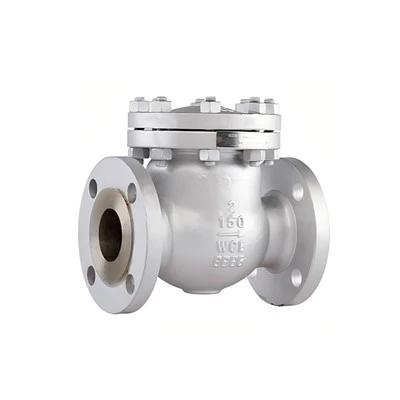
If you’ve got questions about your specific application, or you’re ready to look at globe valve options for your throttling needs, feel free to reach out to discuss. We can walk through your setup, talk trim designs, pressure ratings, whatever you need.
Butterfly Valve References:
- Valve Technical Institute. Industrial Valve Selection and Application Guide. 2021.
- Perry, R.H., Green, D.W. Perry’s Chemical Engineers’ Handbook, 9th Edition. McGraw-Hill. 2018.
- Fluid Controls Institute. Valve Throttling Performance and Durability Report. 2020.
- Miller, J.E. Process Valve Technology: Selection, Operation, and Maintenance. CRC Press. 2019.
Wenzhou Starry Valve Co., Ltd.
Wenzhou Starry Valve Co., Ltd. is one of the most professional globe valve manufacturers and suppliers in China, also supports customized service with low price. Please feel free to buy the newest globe valve made in China here from our factory. Welcome to contact us for pricelist.
Address: No.4900, 3rd Road, Binhai Industrial Park, Wenzhou Economic & Technological Development Zone, Wenzhou City
E-mail: starryvalves@163.com
WebSite: https://www.starryvalves.com/
