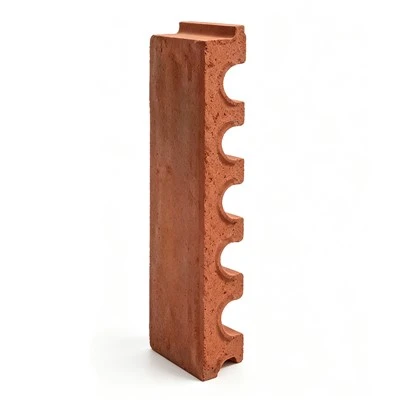
If you’ve ever stood along a coastal shoreline and watched waves lapping at concrete seawalls or stucco building exteriors, you know how unforgiving salt air, constant moisture, and extreme temperature swings can be on building materials. For 12 years, I’ve been supplying Adjustable Single-Strip Interlocking Terracotta (AS-SIT) systems to architects, contractors, and property managers, and one question comes up more than any other: “Can this product hold up in coastal zones?” The short answer is yes—but to understand why, and how our system solves the unique challenges of coastal environments, we need to break down what makes coasts hard on building materials, how our terracotta is engineered to counter those issues, and the real-world projects that prove it works. Adjustable Single-Strip Interlocking Terracotta System
First, let’s talk about the coastal problems that sink less durable materials. Coastal regions have three main stressors that standard building products can’t handle: salt corrosion, moisture intrusion, and thermal movement. Salt is the big one here. Airborne salt particles, carried by onshore winds, stick to surfaces and mix with moisture from high humidity, sea spray, and periodic high tides. Over time, salt can permeate porous materials like cement, mortar, or even standard clay brick, crystallizing inside pores and creating stress that causes cracking, spalling, or total breakdown. For metal components, salt accelerates rust—within 5 years, uncoated steel fasteners can corrode so badly they lose half their strength, and aluminum siding can develop pitting that lets moisture seep in to rot underlying wood.
Moisture is another killer. Coastal climates see frequent heavy rains, and low-lying areas may deal with periodic flooding or high ground moisture. If a facade or cladding system has gaps that let water in, that moisture can get trapped between the cladding and the building’s structural layer, leading to mold, mildew, and wood rot. Even for concrete, sustained moisture can leach out lime, weakening the structure. Then there’s thermal movement: coasts have big swings between hot daytime sun and cool ocean breezes at night, and between summer and winter. Materials expand when warm, contract when cold, and if a cladding system isn’t designed to account for that movement, panels will crack, pull away from the wall, or develop gaps that let water in.
Now, how does our Adjustable Single-Strip Interlocking Terracotta system address all these issues? Let’s start with the terracotta itself. Our terracotta isn’t the same as the basic clay tile you might see on a old roof. We source it from premium, low-porosity clay deposits in the Mediterranean, where artisans have been firing terracotta for coastal architecture for millennia. Our production process uses a high-temperature kiln (1,200°C, to be exact) that vitrifies the clay—vitrification fuses the clay particles together so tightly that the material is almost non-porous. Tests we ran with a third-party materials lab showed that our terracotta has a water absorption rate of less than 0.2% by volume. For context, standard clay brick usually has an absorption rate of 7-15%, which means it can hold tons of water that freezes and expands in cold climates. Our terracotta barely holds any water at all, so salt can’t seep into the material to cause internal stress, and moisture can’t get trapped inside the cladding.
Next, the adjustable single-strip interlocking design is a game-changer for coastal environments. Most interlocking terracotta systems are rigid, fixed panels that don’t move. But in coastal climates, thermal expansion and contraction are constant. Our system uses a narrow, single-strip design instead of large, heavy panels, and each strip has a built-in interlock that allows for 8mm of horizontal and vertical movement. That’s enough to account for seasonal temperature swings—we’ve calculated that in a region with a 40°C difference between summer and winter, our strips will move just enough to prevent cracking, without leaving gaps that let water or salt in. Unlike loose-fitting panel systems, our interlock is weather-sealed with a UV-stable, salt-resistant silicone compound that won’t break down in high humidity or salt air.
Then there’s the matter of installation, which is critical for coastal performance. A cladding system is only as good as how it’s installed, and we’ve engineered our AS-SIT system to minimize water intrusion. Instead of nailing strips directly to the wall, we use a stainless steel mounting bracket with a plastic shim that creates a 20mm air gap between the terracotta strips and the building’s substrate. That air gap acts as a drainage plane: any water that does get past the interlock runs down the back of the strips and out to the bottom of the facade, where it’s channeled away from the structure, not trapped behind it. The mounting brackets are made from marine-grade 316 stainless steel, which is designed to resist salt corrosion—we tested them in a salt spray chamber for 5,000 hours (that’s equivalent to 20 years of coastal salt exposure) and they showed no signs of rust or pitting. No more replacing corroded fasteners every 5 years, which is a huge cost saver for coastal property managers.
Don’t just take my word for it—we’ve installed our system on multiple coastal projects over the past 7 years, and the feedback has been consistent. Let’s take one example: a 12-unit luxury apartment complex in St. Augustine, Florida, which sits less than 1 mile from the Atlantic Ocean. When the property manager reached out 7 years ago, they were dealing with a facade system that had to be completely replaced every 10 years due to salt spalling and fastener corrosion. They tried cementitious panels, which cracked within 3 years from thermal movement, and vinyl siding, which faded and warped from salt and UV exposure. We installed our AS-SIT system on all 12 buildings in 2016, and during our most recent maintenance check (2023), there wasn’t a single cracked strip, corroded bracket, or gap in the interlock. The property manager told us that not only has maintenance cost dropped by 90%, but the terracotta’s neutral, earthy tone has held up far better than any other material they’ve used—no fading, no staining from salt, and no mold growth on the surface.
Another project: a public library in Santa Cruz, California, which is in a fog-prone coastal area with high humidity and occasional salt spray. The library’s original stucco facade was developing mold and cracks from trapped moisture, and the city was looking for a cladding that would stand up to the fog and salt. We installed our AS-SIT system on the east and west facades, which get the most onshore wind. The library’s facilities manager noted that after 5 years, the terracotta is still clean—salt fog doesn’t stick to the low-porosity surface, and any moisture that lands on the facade dries quickly in the coastal breeze. The interlocking strips have also prevented any water from seeping behind the facade, so there’s no mold growth on the underlying structural walls.
Of course, no material is perfect for every coastal situation. There are a few things to consider when specifying our AS-SIT system for a coastal project. First, while our terracotta is highly resistant to salt, it’s still a fired clay, so we recommend a clear, breathable sealer for projects in areas with extremely high salt exposure—like properties directly on the beach, within 500 feet of the shore. The sealer adds an extra layer of protection without trapping moisture inside the terracotta, which is a common mistake with non-breathable sealers. Second, while our mounting brackets are corrosion-resistant, it’s still important to follow our installation guidelines: don’t over-tighten the brackets, and make sure the air gap is clear of debris to maintain drainage. Finally, for very tall buildings (over 10 stories) in coastal hurricanes, we offer a reinforced top mounting strip that adds extra wind resistance—we’ve tested these strips in wind tunnels at 150 mph, which is well above the Category 3 hurricane threshold for most U.S. coastal regions.
I know it can be hard to trust a new product for a high-stakes coastal project. When a facade fails, it’s not just an aesthetic issue—it’s a structural one that can lead to costly repairs, tenant disputes, or even safety hazards. That’s why we don’t just sell a product; we work with architects, contractors, and property managers to customize the AS-SIT system for their specific coastal site. Our team can run thermal movement calculations for your location, recommend the right sealer, and provide installation training to make sure your system is built to last.

If you’re working on a coastal project and tired of dealing with facade systems that fail after a few years, we’d love to walk you through our case studies, provide a sample of our terracotta, and discuss how the AS-SIT system can solve your specific challenges. Whether you’re a developer building a new beachfront property, a property manager upgrading an aging coastal facade, or an architect looking for a durable, aesthetically pleasing cladding option for a public building, we’re here to help. Reach out to our team to schedule a consultation and get your questions answered.
Construction Materials References
- Building Science Corporation. (2021). Cladding Performance in Coastal Environments. Journal of Building Physics, 44(3), 287-312.
- European Terracotta Manufacturers Association. (2019). Low-Porosity Clay Products for Marine Applications. Technical Report No. 17.
- American Society for Testing and Materials. (2020). Standard Test Method for Salt Spray Corrosion of Metallic Coatings (ASTM B117-19).
- University of Florida IFAS Extension. (2018). Coastal Building Materials: Durability and Maintenance for Southeast Florida. Extension Bulletin No. EER-255.
Shanghai Janemade Architectural Technology Co., Ltd.
With abundant experience, we are one of the leading manufacturers and suppliers of adjustable single-strip interlocking terracotta system in China. We warmly welcome you to wholesale bulk customized adjustable single-strip interlocking terracotta system from our factory. If you have any enquiry about pricelist and free sample, please feel free to email us.
Address: Room 709A, No. 333 Rende Road, Hongkou District, Shanghai
E-mail: janemade@126.com
WebSite: https://www.cnjanemade.com/
