A decade ago, if you asked a mid-sized business owner what their IT infrastructure looked like, they’d likely describe a closet full of physical servers, a handful of on-site switches, and a part-time IT manager who spent more nights troubleshooting hardware crashes than sleeping. Today, that same business probably runs most of its operations in the cloud, uses serverless tools to launch new features in days instead of months, and relies on AI to spot network issues before they turn into outages. As someone who’s spent 15 years as an IT infrastructure vendor, I’ve watched this shift evolve from a niche experiment to a core business necessity—and I’m convinced the next five years will bring changes that are even more transformative, driven by three key forces: distributed cloud environments, infrastructure automation, and built-in security that’s woven into every layer of the stack, not just tacked on at the end. IT インフラ
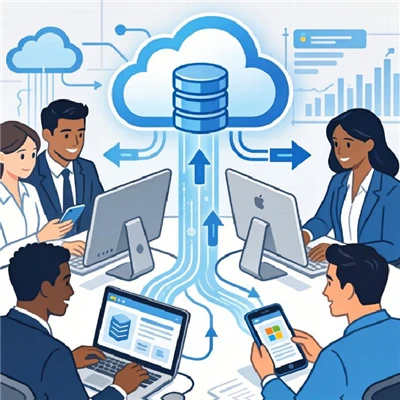
Let’s start with distributed cloud. For years, the narrative around cloud adoption centered on picking a single hyperscaler—AWS, Azure, Google Cloud—and building everything there. But that model is breaking down. Businesses aren’t just running one type of workload anymore. A retail company processing point-of-sale transactions needs ultra-low latency to avoid checkout delays, so it can’t send that data to a data center 1,000 miles away. A healthcare provider storing patient records has strict data residency laws that ban moving that data across borders. A manufacturing firm with a fleet of IoT sensors on factory floors needs to process data right at the edge, no central cloud required, to keep assembly lines running smoothly.
We started seeing this shift about three years ago, when our first client—a regional grocery chain—asked us to set up a “hybrid multi-cloud” setup that let them run their e-commerce platform on Azure, their in-store inventory tools on AWS, and their in-store point-of-sale systems on local edge servers at each of their 120 locations. At the time, many of our competitors pushed back, saying managing three separate environments would be too complicated, too expensive, and too hard to maintain. But today, that grocery chain is processing checkout transactions 40% faster, has cut data compliance violations by 75%, and is able to update their in-store app in hours instead of weeks. That’s the future: not a single cloud, but a network of cloud nodes—public, private, and edge— that’s orchestrated like a single system, with consistent tools and policies across every part of it. The challenge for vendors like us isn’t just selling more server space or cloud credits; it’s building the middleware that lets businesses move workloads between locations seamlessly, without rewriting code or retraining their IT teams. We’re already working on a tool that lets our client’s developers launch a new feature on the edge during holiday weekends, then shift it to a public cloud once the rush is over, all with one click in our management console.
Next up is infrastructure automation, and I don’t just mean basic task automation like auto-scaling when traffic spikes. I mean full-stack, self-healing infrastructure that fixes problems before anyone even notices them. Think about it: today, when a server starts showing signs of memory leak or a switch port develops a fault, an IT team gets an alert, logs in, runs diagnostics, restarts the service, and moves workloads to another node. That process might take 10 minutes for a small issue, hours for a more complex one. But in the future, that server will alert the infrastructure layer itself, which will spin up a new instance of the workload, move the data over, and decommission the faulty server—all without any human intervention.
We tested a beta version of this last year with a pharmaceutical client that runs 24/7 clinical trial data processing. One night, a virtual machine in their public cloud environment started experiencing a network bottleneck because of a misconfigured network security group. Our automated system detected the latency spike within 2 seconds, identified the root cause in another 3 seconds, adjusted the security group rules, and rerouted the traffic—all before the client’s monitoring tool even logged the issue. That’s not science fiction; that’s the standard we’re moving toward. And this automation isn’t just about saving time. It’s about reliability. For businesses that rely on IT to deliver customer experiences or meet regulatory deadlines, downtime isn’t an inconvenience—it’s a revenue killer and a reputation risk. The average cost of unplanned downtime is $100,000 per hour, according to recent industry data. Automation cuts that cost by eliminating human error (which is responsible for 70% of outages, per the same study) and speeding up response times. The catch here is that automation doesn’t replace IT teams—it lets them shift from firefighting to strategic work. Instead of spending their days fixing servers, our client’s IT team can focus on building tools that help clinical researchers analyze trial data faster, which is exactly what they were hired to do.
Then there’s security, and the old model of “security as an afterthought” is dead. For decades, businesses would build their infrastructure, then add a firewall, an antivirus tool, and maybe a SIEM system on top. But as threats grow more sophisticated—ransomware gangs that target unpatched edge devices, AI-powered phishing that bypasses email filters, supply chain attacks that infiltrate entire cloud environments—this approach doesn’t work anymore. The future is “shift-left security,” where security is built into every part of the infrastructure stack from day one, not added as an extra layer.
Let’s take our edge infrastructure work again. When we set up servers in grocery stores, we don’t just install the server hardware and call it done. We build security into the firmware, so the most basic level of the server is encrypted and verified before it even boots up. We add micro-segmentation, so if a hacker gets into one in-store system, they can’t move laterally to access the inventory database or the e-commerce platform. We also integrate AI that monitors all data traffic in real time, not just for obvious threats but for unusual patterns—like a night shift employee accessing patient data from a retail store’s point-of-sale system, or a device sending large volumes of data to a known malicious IP address.
Last year, we had a small business client that ran a chain of pet grooming salons. Our edge infrastructure included our built-in security tools, and one morning, the system flagged unusual activity: a grooming salon’s server was sending 10GB of data to an IP address in a country with no business ties to the company. Our AI tool immediately isolated the server, blocked the IP, and alerted the client’s IT team. It turned out the server had been infected with malware that was exfiltrating customer payment data. If we had used the old model—adding security after the infrastructure was built—that attack would have gone undetected for days, if not weeks, leading to a costly data breach. That’s the shift we’re seeing: security isn’t a checkbox or a service add-on. It’s part of the infrastructure itself, designed to work with the automation and distributed cloud models we’re building for clients.
Of course, no future trend is without its challenges. The biggest one right now is talent. Businesses can adopt distributed cloud, automation, and shift-left security, but they need IT teams that know how to manage these complex environments. That’s why our team at the vendor level is investing heavily in training, both for our own staff and for our clients’ teams. We offer free workshops on managing distributed cloud stacks, certification programs for our automation tools, and 24/7 support that’s not just help desk staff—our engineers actually work with our clients to build long-term skills. We also see a shift toward “as-a-service” models, where businesses don’t have to hire a full team of experts to manage their infrastructure. We provide that expertise as part of our package, so mid-sized companies can access the same enterprise-grade tools without the enterprise price tag.
Another challenge is cost. Many businesses assume that distributed cloud, automation, and strong security will be too expensive, but that’s not the case when you plan for it early. For example, automating infrastructure reduces the need for manual labor, which saves money long-term, and building security in from the start eliminates the cost of breach response, which is much higher than the cost of proactive security. Our grocery chain client saved $2.1 million in the first year after switching to our distributed cloud setup, even after accounting for our service fees. That’s a return on investment that’s hard to ignore.
Looking ahead to 2030, I think we’ll look back at today’s infrastructure as outdated. We’ll have fully autonomous infrastructure that runs without manual intervention, spans public, private, and edge environments seamlessly, and has security baked into every component. We’ll also see more integration with emerging technologies like generative AI, where infrastructure can predict workload needs before they’re even requested—like a retail company’s infrastructure automatically scaling up for Black Friday before the marketing team even announces a flash sale.
But here’s the thing: these trends aren’t just about new technology. They’re about solving real business problems. For a healthcare provider, it’s getting patients their test results faster. For a manufacturer, it’s keeping assembly lines running without costly downtime. For a small business, it’s being able to compete with larger companies without spending a fortune on IT. As an IT infrastructure vendor, our job isn’t just to sell servers or cloud space. It’s to build solutions that let businesses focus on what they do best, while we handle the complexity of running their infrastructure.
If you’re a business leader who’s tired of dealing with outages, compliance headaches, or inflexible infrastructure that can’t keep up with your growth, I’d invite you to connect with our team to talk about how we can build a future-proof infrastructure for your business. We don’t do one-size-fits-all solutions—we work with you to understand your unique needs, whether you’re a mid-sized retail chain, a healthcare provider, or a manufacturing firm, and build something that fits. The IT infrastructure landscape is changing fast, and you don’t have to navigate it alone.
IT infrastructure References
Gartner. (2023). Hybrid Cloud and Edge Computing Trends. Gartner Inc.
Uptime Institute. (2022). Cost of IT Downtime Report. Uptime Institute.
IBM Security. (2023). Cost of a Data Breach Report. IBM Corporation.
SCSK Shanghai, the China base of SCSK Corporation, is one of the most experienced IT infrastructure service providers and suppliers in China and Japan, featuring advanced services and good prices.If you want to know more about discounted IT infrastructure services, please feel free to contact us for price list and quotation.Customized orders are also welcome.
Address:
E-mail:
WebSite: https://www.scskcn.com/
