Hey there, everyone! If you’re running a beverage, dairy, or liquid food production line and you’ve ever dug into the ins and outs of gable top carton filling machines, you know there’s a lot more to them than just pouring liquid into that iconic triangular-topped box. As someone who’s spent the last 12 years working as a gable top carton filling machine supplier—walking alongside small craft dairies, mid-sized juice brands, and large beverage conglomerates through their setup, upgrades, and troubleshooting—I’ve heard the same question a hundred times: “What’s the right air pressure for our gable top filler?” Gable Top Carton Filling Machine
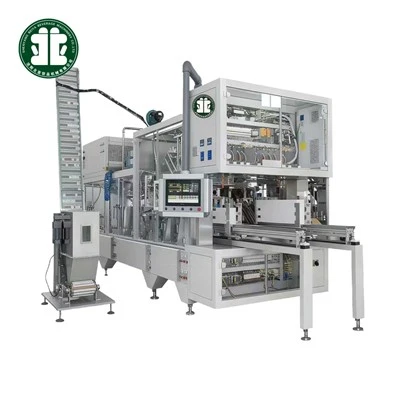
It makes total sense to ask, too. Compressed air is the unsung workhorse of these machines. It powers everything from the carton blank feeding and forming to the nozzle sealing and the precise flow control that keeps your filling volumes accurate. Get the air pressure wrong, and you’re not just dealing with minor hiccups—you’re facing leaks, inconsistent seals, carton jams, or even finished products that don’t meet your shelf standards. Let’s break this down like we do with our clients, not just with textbook jargon, but with real-world context that works for every type of production line.
First, let’s ground this in what gable top carton fillers actually use compressed air for. Unlike some filling machines that rely on hydraulics or electric actuators, most standard gable top fillers (especially the intermittent motion models that dominate small to mid-sized runs) have multiple pneumatic functions firing at once. A typical cycle includes: feeding the flat carton blank from the stack, pulling it into the forming station where it’s folded into that rectangular tube, sealing the bottom (both longitudinal side seals and the bottom heat seal), lifting the nozzle into the carton to fill it, sealing the top after filling, and ejecting the finished carton. Each of these steps needs a specific pressure range—you can’t use the same pressure for a delicate top fold as you would for pushing a carton blank through a tight feeder channel.
Now, the big question: what’s the actual pressure requirement? I’ll start with the baseline for most standard gable top fillers we supply. For the primary compressed air system that runs all the core functions, the minimum working pressure you need is 6 bar (that’s about 87 psi, for anyone using imperial units). Most of our clients operate in a sweet spot between 6 and 6.5 bar (87 to 94 psi), and that’s not a random number. Let’s unpack why: below 6 bar, you’ll start seeing noticeable performance drops. For example, the bottom sealing cylinders might not have enough force to create a hermetic seal, especially if you’re using thicker carton blanks (which are common for longer shelf-life products like UHT milk or juice). Too little pressure there leads to leaks, which can cause product spoilage or contamination during storage.
Wait, but that’s the overall system pressure—what about individual functions? That’s where a lot of new production teams get confused. It’s not one-size-fits-all. The carton feeding and forming systems usually need a lower auxiliary pressure, around 5.5 to 6 bar (80 to 87 psi). These parts handle delicate, thin paperboard, so higher pressure here would actually tear the blanks or crumple the edges before they even get to the sealing station. On the flip side, the sealing and nozzle actuation systems need the higher end of the range, often up to 6.5 bar. For hot-fill applications (super common for fruit juices or flavored drinks), the sealant is molten, so the sealing cylinders need extra force to press the two carton layers together firmly enough to fuse properly before cooling. And for aseptic gable top fillers—used for shelf-stable products without refrigeration—you’ll often see requirements a bit higher, around 6 to 7 bar (87 to 101 psi), because the aseptic seals have to be extra tight to block bacteria and oxygen.
But here’s the thing: that baseline range only works if your compressed air supply is clean and dry. I can’t tell you how many times we’ve had a client reach out saying their machine is acting up, only to find their air compressor has moisture or particulates in the lines. Gable top fillers use tiny pneumatic valves and seals—moisture can cause rust, which clogs those valves and leads to pressure drops mid-cycle. Even small amounts of water in the air line can make the carton seals fail because the seal surfaces get slippery, so the cylinders can’t apply consistent pressure. That’s why we always recommend adding a compressed air treatment system: a particulate filter to remove dust and debris, a water separator to catch moisture, and a desiccant dryer to keep the air humidity below 10°C dew point. If you skip that, even a compressor that hits 7 bar won’t work right for long.
Another variable that changes pressure requirements is your production speed. If you’re running a high-speed filler that cranks out 12,000 cartons per hour (that’s our high-output model for large beverage brands), you might need a slightly higher system pressure—up to 7 bar (101 psi). Why? At faster cycle rates, the pneumatic cylinders have to move quicker, and they need more pressure to overcome the resistance of moving parts and the speed of the line. For small, low-speed fillers (for craft producers making 2,000 cartons per hour), 5.5 to 6 bar is more than enough—you don’t need extra pressure for slow, deliberate cycles.
I’ve seen this play out firsthand with a client last year: a small craft dairy in Vermont that makes organic oat milk, running our mid-range gable top filler at 3,000 cartons per hour. They initially set their compressor to 7 bar because they “heard higher pressure is better,” and within a week, they were having carton jams at the forming station. The higher pressure was making the pneumatics pull the carton blanks too hard, wrinkling the paperboard edges. Once they dialed it back to 6 bar and added a better moisture filter, those jams stopped. The seals improved too, because the extra pressure wasn’t forcing the seals to over-compress, which can also cause leaks in long-term storage. That’s the kind of real-world test I rely on when advising clients—textbook numbers are a starting point, but your specific setup needs fine-tuning.
Now, common mistakes we see that mess up air pressure performance: first, undersized air compressors. A lot of producers buy a compressor that’s too small for their filler’s demand, especially if they add other equipment downstream (like a carton packer or a labeler). Our gable top fillers have a specific air flow rating too—usually around 15 to 20 cubic feet per minute (CFM) at 6 bar. If your compressor only puts out 12 CFM, it can’t maintain consistent pressure during peak cycles, leading to fluctuations that cause seal failures. Second, not regular pressure testing. Pneumatic lines can develop leaks over time—old seals, loose connections, even tiny holes in hoses. A 10% pressure drop from leaks is enough to cause noticeable issues, so we tell clients to test their system pressure weekly with a manual gauge, not just rely on the compressor’s built-in readout. Those built-in gauges are often off by a few psi, which adds up.
Third, mixing up imperial and metric pressure units. This is a bigger issue than you’d think, especially with global clients. A lot of international buyers reference bar, while US-based operators use psi. We always provide both in our machine manuals, but it’s easy to mix up—6 bar is not the same as 6 psi, that’s a common mistake that leads to way too low pressure.
So, what should you do if you’re setting up a new gable top filler or troubleshooting an existing one? Start with the manufacturer’s guidelines for your specific model—this is non-negotiable, because every brand’s machine is built with slightly different pneumatic components. Next, check your compressed air system: make sure it’s filtered, dried, and sized correctly to match your filler’s CFM requirement. Then, adjust the pressure gradually: start at 6 bar, test a few cartons, check the seals (run a leak test by submerging a finished carton in water to see if bubbles form), and adjust up or down by 0.5 bar at a time until you find your sweet spot. Don’t just crank it up to the maximum—that never solves problems and just wears out your machine’s pneumatic parts faster.
At the end of the day, air pressure for gable top carton fillers isn’t a number you can pull out of thin air (pun intended). It’s a balance between your machine’s design, your production speed, the type of product you’re filling, and the quality of your compressed air supply. As a supplier, our job isn’t just to sell you a machine—it’s to help you get it running efficiently, with the right settings that keep your cartons sealed, your lines running, and your products ready for shelves.
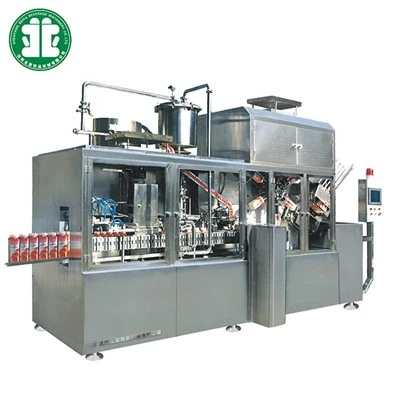
If you’re setting up a new gable top filler, upgrading your current line, or dealing with persistent air pressure issues, we’re here to help fine-tune your setup to your specific needs. Don’t hesitate to reach out for a consultation.
Pet Food Filling Machine References:
- European Food Safety Authority. (2021). Packaging and Food Contact Materials: Requirements for Aseptic Sealing.
- Pneumatic Systems Association of North America. (2020). Compressed Air Quality Standards for Packaging Machinery.
- Gable Top Carton Filling Machine Technical Manuals, Series GTF-3000 and GTF-12000. (2023). Machinery Manufacturing Co.
Shenyang Beiya Beverage Machinery Co., Ltd.
With abundant experience, we are one of the most professional gable top carton filling machine manufacturers and suppliers in China. If you’re going to buy customized gable top carton filling machine made in China, welcome to get quotation from our factory. For price consultation, contact us.
Address: No. 2-1, Tongling Street, Yuhong District, Shenyang City, Liaoning Province, China
E-mail: market@sybeiya.com
WebSite: https://www.chinafilling.com/
