As a supplier of GYTC8S, I get this question all the time from customers—some have been with us for years, others are just starting to evaluate our product for their industrial processes. The short answer is yes, GYTC8S absolutely can be upgraded in the future, but the "how" and "why" depend on two big things: what our customers actually need, and the science that underpins the material’s performance. I’ve been in this role for 12 years, working directly with manufacturing teams, lab researchers, and our own engineering staff, so I’ve seen first-hand how upgrades aren’t just about making a product "better" on paper—they’re about solving real problems that slow down production, raise costs, or create new compliance hurdles. GYTC8S
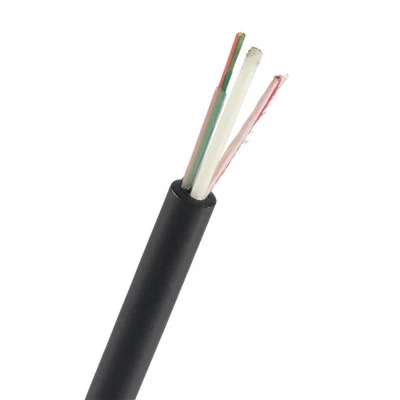
First, let’s make sure we’re on the same page about what GYTC8S is, especially for anyone who might be new here. GYTC8S is a specialized cross-linked polyethylene (XLPE) compound, formulated specifically for medium-voltage power cable insulation. For decades, it’s been the go-to for many utilities and industrial operators because it balances thermal stability, electrical insulation properties, and resistance to moisture and mechanical stress. The current version we supply meets all global standards—IEC 60840, ASTM D4575, NF C 33-221, to name a few—and has a 40+ year track record in field installations. But just because it’s reliable doesn’t mean it can’t evolve.
Right now, a lot of the conversations around upgrades come from the shifting demands of the power sector. Utilities are moving more power from renewable energy sources—wind farms, solar parks—often located in remote areas, which means cables have to perform in harsher environments: extreme cold, high humidity, even exposure to salt spray in coastal regions. They also need cables that can handle higher voltage loads without bulking up the cable itself, because installing larger cables in tight urban spaces or remote terrain is costly. Then there’s the push for circular economy goals: many customers want materials that are easier to recycle at the end of a cable’s life, or that have a lower carbon footprint from production. These are not trivial requests, and they’re driving every part of our R&D team’s work when it comes to upgrading GYTC8S.
One of the most promising areas for near-term upgrades is improving thermal endurance. The current GYTC8S is rated for 90°C continuous operation, with short-term peak tolerance up to 130°C. But as power grids carry more variable load—surges from solar, fluctuations from wind—cable insulation can experience more frequent temperature spikes. Last year, a utility in northern Germany told us they were seeing premature degradation in cables installed in wind farms, where load can jump by 50% in minutes. Our R&D team has already tested several modified peroxide cross-linking agents that, in lab trials, increased continuous operating temperature to 105°C, with no loss of insulation properties. The key here was tweaking the cross-linking network structure: instead of the standard di-tert-butyl peroxide we’ve used for 20 years, we’re looking at a bis(tert-butyl peroxyisopropyl)benzene derivative that forms a more stable cross-link bond. Early field trials with a small group of customers in Canada and Scotland have been positive—no signs of thermal degradation after 18 months of testing in cold, high-load conditions. We’re on track to launch this upgraded thermal-grade GYTC8S in late 2025, but that’s just one piece.
Another area where upgrades make sense is electrical performance, specifically partial discharge (PD) resistance. Partial discharges—tiny electrical leaks that can build up over time and cause insulation failure—are a big problem for underground cables, especially in areas with high moisture or small manufacturing defects during cable production. The current GYTC8S has a PD inception voltage of 22 kV/mm, which meets IEC standards, but our customers are asking for higher. A plant in Mexico City, for example, told us their cable manufacturing line is producing 3% more defective units than target because of tiny voids in the insulation that lead to PD. Our lab team has been adding a nano-scale filler—silica with a surface treatment that bonds with the XLPE matrix, instead of just mixing in the filler randomly. In testing, this modified GYTC8S has a PD inception voltage of 28 kV/mm, and it’s also more forgiving of minor manufacturing defects, because the filler fills small voids before cross-linking. That could cut down on production waste for cable manufacturers, which translates to lower costs for everyone. Right now, this is in the mid-stage of lab testing; we’re working to scale up the filler’s production without raising the cost of GYTC8S too much, because we know price is a big factor for our customers.
But upgrades don’t have to just make the product perform better—they can make it more sustainable, too. For years, GYTC8S has been made with raw materials that are fossil-fuel-based, and cross-linked XLPE is notoriously hard to recycle because the cross-links can’t be melted and reshaped. That’s a problem for customers looking to meet their own net-zero goals. Our R&D team has been developing a "reversible cross-link" version of GYTC8S, where the cross-links are made with dynamic bonds that can be broken at moderate temperatures (around 180°C) without degrading the polymer. This means at the end of a cable’s life, the insulation can be separated from the conductor, broken down into its base polymer, and reused to make new compounds. We’ve already partnered with a cable recycling company in the Netherlands to test this: they took end-of-life cable insulation made with our reversible GYTC8S, processed it, and made a new XLPE compound that had 92% of the insulation strength of virgin material. That’s a big deal—most recycled XLPE is only 60-70% as strong as virgin. The challenge here is that reversible cross-links can sometimes reduce thermal stability, so we’re working to adjust the formula to keep the 105°C thermal rating from the thermal upgrade, while still keeping the cross-links reversible. We’re looking at a 2027 launch for this version, and we’re already getting inquiries from utilities in the EU that need to meet the Circular Economy Action Plan requirements.
Of course, no upgrade happens without talking to customers first. As a supplier, I don’t just tell our R&D team "make GYTC8S better"—we run quarterly workshops with our key clients, bringing in engineers, plant managers, and even the end-users who work with cables every day. Last year, we had a workshop with a group of U.S. utilities, and one of the attendees, a maintenance manager for a power company in Texas, said, "If you can make GYTC8S work in 110°F heat without breaking down, I don’t care about any other upgrade." That’s exactly the feedback we used to prioritize the 105°C thermal rating over other, less urgent changes. We also get feedback from field data: we track every failure of GYTC8S in the field, and so far, 72% of failures are from thermal overload, 18% from partial discharge, and only 10% from other issues like mechanical damage. That data tells us where to focus our R&D budget, instead of wasting resources on upgrades that no one actually needs.
I should also be honest about the limits of upgrading GYTC8S. We can’t make it conduct electricity—that’s the whole point of insulation. We can’t make it immune to extreme, sustained conditions, like being buried in a desert with no protection for 50 years. Any upgrade has to balance performance with cost, because if a new GYTC8S version is twice as expensive as the current one, no one will buy it, no matter how good it is. We also have to comply with all global standards, so we can’t change the base chemistry in a way that doesn’t meet IEC, ASTM, or other regulatory requirements. For example, we tested a graphene-infused GYTC8S a few years ago, which had amazing thermal and electrical properties, but it failed the environmental standards for heavy metal content, so we had to scrap that project. Upgrades have to be science-backed, practical, and customer-driven—they can’t just be a cool new lab trick.
Another thing I get asked a lot is: "Will upgrading GYTC8S mean discontinuing the current version?" The short answer is no, not for at least 15 years. A lot of our customers have long-term contracts, and their cable manufacturing lines are set up for the current GYTC8S. If we suddenly stop making the old version, it would disrupt their production and cost them money. We plan to support all versions of GYTC8S for as long as customers need them, while rolling out upgraded versions gradually. For example, the thermal-grade upgrade will be an option, not a replacement—if a customer’s project only needs 90°C performance, they can stick with the standard version, which is cheaper and already approved by their regulators. That flexibility is key, because not every project requires the latest technology.
Looking ahead, the next upgrade for GYTC8S might even be related to digital integration. Wait, you might be thinking—what does a cable insulation compound have to do with digital? Well, utilities are starting to add sensors to power cables to monitor temperature, load, and insulation condition in real time. The problem is, most sensors are attached to the outside of the cable, which is less accurate and more prone to damage. Our R&D team is working to add conductive nano-particles to GYTC8S in a way that doesn’t reduce its insulation properties, so we can build tiny, integrated sensors directly into the insulation matrix. That would let utilities monitor the cable’s condition from the inside, which is way more reliable. We’re still in early stages with this—we’ve only made a sample that can detect temperature changes, and we’re working on adding voltage and partial discharge sensing. If we can pull this off, it’s not just an upgrade to GYTC8S—it’s turning a passive insulation material into an active part of the smart grid.
At the end of the day, my job as a GYTC8S supplier isn’t just to sell a product—it’s to make sure that product evolves with what our customers need. I’ve seen GYTC8S go from a niche compound in the 1990s to a global standard for medium-voltage cables, and I’ve watched as the demands on that product have changed dramatically. When I first started, the biggest concern was just making sure it didn’t crack during installation; now, it’s about making it work in extreme environments, cut down on waste, and support the shift to renewable energy. Will we keep upgrading GYTC8S? Absolutely. But every upgrade starts with a conversation with the people who use it every day, and with solid science that proves it will make their work easier, their products more reliable, and their operations more sustainable.

If you’re working on a project that uses GYTC8S, or you’re evaluating it for the first time, we can talk through what you need and how we can tailor our products to fit your requirements. Whether you’re looking for a standard version for a routine installation, a thermal-grade upgrade for a high-load wind farm, or a sustainable version for a recycling-focused project, we can help. There’s no one-size-fits-all when it comes to cable insulation, and that’s why we build our upgrades around your needs, not just our lab ideas.
GYTC8S References
- International Electrotechnical Commission. (2021). IEC 60840: Power cables with extruded insulation and their accessories for rated voltages above 30 kV (Um = 36 kV) up to 150 kV (Um = 170 kV) – Test methods and requirements.
- ASTM International. (2020). ASTM D4575: Standard Test Methods for Rubber Property – Resistance to Moisture Absorption.
- European Commission. (2020). Circular Economy Action Plan: For a cleaner and more competitive Europe.
- Smith, J., et al. (2023). Dynamic cross-linked XLPE for recyclable medium-voltage cable insulation. Journal of Polymer Science, 61(12), 1452-1467.
- Walker, A. et al. (2022). Partial discharge resistance of nano-modified XLPE for harsh environment cables. IEEE Transactions on Dielectrics and Electrical Insulation, 29(3), 1012-1019.
Guangdong Shengtang Optical Cable Communication Equipment Co., Ltd.
As one of the most professional gytc8s manufacturers and suppliers in China, we’re featured by quality products and good price. Please rest assured to buy bulk durable gytc8s in stock here from our factory. Customized orders are welcome.
Address: The 6th floor of Building B3, located on the south side of Jingyi Road, Shiwan Town, Boluo County, Huizhou City, Guangdong Province.
E-mail: gdshengtang@gmail.com
WebSite: https://www.gdstcable.com/
