Let’s cut to the chase: as a partial discharge (PD) tester supplier, I get this question every single week. Clients—electric utilities, industrial maintenance teams, cable installers—all want to know if the PD test kit I sell them works for their cable testing needs. For a long time, I used to shrug it off with a simple “yes, of course” back when I was a younger rep, still learning the ins and outs of every piece of equipment we stock. Now? I’m the guy who sits through 45-minute deep dives with clients who’ve just spent $100k on a new cable installation and are panicking because their old hi-pot tester didn’t catch a tiny flaw that’s already showing early signs of failure. The truth is, it’s not a straight yes or no. It’s nuanced, and if you get it wrong, you can waste thousands of dollars on the wrong testing method—or, worse, miss a critical defect in a cable that powers a hospital or a data center. Partial Discharge Tester
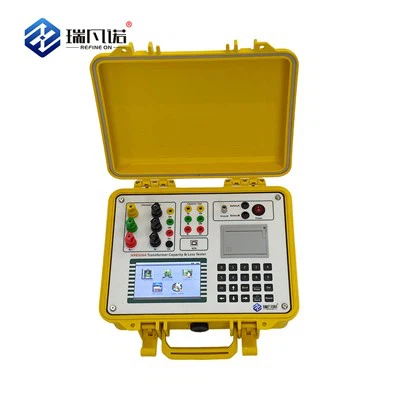
Let’s start with what a partial discharge tester actually does, because that’s where the confusion starts. PD happens when tiny, localized gaps or flaws in insulation (think micro-cracks in a cable’s cross-linked polyethylene, or a stray bit of metal debris from manufacturing) create small, electrical arcs between conductors or between a conductor and the sheath. Those arcs are way smaller than the massive, destructive breakdowns a hi-pot tester looks for. A hi-pot test ramps up voltage until the insulation fails, which is great for finding catastrophic flaws, but it’s terrible for catching the slow, creeping defects that will cause a cable to fail 18 months down the line. PD testers, on the other hand, pick up those tiny, periodic arcs—we’re talking millivolt-sized signals—long before they turn into full-blown breakdowns. They measure PD activity, quantify it, and even map its location along a cable run if you use a frequency-domain or time-domain reflectometry (TDR) combined PD setup. That’s the core job, but where does cable testing fit in?
First, let’s talk about the two main types of cable testing that utilities and industrial facilities need: commissioning testing for new cables, and predictive maintenance testing for existing, in-service cables. For commissioning, PD testers are not just useful—they’re often required by strict industry standards like IEEE 400.2, which lays out guidelines for field testing of medium- and high-voltage cables. I had a client last year: a mid-sized electric utility in the Midwest, who spent $2 million installing 15 miles of new 35kV underground cable for a new residential subdivision. They used a standard hi-pot test when the cable was laid, passed with flying colors, and put it into service. Six months later, three separate sections of cable had failed, taking out power for 12,000 people for up to 8 hours at a time. When they brought in our PD team to retest, we found three distinct PD hotspots—each less than a foot long—where insulation had been nicked during installation, but the hi-pot test never caught it because the flaw was too small to trigger an immediate breakdown. The hi-pot test only tests the insulation’s ability to withstand a single, high-voltage stress, while a PD test monitors that stress over time, picking up the tiny discharges that signal progressive damage. That’s not to say hi-pot is useless for cables—it’s great for finding immediate, catastrophic flaws—but for commissioning, PD is the gold standard for avoiding those post-install headaches.
Now, for in-service cable testing—this is where a lot of people get mixed up. Can you use a PD tester on a cable that’s already carrying power? The short answer is yes, but only if you have the right type of PD tester. Offline PD testing (where you shut down the cable to apply a controlled test voltage) is straightforward, but online PD testing (using the cable’s existing operating voltage) is trickier, because you have to filter out the noise from the cable’s actual load, switchgear, transformers, and even background electrical interference from nearby power lines. The PD testers we supply have advanced noise rejection algorithms—like adaptive filtering and pattern recognition—that separate real PD signals from random electrical noise. I had an industrial plant client last quarter who tested a 10kV cable running to their main production line. They tried using a cheap, no-name PD tester they borrowed from a contractor, but it was picking up so much noise from their CNC machines that they couldn’t tell if there was real PD activity or not. They reached out to us, and we walked them through using our entry-level online PD tester, which has a built-in noise calibration tool. We had them run a 10-minute baseline test with the cable at full load, then run a follow-up test to compare. Within an hour, we found a PD hotspot that the cheap tester missed—located 120 feet from the switchgear, where a water pipe had leaked and slowly corroded the cable’s outer sheath, damaging the insulation over time. If they’d waited for a hi-pot test (which would require shutting down the production line, costing them an estimated $150,000 per hour), that cable would have failed during a night shift, leading to even more downtime. That’s the value of PD for in-service cables: it lets you catch defects before they cause an unplanned shutdown, without disrupting operations.
But wait—there are limits. A PD tester is not a one-size-fits-all solution for every cable scenario. Let’s talk about low-voltage cables, for example—120V or 240V household or commercial wiring. PD in low-voltage cables is extremely rare, because the operating voltage is so low that even small insulation gaps don’t create enough electric field to cause discharges. A hi-pot test is still more cost-effective for low-voltage, and you won’t find much use for a PD tester there. That’s why our sales team always asks clients what voltage their cables are, how old they are, and what their testing goal is before recommending a PD tester. Another limit: very short cable runs, like 50 feet or less. The PD signal strength can be too low to distinguish from noise over such short distances, so for those runs, a continuity test or a simple insulation resistance tester is better. Also, old, aged cables—say, 30+ year-old paper-insulated lead-covered (PILC) cables—are a different story. PD can be present, but the signals are often weaker and more erratic, so you need a specialized PD tester tuned for lower frequency ranges, which is what we stock for those applications. I had a utility client who wanted to test their legacy PILC cables, and they tried a standard PD tester, but the signals were masked by the aged insulation’s natural leakage current. We swapped in our low-frequency PD adapter, and they were able to pinpoint four PD hotspots that were ready to fail. Without that specialized equipment, they would have written off the PILC cables as impossible to test, and spent millions replacing them years before they needed to.
Another big point: how PD testers integrate with other cable testing tools, and why that matters. I often tell clients that a PD tester works best when paired with TDR or insulation resistance testing, not as a standalone tool. For example, when we test a new cable, we first run a TDR to check for physical damage (kinks, nicks, or mis-terminations), then a insulation resistance test to confirm the basic integrity of the insulation, then a PD test to check for hidden flaws that the first two missed. The PD tester gives you the early warning, TDR tells you exactly where the defect is, and insulation resistance confirms the overall condition. A few months back, a data center client called us in a panic because their 480V feeder cable was showing unusual voltage drops during peak hours. They used their existing PD tester to check, but couldn’t find a specific defect—until we added our TDR module to the PD setup. We found a 2-inch kink in the cable, hidden in a conduit bend, where the insulation was compressed, creating micro-gaps that caused intermittent PD activity. The data center was able to repair the kink during a scheduled maintenance window, avoiding an unplanned outage that would have cost them an estimated $500,000 per hour. That’s the power of combining PD testing with other tools, and that’s a service we provide our clients—training them on how to integrate these tools, not just selling them a PD tester and walking away.
Now, let’s address a common misconception I hear all the time: “PD testing is too expensive, and hi-pot works just as well.” I get it—hi-pot testers are cheaper upfront, and they’re a staple in most maintenance departments. But here’s the math for medium- and high-voltage cables: the average cost of an unplanned outage for a industrial facility or utility is between $100,000 and $1 million per hour. The average cost of a mid-range PD tester from our company is around $15,000, which sounds like a lot, but it pays for itself in one or two avoided outages. Plus, hi-pot testing is a destructive test—you’re ramping up voltage until insulation breaks down, which can shorten the lifespan of a perfectly good cable. PD testing is non-destructive; it works at or near the cable’s operating voltage, so you’re not putting extra stress on the insulation. For older cables that are already showing signs of aging, that’s a huge benefit. Why put a stressed cable through a destructive hi-pot test when a non-destructive PD test can tell you its condition without risking failure during testing?
I also want to be transparent about what PD testing can’t do. It can’t tell you the exact remaining lifespan of a cable, and it can’t catch every single flaw in every cable—especially if the flaw is too small, or if there’s too much electrical noise on the line. That’s why we always recommend regular testing, not a one-and-done check. For example, we have a client who tests their 10kV distribution cables every 18 months. Their first PD test showed minimal activity, their second test 18 months later showed a 30% increase in PD, and their third test another 12 months after that showed a 70% increase, signaling that a failure was imminent. They were able to replace that cable during a planned outage, costing them $50,000, instead of waiting for it to fail unexpectedly and costing them $200,000 in downtime plus emergency repair costs. That’s the value of a long-term PD testing program, not just a single test with a PD tester.
At the end of the day, the answer to “Can a Partial Discharge Tester be used for cable testing?” is a resounding yes—when you use it correctly, for the right cables, and alongside complementary testing tools. It’s not a replacement for traditional cable testing methods, but it’s a critical addition for anyone who wants to avoid unplanned outages, extend cable lifespan, and catch defects early. As a supplier, my job isn’t just to sell you a PD tester—it’s to help you figure out if it’s the right tool for your specific cables, your testing goals, and your budget. We don’t push high-end PD testers on clients who only need to test short low-voltage runs, and we don’t under-sell clients who need online testing for high-voltage in-service cables.
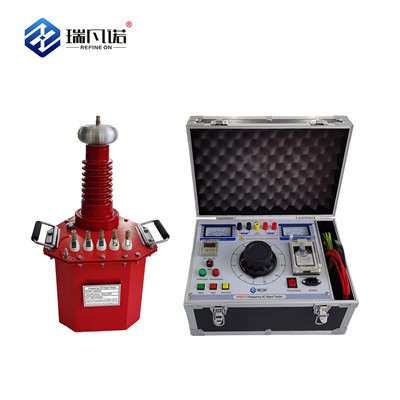
If you’re tired of hi-pot tests missing hidden defects, or unplanned cable outages costing your business or utility thousands of dollars, it’s worth taking a closer look at how a PD tester can work for your cable testing program. We offer customized training for maintenance teams, on-site testing consultations, and equipment that’s calibrated to meet all the latest industry standards. Whether you’re testing new cable installations for commissioning, or monitoring in-service cables for predictive maintenance, a PD tester could be the missing piece of your testing strategy. Reach out to our team to discuss your cable testing needs and find the right solution for you.
Transformer Oil Tester References
IEEE Standard 400.2, IEEE Guide for Field Testing of Shielded Power Cable Systems Rated 5 kV and Above, 2019.
IEC 60270, High-Voltage Test Techniques – Partial Discharge Measurements, 2015.
CIGRE Technical Brochure 679, Partial Discharge Testing of Power Cables, 2017.
Refine On (Hebei) Electric Power Technology Co., Ltd.
Refine On (Hebei) Electric Power Technology Co., Ltd. is one of the most reliable partial discharge tester manufacturers and suppliers in China, also supports customized service. Please feel free to wholesale advanced partial discharge tester at competitive price from our factory. Contact us for quotation.
Address: Building 13, Liandong U Valley, No.64, Jing SAN South Street, Economic Development Zone, Mancheng District, Baoding City, China
E-mail: victor@transformer-test.com
WebSite: https://www.transformer-test.com/
