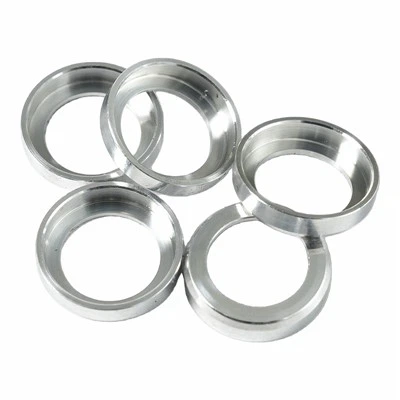
Hey there! As a supplier of custom turned parts, I’ve seen firsthand how crucial dimensional stability is in this industry. You know, when clients come to us, they’re not just looking for parts; they’re looking for parts that fit perfectly, every single time. And that’s where achieving good dimensional stability comes in. So, let’s dive into how we can make that happen. Custom Turned Parts
Understanding Dimensional Stability
First off, what exactly is dimensional stability? Well, it’s the ability of a part to maintain its shape, size, and form under different conditions, like changes in temperature, humidity, or mechanical stress. Think about it – if you’re making a part for an engine, and it expands or contracts unexpectedly due to heat, it can cause all sorts of problems. That’s why we need to make sure our custom turned parts are as dimensionally stable as possible.
Material Selection
One of the most important factors in achieving good dimensional stability is the material we choose. Different materials have different properties, and some are better suited for dimensional stability than others. For example, metals like steel and aluminum are popular choices because they have relatively low coefficients of thermal expansion. This means they don’t expand or contract as much when the temperature changes compared to other materials.
But it’s not just about the type of material; it’s also about the quality. We always source our materials from reliable suppliers and make sure they meet our strict quality standards. That way, we can be confident that the parts we produce will have consistent dimensions.
Another thing to consider is the material’s hardness. Harder materials tend to be more dimensionally stable because they’re less likely to deform under stress. However, harder materials can also be more difficult to machine, so we need to find the right balance.
Machining Process
The machining process is another critical factor in achieving good dimensional stability. When we’re turning parts on a lathe, we need to pay close attention to a few key things.
Precision Tooling
First of all, we use high – quality precision tooling. The tool we use to cut the material needs to be sharp and accurate. Dull tools can cause the material to be deformed during the cutting process, leading to inconsistencies in dimensions. We regularly maintain and replace our tools to ensure they’re in top condition.
Cutting Parameters
We also carefully control the cutting parameters, such as cutting speed, feed rate, and depth of cut. These parameters can have a big impact on the dimensional accuracy of the part. For example, if the cutting speed is too high, it can generate a lot of heat, which can cause the material to expand and distort. On the other hand, if the feed rate is too low, it can increase the machining time and may not be cost – effective. So, we do a lot of testing to find the optimal cutting parameters for each material and part design.
Fixturing
Proper fixturing is essential. The part needs to be held securely in place during the machining process to prevent any movement or vibration. Any unwanted movement can result in inaccurate dimensions. We use custom – designed fixtures that are tailored to each specific part to ensure a perfect fit and stable clamping.
Heat Treatment
Heat treatment is often used to improve the dimensional stability of custom turned parts. By subjecting the part to specific heating and cooling cycles, we can relieve internal stresses that may have been introduced during the machining process. These internal stresses can cause the part to warp or deform over time, so it’s important to get rid of them.
There are different types of heat treatment processes, such as annealing, quenching, and tempering. Each process has its own advantages and is used depending on the material and the specific requirements of the part. For example, annealing is often used to soften the material and relieve internal stresses, while quenching and tempering can increase the hardness and strength of the part.
Quality Control
We can’t talk about dimensional stability without mentioning quality control. It’s like the backbone of our entire operation. We have a comprehensive quality control system in place to ensure that every part we produce meets the required dimensional specifications.
Inspection Equipment
We use state – of the – art inspection equipment, such as coordinate measuring machines (CMMs). These machines can measure the dimensions of a part with extremely high accuracy, checking for any deviations from the design specifications. We also use optical measuring systems and micrometers for more manual inspections.
Sampling and Testing
We regularly sample parts from each production batch and subject them to rigorous testing. We check not only the dimensions but also other properties like surface finish and hardness. If we find any issues, we immediately investigate the root cause and take corrective actions to prevent similar problems from occurring in future production.
Environmental Factors
The environment in which the parts are manufactured and used also plays a role in dimensional stability. For example, temperature and humidity can have a significant impact on the dimensions of the parts.
In our manufacturing facility, we try to maintain a stable environment as much as possible. We use climate – control systems to keep the temperature and humidity within a narrow range. This helps to ensure that the machining process is consistent and that the parts are not affected by environmental changes during production.
When it comes to the end – use environment, we work closely with our clients to understand the conditions in which the parts will be used. If the parts are going to be exposed to extreme temperatures or high humidity, we can recommend appropriate materials and treatment processes to enhance their dimensional stability.
Working with Clients
At the end of the day, achieving good dimensional stability is a collaborative effort between us and our clients. We encourage our clients to be involved in the design process from the very beginning. By understanding their specific requirements and the application of the parts, we can offer valuable advice on material selection, machining processes, and heat treatment.
We also provide detailed documentation and technical support to our clients. This includes things like inspection reports, material certificates, and machining specifications. By being transparent and providing all the necessary information, we build trust with our clients and ensure that they have confidence in the quality of our custom turned parts.
Conclusion
So, there you have it – a rundown of how we achieve good dimensional stability in custom turned parts. From careful material selection and precise machining processes to thorough quality control and consideration of environmental factors, every step in the process is important.
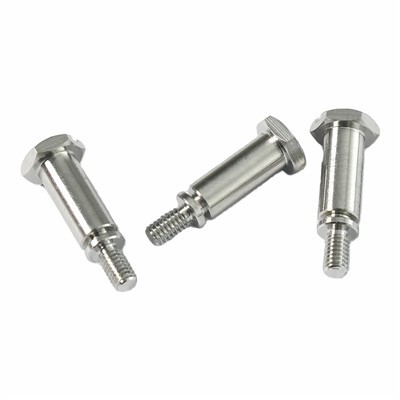
CNC Turning If you’re looking for a reliable supplier of custom turned parts with excellent dimensional stability, we’d love to hear from you. We have the experience, the expertise, and the commitment to quality to meet your needs. Don’t hesitate to reach out and start a conversation with us about your next project. We’re here to help you get the best – quality parts at a competitive price.
References
- "Machining Handbook" by Industrial Press Inc.
- "Materials Science and Engineering: An Introduction" by William D. Callister Jr. and David G. Rethwisch
- Industry research papers on dimensional stability in machining processes
Huizhou Quanyi Precision Hardware Products Co., Ltd.
Address: Building A10, 7th Floor, Zhongchuangyingke 5G Industrial Park, Zhonghan Industrial Park, Tonghu Town, Huizhou City
E-mail: info@qycncturning.com
WebSite: https://www.qycncturning.com/
