What is a flexible trailer cable? If you’ve ever stood in a parts lot at a campground or a truck stop, staring at a dusty old cable connecting your trailer to your tow vehicle, you’ve probably wondered why it’s not just a regular electrical wire. I get it—when I first started in the trailer cable game, I thought “cable is cable, right?” Turns out, I was dead wrong. Flexible trailer cable isn’t just some random wire you grab from a hardware store shelf; it’s a specialized part that keeps people safe, their trailers working, and their stuff (and sometimes their lives) moving. Let’s break this down like I’d explain it to a buddy who’s got a beat-up utility trailer he’s trying to fix for his weekend haul. Trailer Cable

First off, let’s talk about what makes it flexible, because that’s the whole point. Most regular electrical wire is stiff, right? It’s made of a single solid copper core covered in plastic. Try bending that too many times, and it’ll snap. Trailer cables, though, are built with strands—lots and lots of tiny copper strands twisted together, not a solid piece. I’m talking like, for a standard 10-gauge trailer cable, you might have 60 or more individual copper wires twisted into one flexible bundle. Think of it like rope: a single thick strand of rope is hard to bend and breaks easy, but twist a bunch of thin fibers together, and you’ve got something that moves with you every time. That flexibility isn’t a gimmick, either. When you’re towing, your tow vehicle bounces up and down, turns, goes over rough roads, and your trailer is moving slightly behind it, tugging and pulling at that cable. If it was stiff, it’d crack, fray, and stop working within a few trips. I’ve seen old trailers where the cable was so stiff from age or wrong wire that the taillights cut out every time they hit a pothole—total nightmare when you’re driving down the highway at dusk.
But flexibility isn’t the only thing that defines a good flexible trailer cable. It’s also designed specifically for the brutal conditions trailers face. These cables are outdoors 24/7, right? Sun beating down on them, freezing rain, snow, mud, sometimes being dragged through dirt if your trailer’s a little off-center, even splashed with salt water if you’re hauling to the coast or driving in winter where roads are salted. So the outer jacket isn’t just basic plastic—it’s usually a special thermoplastic, like PVC that’s been modified to be oil-resistant, UV-stabilized, and cold-flexible. Regular PVC gets brittle in cold weather and melts in the sun, but trailer cable’s jacket is built to last. I remember a customer a few years back who tried to use a random extension cord for his boat trailer. After one summer of pulling his boat to the lake, the outer jacket was cracked, and the copper was peeking out—definitely a fire hazard, not to mention illegal if your trailer lights aren’t working. Flexible trailer cable’s jacket is made to handle that kind of abuse, no extension cord hack job allowed.
Now, what does it actually do? Let’s get practical here, because this isn’t rocket science but it is critical. Flexible trailer cables are the nerve system between your tow vehicle and trailer. They carry power to the taillights, turn signals, brake lights, and even things like trailer brakes, electric jacks, or maybe a fridge if you’ve got a camper trailer. When you hit the brake in your pickup, that signal runs through the flexible trailer cable to the trailer’s brake lights and its own brakes, so everyone behind you knows you’re stopping. No cable, no trailer lights—big problem, especially at night. And because it’s flexible, it can move with the sway and movement between the two vehicles without breaking that connection. I always tell new clients: if your cable is stiff when your trailer is hitched up, it’s going to fail. Swap it out before you’re stuck on the side of the road.
Wait, there’s also different types of flexible trailer cable, right? Not all are the same. There’s 4-way, which is the basic one for small utility trailers: it has wires for running lights, left turn, right turn, and brakes/ground. Then there’s 5-way, which adds a separate wire for trailer brakes, 6-way for things like auxiliary power, and 7-way (that’s the big trucker-style plug you see on semi trailers) which has even more wires for things like reverse lights, electric trailer brakes, and 12-volt power for accessories. The flexible part is consistent across all of them, but the number of strands, the gauge (thickness) of the copper, and the jacket specs change based on what you’re hauling. For example, a small lawn trailer only needs a thin 16-gauge 4-way cable, but a heavy equipment trailer with electric brakes needs a thicker 10-gauge 7-way cable to handle the power load—you can’t skimp there, because thin wire for heavy use will overheat and melt.
Let me also clear up a common misconception: people think “flexible” means it’s weak. Nah, the opposite is true. The way those copper strands are twisted and the outer jacket is made makes it more durable than solid wire. Solid wire might seem stronger at first, but it can’t handle the constant movement of towing. I’ve tested this myself—we do pull-testing in our warehouse, tugging cables until they break. A solid wire snaps at like 5 pounds, but a flexible trailer cable with 60 strands doesn’t break until you’re pulling 50+ pounds, and it still works afterward, too. That’s the tradeoff: flexibility doesn’t equal weakness here, it’s what makes it reliable.
So why does this matter to you, the trailer owner or someone just looking to keep your setup safe? Let’s be real—most people don’t think about their trailer cable until it stops working. But changing a flexible trailer cable is one of the cheapest, easiest maintenance jobs you can do, and it can save you from so much headache. A friend of mine was driving cross-country with his camper last year, and halfway through the trip, his trailer’s turn signals died. Turns out his cable had frayed from being rubbed against the trailer frame for months. He had to pay $150 to tow to a mechanic, instead of spending $10 on a flexible trailer cable and 10 minutes of his time to swap it. That’s the kind of mistake that’s avoidable.
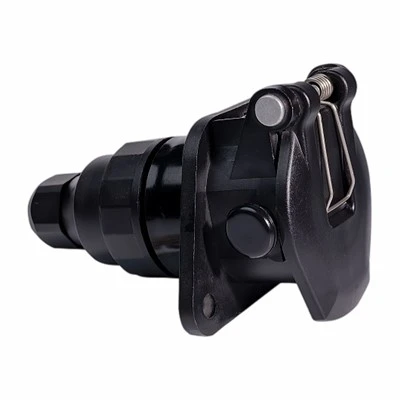
At the end of the day, flexible trailer cable is just a specialized part built for a specific job: connecting two moving vehicles safely, in all kinds of weather, without failing. It’s not fancy, but it’s essential. If you’re in the market for a new cable, don’t grab whatever’s cheap at the auto parts store. Make sure it’s actually a flexible trailer cable—check for that multi-strand copper core, the heavy-duty outer jacket, and the right gauge and plug for your trailer. If you have questions, hit me up. We’ve been supplying reliable flexible trailer cable for years, and we can help you pick the right one for your setup, no confusion, no overcharging. Just send a note and we can chat details.
Extension Cord References:
- National Electrical Manufacturers Association (NEMA). Standard for Trailer Cable, Type TC, 2021.
- Automotive Industry Action Group (AIAG). Trailer Electrical Connector and Cable Specifications, 2022.
- Underwriters Laboratories (UL). Standard for Safety for Flexible Cords and Cables, UL 62, 2023.
Yuyao Mideal Electric Co., Ltd.
Yuyao Mideal Electric Co., Ltd. is one of the most professional trailer cable manufacturers and suppliers in China, also supports customized service. With abundant experience, we warmly welcome you to wholesale cheap trailer cable in stock here from our factory. For price consultation, contact us.
Address: No.28, Lujiafan Road, Langxia Street, Yuyao City, Zhejiang Province, China
E-mail: manager@nbmideal.com
WebSite: https://www.midealcord.com/
