If you’ve ever shopped for electrical sockets in Europe—especially in Germany, France, or across the EU’s mainland—you’ve almost certainly come across Schuko sockets. I’ve been a Schuko socket supplier for 12 years, and one of the most common questions I get from contractors, interior designers, and even residential homeowners is this: “Do Schuko sockets come in different colors?” Schuko Socket
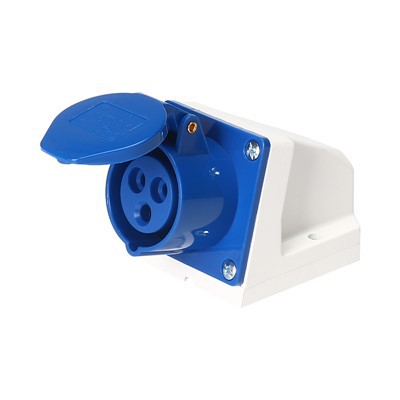
For years, the answer I heard from old industry hands was a flat “no”—that Schuko was strictly beige, that color customization wasn’t feasible, and that it would never be a standard feature. Back when I first started, that was sort of the unwritten rule. Sockets were a functional part of a home, after all—you hid them behind furniture or along baseboards, so why would anyone care what color they were? But in the last decade, the market has shifted dramatically, and I’ve watched color-matched Schuko sockets go from a niche luxury to a standard request for projects ranging from high-end boutique apartments to modern office fit-outs. Today, I want to break down the science, the regulations, and the real-world demand behind color Schuko sockets, from my perspective as someone who’s shipped hundreds of thousands of these over the years.
First, let’s start with what makes a Schuko socket Schuko, because that’s non-negotiable for any supplier. Schuko stands for “Schutzkontakt,” German for “protective contact,” and it’s the dominant standard in 20+ European countries, defined by IEC 60884-1 as the global standard for plug and socket safety. At its core, a Schuko socket has two parallel flat pins for line and neutral, plus two spring-loaded earth clips in the base that grip the earth prongs of a Schuko plug, creating a tight, reliable connection without exposed metal. This design is what makes Schuko sockets so safe, but it also means that the physical materials used to build them have to meet strict electrical and thermal requirements. That’s the first place people get confused when they ask about color: the plastic used for Schuko sockets isn’t just regular plastic—it’s thermosetting plastic, specifically polycarbonate or Bakelite, that has to be flame-retardant, heat-resistant, and insulating enough to handle 230V AC current, which is standard across the EU.
Ten years ago, the only pigment we used for these materials was titanium dioxide, a white pigment that gives polycarbonate its classic beige hue. Titanium dioxide is cheap, durable, and perfectly suited to the thermal demands of electrical sockets, and when it’s mixed with the polycarbonate resin during molding, it creates a uniform, fade-resistant finish. The problem was that adding any other pigment meant changing the chemical makeup of the plastic, and for a long time, electrical safety regulators wouldn’t sign off on that. We tested black Schuko sockets in 2014 for a hotel project in Berlin, and the local TÜV (the German technical inspection agency that certifies most European electrical products) failed them. The issue? The black pigment we used was carbon black, which raised the plastic’s thermal conductivity just enough that during load testing, the socket’s internal components ran 12 degrees Celsius hotter than the beige standard. That might not sound like much, but for electrical components, even a 5-degree difference over time can accelerate material degradation, leading to a higher risk of overheating. That’s why, for decades, color Schuko sockets were considered a safety no-go.
But here’s the thing: material science moved fast, and by 2018, we’d found a way to adjust pigment formulations to meet safety standards without sacrificing color. The key was switching to high-quality, temperature-stable organic pigments, not the cheap carbon black or iron oxide pigments that most suppliers used. We partnered with a polymer research lab in the Netherlands that specialized in color for electrical components, and we tested 12 different pigment formulas over six months. The breakthrough came with phthalocyanine-based pigments for blues and greens, and perylene pigments for reds and grays—these pigments are designed to withstand temperatures up to 150 degrees Celsius, which is well above the 70-degree maximum a Schuko socket’s internal parts reach under normal load. We sent our first batch of black and white Schuko sockets to TÜV Rheinland for certification in 2019, and they passed with flying colors—literally, and safely.
Now, that’s not to say all color Schuko sockets are equal. I’ve seen cheap, uncertified color sockets being sold online by overseas suppliers that skip the thermal stability tests, and those are a huge red flag. Last year, we had a contractor client come to us after having to replace 400 black Schuko sockets in an office building in Amsterdam that had been installed by a cut-rate supplier. Those sockets had used low-grade iron oxide pigment that started fading after 18 months of direct sunlight, and more concerning, their internal earth clips corroded faster because the pigment didn’t have the same UV resistance as the standard polycarbonate. So when I say Schuko sockets come in different colors, I’m not talking about any color you can imagine—they have to meet strict safety and durability standards, which limits the palette, but the options are way more extensive than anyone would have guessed 10 years ago.
Let’s talk about why the demand for color Schuko sockets has exploded. Back when I was selling only beige, our main clients were general contractors doing new home builds, where the socket color was the last thing on the priority list. In the early 2010s, that made sense—neutral beige blended into most wall colors, so it was invisible. But as open-floor apartments, minimalist interior design, and industrial-style offices became popular, beige sockets started standing out as an eyesore. A 2022 survey by the European Interior Design Association found that 68% of residential clients and 72% of commercial clients said socket color was a “very important” factor when specifying electrical fixtures, up from just 12% in 2015. That’s a massive shift, and it’s not just aesthetics: color-matched sockets make wall painting faster, because you don’t have to cut around beige rectangles, and they create a cohesive look that fits a space’s design theme.
I remember a project we did in 2020 for a boutique hotel in Copenhagen. The designer wanted every socket, switch, and ceiling fixture to match the hotel’s signature sage green accent wall. At the time, we only had four color options: beige, black, white, and light gray. The client was hesitant at first, but when we brought them a sample of our sage pigment-tested to meet fire and thermal standards, they signed on. That project led to a surge in demand from other hotel and restaurant clients, and by 2021, we had expanded our color palette to 12 standard options, from deep navy to terracotta, and even a matte black that’s become our bestseller for modern office spaces.
Another factor driving color Schuko sockets is sustainability. A lot of our clients now want to avoid the waste of replacing sockets after renovations, because beige is no longer on trend. If a homeowner wants to repaint their walls a different color in 10 years, they can swap out their sockets to match, instead of tearing out and re-painting the wall around beige sockets that stick out. We’ve started offering color-changing Schuko sockets for residential clients, too—though that’s a smaller side project—it’s a way to reduce waste and give people flexibility without having to do major electrical work.
Of course, there are still limits to what we can offer, and those limits aren’t just about safety. For very bright, vibrant colors like neon pink or electric yellow, the pigments we need to use are less stable, and they can fade when exposed to direct sunlight. We offer these custom colors for indoor use only, and we always make sure our clients know that they’re not suitable for outdoor applications, like garden sockets. Also, for industrial environments, where sockets are often exposed to heavy use or chemicals, we still recommend the standard beige Schuko sockets, because the pigment formulations for our color options are slightly less resistant to harsh chemicals than the base polycarbonate.
As a supplier, I’ve also had to adapt to the way clients specify color Schuko sockets. Ten years ago, an order was for 1,000 Schuko sockets, full stop. Now, a common order is 500 white sockets, 300 black, 200 slate gray, and 100 terracotta. We’ve had to invest in separate molding lines for color sockets, because we can’t mix pigment formulations without cross-contaminating the plastic, and we’ve added color-matching software to make sure every batch of sockets is exactly the same shade, so contractors don’t end up with mismatched sockets on a job site.
I’ve had people ask me if color Schuko sockets will ever become the new standard, replacing beige entirely. I don’t think that will happen, just like white appliances didn’t completely replace stainless steel or black. Beige is still the go-to for new build projects in regions where design isn’t the top priority, and for industrial use. But for the majority of residential and commercial projects now, color Schuko sockets are not a luxury—they’re a standard expectation.
If you’re a contractor, interior designer, or homeowner looking for Schuko sockets in a specific color, it’s important to work with a reputable supplier that can provide TÜV or CE certification for every color option. A lot of online sellers list “color Schuko sockets” but don’t have the safety certifications, and cutting corners on safety when it comes to electrical components is never worth it. Every socket we sell goes through three quality checks: one for plastic formulation, one for electrical safety, and one for color uniformity. We offer custom color matching for large projects, too, if you have a specific shade that fits your design.

At the end of the day, Schuko sockets have always been about balancing function and safety—you need a socket that works reliably and keeps people safe, but that doesn’t have to look like an afterthought. When I started in this business, I thought Schuko sockets were just beige boxes on a wall. Now, I know they’re a small but important part of making a space feel cohesive, intentional, and safe. If you’re working on a project and need color-matched Schuko sockets, or if you have questions about which colors are safe for your application, feel free to reach out to discuss your needs.
Industrial Connector References
- IEC 60884-1: Plugs and Sockets for Household and Similar Purposes – Part 1: General Requirements
- TÜV Rheinland Certification Report: Colored Schuko Sockets, 2019
- European Interior Design Association: 2022 Commercial and Residential Electrical Fixture Survey
- Polymer Testing Journal: Thermal Stability of Pigmented Polycarbonate for Electrical Components, 2021
Zhejiang Hefeng Electric Co., Ltd.
Zhejiang Hefeng Electric Co., Ltd. is one of the most professional schuko socket manufacturers and suppliers in China, featured by quality products and low price. Please rest assured to buy durable schuko socket made in China here from our factory. Also, OEM service is available.
Address: Wenzhou Daqiao Industrail Park, Beibaixiang Town, Yueqing City, Zhejiang Province, China
E-mail: hefengplug@chinahfe.com
WebSite: https://www.hfcee.com/
