If you’ve ever walked past a recently installed fiberglass pool, driven a car with a glossy, chip-resistant body panel, or even admired a durable, weatherproof water tank, chances are you’ve encountered polyester resin at work. For nearly 20 years, my team and I have supplied polyester resins to manufacturers across the construction, automotive, marine, and industrial goods sectors, and one question we get asked more than any other is: “What’s the actual difference between saturated and unsaturated polyester resins?” It’s a fair question—on the surface, both sound like the same basic product line, and their chemical names don’t exactly roll off the tongue. But after fielding this question from small-batch pool builders and Fortune 500 automotive part designers alike, I can tell you that choosing the right type makes all the difference between a product that lasts 5 years and one that lasts 50. Let’s break this down, plain and simple, from the perspective of someone who ships thousands of gallons of these resins every month. Polyester Resins
First, let’s start with the shared foundation: both saturated and unsaturated polyester resins are part of a family of polymers made by reacting a diacid (or acid anhydride) with a diol, a chemical process that creates long molecular chains linked by ester bonds. That’s the basic chemistry, but where these two types diverge is in the type of diacid we use to build those chains, and that small difference ripples out to every part of their performance, application, and cost.
Unsaturated polyester resins are the workhorses of the industry, the ones most people are familiar with. We use a specific type of diacid here: one that has a double bond (or multiple double bonds) within its molecular structure, which is why we call it “unsaturated.” Think of those double bonds as tiny, reactive “sticky points” along the length of the polymer chain. When you add a catalyst and an initiator to unsaturated resin, those double bonds break and link up to adjacent chains, creating a rigid, crosslinked network. That’s the curing process, the same chemical reaction that turns a pourable liquid into a solid, durable part.
What makes unsaturated resin so popular is its versatility. It’s cheap to manufacture, cures quickly at room temperature (no need for extreme heat or pressure), and adheres well to a huge range of materials: fiberglass, wood, concrete, even metal. That’s why you’ll find it in everything from boat hulls and automotive body fillers to countertop resins and moldings. When a customer calls us needing a resin that can be mixed with fiberglass mat to build a pool shell, or one that can be applied to a car door panel to hide dents, 9 times out of 10 we recommend unsaturated. It’s reliable, it’s easy to work with, and it delivers a strong, rigid end product for most general-purpose applications.
But here’s the catch with unsaturated polyester resins: those double bonds that make them so easy to cure also make them susceptible to damage over time, especially when exposed to harsh environments. UV light from the sun, constant moisture, chemicals like salt or acids—all of these can attack the double bonds in the crosslinked network, breaking it down and causing the resin to fade, crack, or become brittle. For example, a fiberglass boat hull made with unsaturated resin might look great for the first few years, but after 5 or 6 years of being left in the sun and saltwater, it can develop surface blisters, and the color might turn yellow. In industrial settings, if you’re storing chemicals or using a resin in a facility with high levels of corrosive fumes, unsaturated resin will break down much faster than you’d want.
Now let’s turn to saturated polyester resins, the less well-known cousin that’s designed for those heavy-duty, long-lifespan applications. The key difference here is the diacid we use: no double bonds. The molecular chains are fully “saturated” with hydrogen atoms, so there are no reactive double bonds along the chain. That might sound like a small change, but it completely alters how the resin behaves. Without those double bonds, saturated resin can’t cure the same way as unsaturated. Instead of crosslinking through double bonds, we add a separate crosslinking agent—usually something like isocyanate or a melamine-formaldehyde resin—that reacts with hydroxyl groups along the saturated polyester chains to form the final solid structure.
The tradeoff here is that saturated polyester resins don’t cure as quickly as unsaturated ones—they often need heat, sometimes up to 150–200°C, to fully crosslink, and they’re a bit more expensive to manufacture. But the payoff is enormous when it comes to durability. No double bonds mean no weak points for UV light, moisture, or chemicals to attack. Saturated resins have exceptional resistance to weathering, corrosion, and abrasion. They don’t fade, crack, or become brittle even after decades of outdoor exposure. That’s why they’re the go-to for applications where long-term performance is non-negotiable. For example, we recently supplied saturated resin to a manufacturer of highway guardrails that needed a coating that would last 20 years without repainting, or a solar panel frame producer that needed a resin that could withstand constant sun and temperature fluctuations. We also use saturated resin for industrial storage tanks that hold corrosive chemicals, because it won’t break down when exposed to those harsh substances.
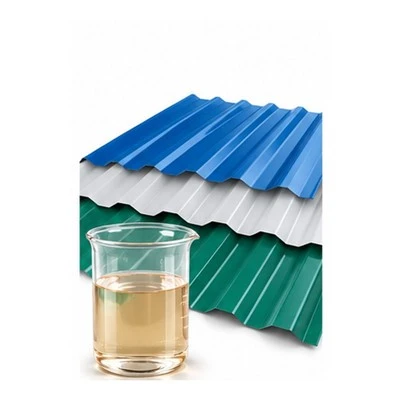
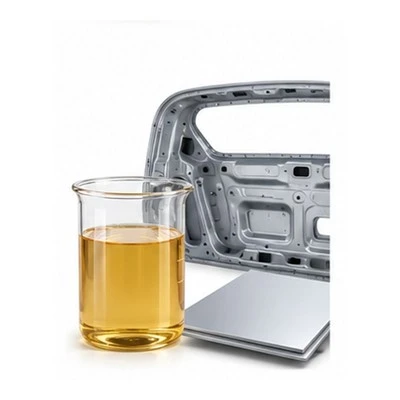
Another big difference between the two comes down to flexibility and finish. Unsaturated resins tend to be more rigid and brittle once cured, which makes them great for structural parts like boat hulls, but not ideal for applications that need to flex or stretch. Saturated resins, on the other hand, can be formulated to be much more flexible, making them perfect for coatings that need to bend with a substrate—like metal roofing panels or flexible packaging materials. The finish also differs: saturated resins typically produce a smoother, more glossy finish that’s far more resistant to scratches and stains, which is why you’ll see them in high-end automotive coatings, luxury countertops, and architectural finishes.
Let me also talk about cost, because that’s a huge factor for most of our customers. Unsaturated polyester resins are significantly cheaper than saturated ones, mostly because the raw materials and curing process are simpler. For a small business building a handful of custom fiberglass kayaks, or a homeowner doing a DIY garage floor coating, unsaturated resin is the clear choice—it gets the job done at a price that makes sense. But for a large construction company building a bridge that needs to last 75 years, or a food processing plant that needs storage tanks that won’t leach chemicals into their products, the extra cost of saturated resin is well worth it for the longevity and performance.
I’ve seen too many customers make the mistake of choosing the wrong resin for their needs, and it always ends badly. A few years ago, we had a customer who owned a small pool installation business and insisted on using cheaper unsaturated resin for all their pools. Within three years, half their clients were calling with cracked or blistering pool shells because the resin couldn’t handle the constant chlorine and UV exposure. They switched to our line of corrosion-resistant saturated polyester resins, and haven’t had a single warranty claim from a pool in over five years. That’s the kind of outcome that makes our job worth it—helping customers pick the right resin, not just the cheapest one.
Another thing to note is that both resins come in different formulations for specific applications. Unsaturated resins can be modified to be more flexible or more heat-resistant, and saturated resins can be adjusted to cure at lower temperatures if a customer doesn’t have access to high heat. But the core difference remains the presence (or absence) of double bonds, which dictates every other property of the resin.
At the end of the day, when you’re choosing between saturated and unsaturated polyester resins, you need to ask yourself a few key questions: What environment will the final product be in? How long does it need to last? What performance properties matter most—rigidity, flexibility, chemical resistance, UV resistance? And what’s your budget? If you need a quick-curing, low-cost resin for a structural part that won’t see harsh conditions, unsaturated is your answer. If you need a resin that will stand up to decades of sun, chemicals, or heavy use, saturated is the right choice.
For nearly two decades, our team has worked closely with customers to understand their unique needs, and we keep a wide range of both saturated and unsaturated polyester resins in stock to meet every demand. Whether you’re a small manufacturer just starting out or a large industrial company needing bulk shipments, we can help you select the perfect resin for your project. If you have questions about which resin is right for your application, or if you’re ready to place an order and discuss your specific needs, reach out to our team to connect and discuss your polyester resin requirements.
Polyester Resins References
- Phillips, L. (2018). Polyester Resins: Chemistry, Properties, and Applications. CRC Press.
- Ash, M., & Ash, I. (2020). Handbook of Polymer Coatings and Resins. Synapse Information Resources.
- Modern Plastics Encyclopedia. (2022). McGraw-Hill.
- Salamone, J. C. (Ed.). (1996). Polymeric Materials Encyclopedia. CRC Press.
Ping Yuan Wen Te Industry Co., Ltd.
As one of the most professional polyester resins manufacturers and suppliers in China, we also support customized service. Please feel free to wholesale high quality polyester resins in stock here from our factory. Welcome to contact us for quotation.
Address: Longmen Economic Development Zone, Pingyuan County, Dezhou City, Shandong Province
E-mail: pywente@outlook.com
WebSite: https://www.wenteglobal.com/
