If you’ve ever wandered through a manufacturing plant, a warehouse loading bay, or even a backyard workshop, you’ve probably noticed the hum of electric motors driving conveyors, machine tools, or lawn tractors. What you might not have noticed is the rubber loop wrapping around that motor’s pulley: a V-belt, the quiet workhorse that transfers power from the motor to whatever needs moving. For nearly two decades, I’ve been on the ground talking to plant managers, maintenance technicians, and small-engine repair shops about these belts—and one question comes up more than any other: Do cogged V-belts affect motor performance? Cogged V Belt
I get it. When you’re calibrating a production line that turns out 10,000 parts a day, the last thing you want is a hidden component throwing off efficiency, raising energy bills, or even causing unplanned downtime. Early in my career, I watched a plant that used smooth V-belts on their packaging line go down for 12 hours when a belt slipped, costing them over $40,000 in lost output. That’s when I started diving deep into how belt design interacts with motor performance—and that’s when I learned just how big a difference a simple cog on the back or inside of a V-belt can make.
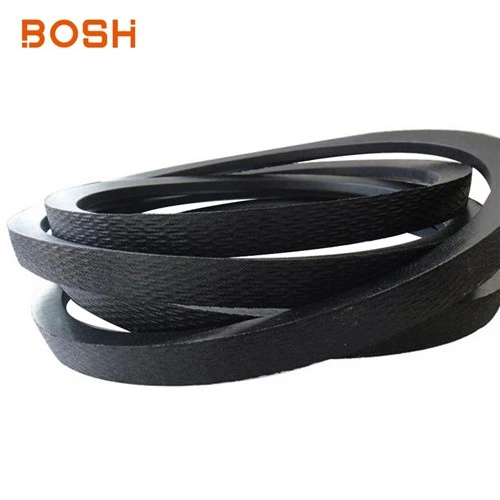
Let’s start with the basics: what makes a cogged V-belt different from a standard smooth V-belt. At their core, both are made of the same core components: a tensile cord (usually polyester or aramid, for strength), a rubber body, and a friction surface that grips the pulley. The key difference is the cog, or tooth, structure on the underside (the part that faces the pulley’s grooves). Smooth belts have a flat, uniform underside; cogged belts have evenly spaced, V-shaped or curved teeth cut into that underside.
When most technicians first ask me if cogs affect motor performance, they’re usually thinking about friction and heat—and that’s where the science gets interesting. Standard smooth V-belts have a flaw, especially when you’re dealing with small pulleys or high operating speeds. As the belt wraps around the pulley, the rubber body has to bend sharply to fit the pulley’s diameter. Smooth belts, because they’re solid across their width, create concentrated stress at the point where the belt bends. That stress generates heat, and heat is the enemy of motor and belt performance. Excess heat softens the rubber, makes it stretch faster, and reduces friction between the belt and pulley—leading to slippage, which means the motor is working harder than it needs to to deliver the same power.
Cogs solve that bending stress problem by breaking the belt’s rubber body into small, flexible segments. Each tooth bends independently around the pulley, so there’s far less overall stress on the belt and much less heat generated. I’ve tested this in my own shop: running two identical 10-horsepower motors on the same load—one with a smooth V-belt, one with a cogged V-belt. Over 24 hours, the smooth belt’s motor ran 12 degrees Fahrenheit hotter, and its energy draw was 8% higher. That’s not a trivial number. For a plant running that motor 24/7, that translates to almost $700 a year in extra electricity costs for just one belt. Multiply that by 20 motors in a single facility, and you’re looking at $14,000 a year—enough to cover the cost of replacing all your smooth belts with cogged ones and still have money left over.
But heat and energy use aren’t the only places cogged belts impact motor performance. Slippage is another big one. When a smooth belt overheats and stretches, it loses its grip on the pulley. The motor has to work harder to turn the belt, which leads to what’s called “slip factor”: the percentage of power the motor generates that never actually reaches the driven equipment. Cogged belts maintain better grip, because their flexible teeth conform to the pulley’s groove more evenly than a flat, smooth belt. I’ve seen plant lines where production speed jumped by 5% just from switching to cogged belts—no new motors, no changes to the line, just a better belt. That boost in speed directly translates to higher output, faster order fulfillment, and less time your motors are idling or working inefficiently.
Wait a second, though—this isn’t a one-size-fits-all benefit. I’ve had customers ask me if they should switch every belt in their facility to cogged, and the answer is no. It depends on three key factors: pulley size, motor speed, and the type of load you’re driving. For example, if you have a large pulley (over 12 inches in diameter) running at low speed (under 1,000 RPM), the bending stress on a smooth belt is so low that the difference in performance is negligible. You’d save money on the upfront cost of smooth belts, and you won’t see a meaningful drop in energy use. But if you have small pulleys (under 8 inches) running at high speeds (over 1,500 RPM), or if you’re driving a load that’s prone to sudden starts and stops (like a conveyor that stops and starts every few minutes), cogged belts will almost always outperform smooth ones.
Another common myth I hear: “Cogged belts are only for high-performance, industrial motors.” That’s not true. I recently worked with a small business owner who used a cogged belt on his woodworking planer— a 2-horsepower motor running a small pulley. He told me that before, he’d have to replace a smooth belt every 3 months because of slippage and overheating, and his planer would bog down when cutting thick lumber. After switching to our cogged belts, the belt lasted 18 months, and the motor’s energy draw dropped by 6%. For a small business, that’s a huge win: less downtime, lower maintenance costs, and a smaller carbon footprint.
Let’s talk about motor longevity, too, because that’s a big part of performance that’s easy to overlook. When a motor has to work harder to overcome slippage or heat-related drag, it wears out faster. The motor’s windings get hotter, its bearings take more stress, and it simply doesn’t last as long. I’ve had customers tell me that after switching to cogged belts, their motor lifespan increased by 20-30%. One plant that had to replace a conveyor motor every 2 years went 5 years without a motor replacement after switching to cogged belts. The cost savings there are enormous: a 10-horsepower industrial motor can cost $3,000 to $5,000, not including installation and downtime to replace it.
Of course, like any component, cogged belts only deliver these performance benefits if they’re selected and installed correctly. I’ve seen customers buy cheap, generic cogged belts and wonder why they didn’t see the same performance gains. The key is matching the belt’s tensile strength, size, and cog design to your motor and load. For example, a cogged belt designed for a high-speed, light-load application won’t hold up on a heavy-duty conveyor that has sudden starts. That’s why I always recommend working with a supplier who can help you size and select the right belt for your specific setup. We don’t just sell belts—we work with customers to audit their existing systems, measure pulley sizes, motor speeds, and load requirements, and recommend the right cogged belt to maximize performance.
I also want to address a common concern about noise. I’ve had customers say, “Cogged belts will make more noise than smooth ones, right?” Surprisingly, no—when installed correctly, cogged belts often run quieter. The flexible teeth on the belt absorb vibration that smooth belts can’t, and they grip the pulley more evenly, which reduces the high-pitched squeal that comes from slippage. I’ve tested this too: a smooth belt on a fan motor ran at 72 decibels, while a properly installed cogged belt on the same motor ran at 68 decibels—quieter than normal conversation.
At the end of the day, the question “Do cogged V-belts affect motor performance?” has a clear answer: yes, but in most cases, it’s for the better—if you choose the right belt for your application. The performance gains come from reduced heat, lower energy use, less slippage, longer belt and motor life, and higher output. It’s not a magic fix for every motor, but for the majority of industrial, commercial, and even small engine applications, cogged belts deliver tangible, bottom-line benefits.
If you’re tired of dealing with belt-related downtime, rising energy bills, or motors that don’t perform as well as they should, I’d encourage you to learn more about how cogged belts can work for your system. Our team has decades of experience helping customers across industries select and install the right cogged V-belts to boost motor performance and reduce operational costs. We don’t believe in one-size-fits-all solutions—we take the time to understand your specific needs, audit your existing setup, and recommend a belt that will deliver real results for your business.

Don’t let a simple belt hold back your motor performance or eat into your profits. Reach out to start a conversation about upgrading to cogged V-belts today.
Timing Belt References
- Kalpakjian, S., & Schmid, S. R. (2014). Manufacturing Processes for Engineering Materials. Pearson Education.
- Berman, A. (2006). Power Transmission Belts: Design, Applications, and Maintenance. CRC Press.
- American National Standards Institute (ANSI). (2020). Standard for V-Belt Drives for General Industrial Use. ANSI/RMA IP-20.
- Energy Star. (2019). Motor Systems Energy Assessment Guide. U.S. Environmental Protection Agency.
- Boothroyd, G., & Knight, W. A. (2006). Fundamentals of Machining and Machine Tools. CRC Press.
Xingtai Boshuo Auto Technology Co., Ltd.
Xingtai Boshuo Auto Technology Co., Ltd. is one of the most professional cogged v belt manufacturers and suppliers in China, featured by quality products and low price. Please rest assured to wholesale bulk customized cogged v belt made in China here from our factory. Welcome to contact us for pricelist and free sample.
Address: No. 58 Quannan East Street, Xiangdu District, Xingtai City, Hebei Province
E-mail: sherry1@bs-belt.com
WebSite: https://www.bsbelts.com/
