As a seasoned supplier in the sintering kiln industry, I often encounter inquiries about the production capacity of sintering kilns. It’s a critical topic for enterprises looking to invest in new equipment or upgrade their existing facilities. In this blog, I’ll delve into the factors that influence the production capacity of a sintering kiln, how to calculate it, and how to optimize it for maximum efficiency. Sintering Kiln
Understanding Sintering Kilns
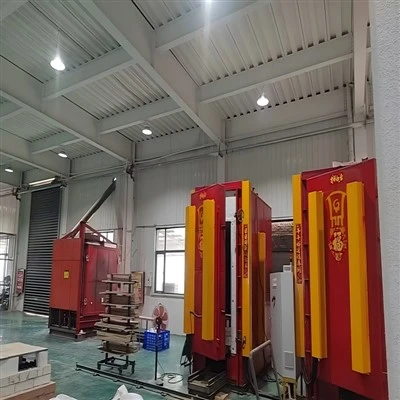
Before we discuss production capacity, it’s essential to understand what sintering kilns are and what they do. Sintering kilns are industrial furnaces used to convert minerals, ores, or powders into a solid mass through sintering. This process involves heating the material to a temperature below its melting point, causing the particles to bond together. Sintering is widely used in industries such as metallurgy, ceramics, and chemical production.
Factors Affecting Production Capacity
The production capacity of a sintering kiln is influenced by several factors, including:
Kiln Size and Dimensions
The physical size of the kiln, including its length, diameter, and volume, plays a significant role in determining its production capacity. Generally, larger kilns can handle more material per batch, resulting in higher production rates. However, the size of the kiln must be balanced with other factors such as energy consumption, maintenance requirements, and available floor space.
Heating System
The efficiency and power of the heating system are crucial for determining the production capacity of a sintering kiln. A high – performance heating system can raise the temperature of the material quickly and maintain a consistent temperature throughout the sintering process. Different heating systems, such as electric, gas, or oil – fired, have varying levels of efficiency and heat output, which can impact how much material can be sintered in a given time.
Material Characteristics
The type, composition, and particle size of the material being sintered also affect production capacity. Some materials require longer sintering times or higher temperatures to achieve the desired bonding. For example, materials with a high melting point or complex chemical composition may take more time to sinter than simpler materials. Additionally, the particle size of the material can influence the heat transfer rate during sintering. Finer particles generally heat up more quickly, allowing for faster sintering and potentially higher production capacity.
Sintering Process Parameters
The sintering process parameters, such as temperature, heating rate, holding time, and cooling rate, have a direct impact on production capacity. Optimizing these parameters can reduce the overall sintering time without sacrificing the quality of the sintered product. For instance, a shorter holding time at the sintering temperature can increase the throughput of the kiln, but it must be carefully balanced to ensure proper bonding of the material.
Automation and Control Systems
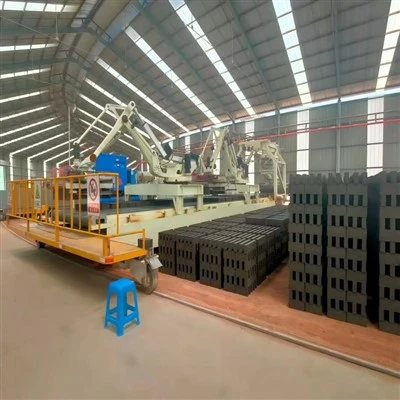
Modern sintering kilns are often equipped with advanced automation and control systems. These systems can monitor and adjust the sintering process in real – time, ensuring optimal conditions for each batch of material. Automated loading and unloading systems can also reduce the time between batches, increasing the overall production capacity.
Calculating Production Capacity
Calculating the production capacity of a sintering kiln is not a one – size – fits – all process. However, a general approach involves the following steps:
- Determine the volume of the kiln chamber. This can be calculated using the geometric formula for the shape of the kiln (e.g., for a cylindrical kiln, (V=\pi r^{2}h), where (r) is the radius and (h) is the height).
- Estimate the bulk density of the material being sintered. The bulk density is the mass of the material per unit volume in its loose state.
- Calculate the maximum mass of material that can be loaded into the kiln based on the kiln volume and the bulk density of the material.
- Determine the sintering time per batch. This includes the heating time, holding time at the sintering temperature, and cooling time.
- Divide the number of hours in a day (or the desired operating period) by the sintering time per batch to get the number of batches that can be processed in a given time.
- Multiply the mass of material per batch by the number of batches to get the daily (or periodic) production capacity.
For example, if a kiln has a volume of (10 m^{3}), the bulk density of the material is (1.5 t/m^{3}), and the sintering time per batch is 8 hours, and the kiln operates 24 hours a day:
The mass of material per batch (= 10 m^{3}\times1.5 t/m^{3}=15) tons
The number of batches per day (=24\div8 = 3) batches
The daily production capacity (=15) tons per batch (\times3) batches per day ( = 45) tons per day
Optimizing Production Capacity
To maximize the production capacity of a sintering kiln, the following strategies can be employed:
Process Optimization
Continuously review and optimize the sintering process parameters. Conduct experiments to find the shortest possible sintering time without compromising product quality. This may involve adjusting the heating rate, holding time, or cooling rate.
Regular Maintenance
Ensure that the kiln is well – maintained. A poorly maintained kiln may experience issues such as uneven heating, leaks, or mechanical failures, which can reduce production capacity. Regularly inspect the heating elements, insulation, and control systems.
Staff Training
Provide comprehensive training to the operating staff. Well – trained operators can operate the kiln more efficiently, adjust the process as needed, and troubleshoot minor issues quickly. This can lead to a more stable and productive sintering process.
Upgrading Equipment
Consider upgrading the kiln to incorporate new technologies. For example, upgrading to a more efficient heating system or adding advanced automation and control features can significantly improve production capacity.
Conclusion
Understanding the production capacity of a sintering kiln is crucial for businesses in industries that rely on sintering processes. By considering the factors that affect production capacity, calculating it accurately, and implementing strategies to optimize it, enterprises can achieve higher productivity and profitability.
Gas Fired Kiln If you’re in the market for a sintering kiln and want to discuss your specific production requirements, I’d be more than happy to have a detailed conversation with you. Our team of experts can help you select the right kiln for your operation and ensure that it meets your production capacity goals. Don’t hesitate to reach out to start our procurement – related discussion.
References
- "Industrial Ceramics: Technology and Applications" by Peter Gray.
- "Metallurgical Engineering Handbook" edited by John Smith.
- "Advanced Furnace Design and Operation" by Anna Johnson.
Henan Yaxin Kiln Co., Ltd.
Henan Yaxin Kiln Co., Ltd. is one of the most professional sintering kiln manufacturers and suppliers in China. With abundant experience, we warmly welcome you to buy high quality sintering kiln with the latest design from our factory. Good service and punctual delivery are available.
Address: Jixian Industrial Zone, Shangqiu City, Henan Province
E-mail: 1543563178@qq.com
WebSite: https://www.hnyxkiln.com/
