If you’re reading this, you’re probably either a small business owner, an e-commerce seller scaling internationally, or someone tired of paying exorbitant rates for full container loads when you only have a handful of boxes to move from China to Australia. I’m a consolidation shipping provider in this space, and I’ve spent the last eight years troubleshooting, simplifying, and refining every part of this process—especially the documentation, because that’s where 90% of delays get kicked off before your goods even leave the port. China To Australia Consolidation Shipping
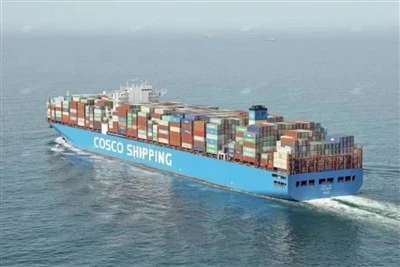
Let’s cut to the chase: consolidation shipping (or “less than container load,” LCL, as many of you might call it) works by packing multiple small shipments from different senders into a single container, splitting costs and logistics to keep things affordable. But here’s the catch: it’s not just about slapping a label on a box. The paperwork has to be exact, because Australian Customs and China’s export authorities scrutinize every entry in consolidated shipments more closely than full containers. Why? Because consolidations are a common loophole for misdeclared goods, and the last thing I want is for a shipment I’ve packed with care to get held up for three days at Sydney Port because someone (even someone else’s someone) forgot a single form.
Over the years, I’ve walked hundreds of first-time clients through this, and I’ve seen every mistake imaginable: a wrong HS code for a batch of kids’ toys, a missing value declaration for a box of office furniture, even a misspelled consignee name that almost sent a $12,000 order to the wrong Melbourne business. So today, I’m breaking down every document you need for China-to-Australia consolidation shipping, exactly how I request them, and why each one matters for your shipment to arrive on time.
Let’s start with the documents you’ll need to prepare from your end (these are the ones you control, so get them right first). The first is the Commercial Invoice. This isn’t a random sales slip you made for your own records—this is a legal document for both Chinese customs and Australian Border Force (ABF). For consolidated shipments, it has to list every single item in your package, right down to the product description, quantity, unit price, and total value. You also need to include the Harmonized System (HS) code for each item; this is a six-to-ten-digit code that classifies goods for duty and tariff purposes, and it’s non-negotiable. I’ve had clients come to me saying “I just use the general toy code” and that’s a red flag—if your toy is a plush doll vs. a toy car, their HS codes are different, and using the wrong one can trigger a customs audit. Also, make sure the total value on your invoice matches exactly what’s on your bank receipt for the sale. Undervaluing goods to avoid duties is a common error that leads to fines, and overvaluing slows down clearance too—ABF wants transparency, so be honest.
Next, the Packing List. A lot of people mix this up with the commercial invoice, but it’s totally different. The commercial invoice is about value and classification; the packing list is about physical details of your shipment. For consolidation, I need you to specify the dimensions (length, width, height) and weight of each individual box, not just a total number. This is how I calculate how much space your shipment takes up in the shared container, and how I split the volume costs fairly with other clients. I also need the net and gross weight for each box—net is the weight of the goods alone, gross is the box plus the packaging. Don’t round these numbers; if your box is 12.3kg, write 12.3kg, not “12kg.” Australian customs officers measure these to the exact gram, and if there’s a discrepancy, they’ll hold the shipment. Also, note if any of your goods are fragile, oversize, or require special handling (like electronics or liquid samples) on the packing list—this helps me flag them to the shipping line so they’re not stacked wrong or damaged in transit.
Then there’s the Export License (if applicable). Most small shipments don’t need this, but if you’re shipping items like batteries, electronics, jewelry, or certain types of machinery, you might need a specific export license from China’s General Administration of Customs. For example, if you’re shipping lithium-ion batteries for power banks, you need a UN38.3 test certificate and a battery transport declaration. I always ask clients to confirm if their goods are restricted before they even pack them, because if you show up with a box of unlabeled power banks, I can’t legally consolidate it with other shipments and we have to turn it away. I can point you to the right government portal to apply for these licenses if you need help, but the key here is to get them before you hand off your shipment to me.
Now, once your shipment is ready to be consolidated and shipped, there are the documents I handle on your behalf, but you still need to provide the details to make them accurate. The first is the Bill of Lading (B/L). This is the most important document in the entire process—it acts as a contract between me (the carrier/consolidator) and you, and it’s also proof of ownership of your goods. For China-to-Australia consolidated shipments, we usually issue a House Bill of Lading (HBL) per client, not a Master Bill of Lading under the container’s main B/L. That’s a huge perk for you because it means you don’t have to wait for the entire container to clear customs; your HBL lets you clear your own part of the shipment separately. But to get the HBL right, I need your full consignee details: the exact name of the Australian business or person receiving it, their Australian Business Number (ABN) if they’re a business, their full address, and their contact number. If the consignee is different from the buyer (for example, you’re shipping to a fulfillment center), make sure that’s clearly noted on the form. I can’t stress enough how important this is—last quarter, a client I worked with had their consignee listed as “Sarah Jones” instead of “Sarah Jones at Sydney Fulfillment Co.” and their shipment was delayed five days because ABF couldn’t match the name to a registered business or address.
Next, the Customs Declaration Form for Australian Entry. This is something I file with ABF on your behalf, but I need accurate information from you to complete it. You’ll need to provide the value of your goods, the country of origin (where the products were made—this is critical because Australian duties vary by origin), and whether the goods are for commercial use (which most of my clients are, selling to customers) or personal use. If you’re shipping commercial goods, you’ll need to provide the ABN of the buyer or consignee; if it’s personal, you’ll need their tax file number (TFN) (but note that personal shipments over AUD 1,000 still face duties and GST). Also, if your goods are under AUD 1,000, you might be eligible for a duty-free concession, but you still need to declare them—no exceptions. I always remind clients that even if you think your shipment is too small to matter, declaring it is mandatory. I had a client a few months back who shipped a single box of custom mugs to Australia and skipped the customs declaration, and ABF seized the shipment because they couldn’t verify it wasn’t counterfeit.
Another document I often help clients with is the Certificate of Origin (COO). This is a document that proves where your goods were manufactured. Some products qualify for preferential duty rates under free trade agreements (like the China-Australia Free Trade Agreement, ChAFTA), which can cut your duty costs by 5-15% depending on the item. To get a COO, you need to provide proof that your goods meet ChAFTA rules of origin—for example, if your t-shirts are made 100% in China, you can get a COO that lets you pay lower duties than a non-preferential rate. I always recommend getting this if you’re shipping commercial goods, because the savings add up fast. The COO has to be issued by a recognized authority in China, like the China Council for the Promotion of International Trade (CCPIT), and it has to match exactly what’s on your commercial invoice. If there’s a mismatch, you won’t get the preferential rate, and if you claim it incorrectly, you could face penalties.
Wait, there’s one more document that many people overlook, especially if they’re shipping special goods: the Phytosanitary Certificate, or if you’re shipping used items, the Inspection Certificate. If you’re shipping items like wooden furniture, packaging materials, fresh products (even samples), or plant-based goods, Australia has strict biosecurity rules to stop pests and diseases from entering the country. For example, if you ship a wooden table that’s packed with untreated wooden pallets, ABF will inspect it and might even burn the pallets if you don’t have a phytosanitary certificate. I always tell clients to check Australia’s Department of Agriculture, Fisheries and Forestry (DAFF) website for their specific goods, because this varies a lot. For most small e-commerce shipments, this isn’t needed, but if you’re shipping anything organic, wooden, or used, it’s a must.
Now, let’s talk about common mistakes I see all the time with these documents, because even a small error can derail your consolidated shipment. First, inconsistent information across documents. If your commercial invoice says the total value is USD 800, but your packing list has two boxes totaling USD 900, and your consignee details are misspelled, that’s a red flag for customs. I always double-check every document before sending it to customs, and I ask clients to confirm every detail once they prepare their paperwork—10 minutes of checking saves days of delays. Second, not submitting documents early enough. Consolidated shipments have a tight timeline; we usually need all your documents at least 3 days before the container closes, so we can process customs clearance before the ship departs. If you miss that deadline, your shipment might get held for the next week’s container, which adds to your transit time. Third, forgetting that consolidated shipments mean multiple parties’ documents are combined. I have to cross-reference every client’s paperwork with the other shipments in the container, so if one person’s HS code is wrong, it can affect the entire container’s clearance. That’s why I’m so strict about document accuracy—my job isn’t just to pack boxes, it’s to make sure everyone’s shipment arrives on time.
I should also mention that if you’re a first-time client, I offer a free document review service. A lot of people don’t want to hire a customs broker, but I’ve found that catching a mistake on a commercial invoice before it goes to customs is way cheaper than paying for a delay or a fine. All you have to do is send me scanned copies of your documents, and my team will check them for errors, confirm HS codes, and flag any missing papers before you hand off your shipment. It’s part of the service I offer because I know how stressful international shipping can be when you’re running a small business or growing an e-commerce store.
At the end of the day, consolidation shipping is all about efficiency—saving you money on space, splitting logistics costs, and getting your goods to Australia faster. But none of that works if the documentation is wrong. I’ve seen clients save thousands of dollars by using the right documents to get preferential duty rates, and I’ve seen others lose weeks of time because they skipped a single form. My team and I have streamlined this process so you don’t have to learn every rule from scratch; we walk you through every document, answer your questions, and make sure nothing falls through the cracks.
If you’re ready to ship your goods from China to Australia via consolidation, or if you have more questions about the documentation process, my team is here to help. We can walk you through every step, review your paperwork for free, and make sure your shipment is processed smoothly from origin to delivery. Don’t let paperwork delays slow down your business—reach out to us today to discuss your consolidation shipping needs, and let’s get your goods on the water.
Large-item Logistics From China To Australia References
China Customs. (2024). Guidance for Export Declaration of Consolidated Shipments. General Administration of Customs of the People’s Republic of China.
Australian Border Force. (2024). Import Documentation Requirements for Commercial Shipments. Commonwealth of Australia.
Department of Agriculture, Fisheries and Forestry. (2024). Biosecurity Requirements for Imports into Australia. Commonwealth of Australia.
China-Australia Free Trade Agreement (ChAFTA). (2015). Rules of Origin Guidance. Australian Government Department of Foreign Affairs and Trade.
Council of the European Union. (2023). Harmonized System Nomenclature Update for 2024. (Note: Relevant for HS code classification in international trade.)
Shenzhen Kuaihui International Logistics Co., Ltd.
Shenzhen Kuaihui International Logistics Co., Ltd. is a leading China-Australia dedicated logistics service provider in China. As a professional agent and platform, we are committed to providing high quality china to australia consolidation shipping with low price. Welcome to contact us for pricelist.
Address: 3rd Floor, Building 6, Nanbiantou Industrial Zone, Xifang, Songgang Street, Bao’an District, Shenzhen City, Guangdong Province
E-mail: info@kkhwl.com
WebSite: https://www.kuaihuiexp.com/
