If you’ve ever spent time calibrating or testing high-voltage equipment in mountainous regions or at remote industrial sites, you’ve probably wondered how altitude affects the tools you rely on. As a supplier of Lightning Arrester Testers, this is a question I get asked at least once a week—usually by field technicians who are working 10,000 feet above sea level, pulling their tester out of a truck and worrying if it will perform the way it’s meant to. Today, I want to break down that altitude limit, explain why it matters, and share what our team has learned from years of supporting testers in real-world high-altitude conditions. Lightning Arrester Tester
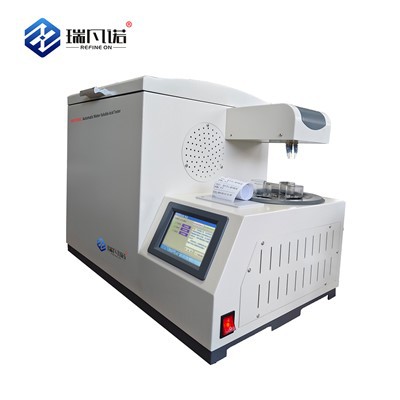
First, let’s start with the basics: what a Lightning Arrester Tester does, and why altitude would ever interfere with that job. A lightning arrester is a critical safety component in power grids—it diverts excess voltage from lightning strikes or surges away from sensitive equipment, preventing outages, fires, and even fatalities. A tester’s job is to measure key parameters of the arrester, like leakage current, resistive current, and residual voltage, to confirm it’s still operating correctly and won’t fail when it’s needed most. These measurements rely on precise electrical interactions between the tester, the arrester, and the surrounding air.
Altitude changes two big things about that air: atmospheric pressure and density. At sea level, the air pressure is about 14.7 pounds per square inch (psi), and it decreases roughly by 1 psi for every 2,000 feet you climb. Lower pressure means fewer air molecules between two conductive surfaces—think of it like the gap between the tester’s high-voltage output and ground. In high altitude, that gap becomes “easier” for electricity to jump across, right? That’s why planes have to fly so high to avoid weather, and why insulators on power lines in the Rockies or the Andes have to be longer than those in Florida or Texas. For a lightning arrester tester, this is a make-or-break detail. If the tester’s internal components or connections can’t handle the reduced air pressure at high altitude, you’ll get faulty readings, or worse, damage to the tester or safety risks for the person operating it.
Now, let’s talk about the actual altitude limit. There’s no one-size-fits-all number here, and that’s where a lot of confusion comes in. Some manufacturers will slap a generic limit of 2,000 meters (about 6,500 feet) on their equipment, but that’s often a one-size-fits-all spec that doesn’t account for real-world testing conditions. Our team has spent years working with technicians across the world, from wind farms in the Tibetan Plateau at 14,000 feet to mining operations in the Peruvian Andes at 12,000 feet, and we’ve refined our testers to perform reliably up to 5,000 meters (about 16,400 feet). But why 5,000 meters, and why can’t it be higher?
Let’s get into the science of that limit. Lightning arrester testers work by applying a controlled high voltage (usually between 1 kV and 100 kV, depending on the size of the arrester) to the unit under test. The electrical breakdown strength of air—meaning the voltage at which it stops insulating and starts conducting—drops proportionally with air pressure. At sea level, air breaks down at about 30 kV per centimeter. At 3,000 meters, that drops to roughly 26 kV per centimeter, and at 5,000 meters, it falls to around 22 kV per centimeter. Our testers are designed with sealed internal components, spaced to account for this reduced breakdown strength, and with overvoltage protection that adjusts automatically to compensate for altitude. But above 5,000 meters, even those design features start to push the limits of what’s safe and accurate. At 6,000 meters, the air’s breakdown strength drops to about 19 kV per centimeter, which is low enough that even the internal gaps in the tester can experience unintended arcing, leading to measurement errors or permanent damage to the tester’s circuitry.
But here’s the thing: the altitude limit isn’t just about the tester’s design—it’s also about the testing standard being used. Most power grid operators follow standards set by organizations like the International Electrotechnical Commission (IEC) or the Institute of Electrical and Electronics Engineers (IEEE). IEC 60071-2, which covers insulation coordination, notes that equipment designed for altitudes above 1,000 meters needs to have enhanced insulation, and many operators require testing to be done in conditions that match the site’s altitude to ensure accurate results. For technicians working above 5,000 meters, we always recommend either renting a temporary high-altitude adapter or upgrading to our high-altitude variant testers, which are calibrated specifically for use between 5,000 and 7,000 meters. We recently worked with a hydropower project in Nepal that was testing arresters at 15,000 feet—their original sea-level tester kept giving wildly inconsistent resistive current readings until they switched to our high-altitude model. Within an hour of making the switch, they had accurate data that let them schedule critical maintenance, avoiding a potential grid failure that would have cost them millions in lost power.
I’ve seen firsthand what happens when operators ignore altitude limits. A few years back, a team of maintenance technicians working on a transmission line in Colorado (at about 11,000 feet) used a standard sea-level tester without adjusting for altitude. The tester reported that a 35 kV lightning arrester was fully functional, but in reality, the arrester had a resistive current 10 times the safe limit. Six months later, that arrester failed during a thunderstorm, taking out a 20-mile stretch of power and leaving 12,000 customers without electricity for three days. When we investigated, we found that the tester’s high-voltage output had arced to its internal ground due to the thin mountain air, leading to a miscalibrated voltage that made the arrester appear healthy. That’s why we emphasize that altitude isn’t just a spec on a data sheet—it’s a safety and reliability factor that can make or break a job.
Another common question I get is: can I adjust my existing tester for high altitude instead of buying a new one? The short answer is, sometimes, but it depends on how the tester was built. If you have a newer tester from a reputable manufacturer, like ours, that has adjustable insulation clearances (most higher-end models do), you can manually adjust the internal gaps to compensate for lower pressure. For every 1,000 meters above 1,000 feet, you should increase the gap between the high-voltage output and ground by about 8%. But this is a temporary fix at best—manual adjustments are prone to human error, and you can’t adjust internal components like voltage transformers or the safety interlocks. That’s why we always recommend our customers use our high-altitude calibrated testers for work above 2,000 meters. We factory-calibrate each unit to its specific altitude range, and include a built-in pressure sensor that automatically adjusts voltage output to maintain consistent, accurate measurements no matter how high you are.
We also test every single one of our high-altitude testers in our environmental testing chamber before it leaves our warehouse. The chamber can mimic altitudes up to 20,000 feet, so we can simulate exactly how the tester will perform in the thin air of the Himalayas, the Rocky Mountains, or the Andes. We test for arcing, measurement drift, temperature stability, and safety interlock functionality at every altitude between 0 and 7,000 meters. This isn’t just a box-ticking exercise—we’ve had customers send us testers that were damaged due to high-altitude use, and we’ve been able to trace those issues back to manufacturing shortcuts that didn’t account for the unique challenges of thin air. For example, some cheap testers use plastic insulators that become brittle and less effective at high altitude, which can lead to leakage current errors. Our testers use high-grade silicone rubber insulators that maintain their insulating properties at low pressure and extreme temperatures, which is critical for working in remote mountain sites where temperatures can drop below freezing overnight.
Now, let’s talk about safety, because that’s the most important part of this discussion. High-voltage testing is inherently dangerous, and the risk increases at altitude. The reduced air pressure means that any unintended electrical arc is more likely to persist and cause serious injury or death. A technician working on a 100 kV arrester at sea level has a small margin for error, but at 10,000 feet, that margin is much smaller. Our testers include additional safety features specifically designed for high altitude: redundant ground interlocks, arc-flash protection that trips faster at low pressure, and a visual and audio alarm that alerts the operator if the tester is approaching its altitude limit. We also provide free training to all our customers who work at high altitude, teaching them how to perform pre-test checks to confirm their tester is calibrated for their site’s altitude, how to adjust settings if needed, and how to identify signs of tester malfunction that can be caused by altitude.
Over the years, we’ve built our business on supporting technicians and utility companies who work in hard-to-reach places. We’ve seen how a reliable lightning arrester tester can mean the difference between a safe, efficient power grid and a catastrophic outage. The altitude limit isn’t a arbitrary number—it’s the result of thousands of hours of testing, feedback from field technicians, and a deep understanding of how electricity behaves in different environments. For most operations, the sweet spot is between 0 and 5,000 meters, but if you’re working above that, we have specialized solutions to meet your needs.
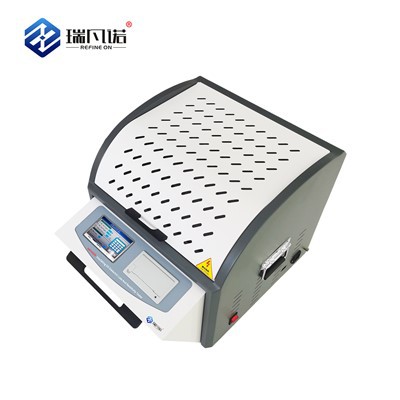
If you’re a field technician, maintenance manager, or power grid operator who has questions about how altitude is affecting your lightning arrester testing, or if you need a reliable tester calibrated for your work environment, I encourage you to reach out and connect with our team. We don’t just sell equipment—we work with our customers to find the right solution for their specific site conditions, whether that’s a wind farm at 8,000 feet or a mining operation at 14,000 feet. We’re here to help you get accurate, safe test results, so you can keep the power grid running, no matter how high you are.
Partial Discharge Tester Reference
IEC 60071-2, Insulation coordination – Part 2: Application guidelines, International Electrotechnical Commission, 2019.
IEEE Std 1127, IEEE Guide for the Field Testing of Surge Arresters, Institute of Electrical and Electronics Engineers, 2018.
National Electrical Manufacturers Association (NEMA) Standard SG5, Altitude Effects on Electrical Equipment, National Electrical Manufacturers Association, 2020.
Refine On (Hebei) Electric Power Technology Co., Ltd.
Refine On (Hebei) Electric Power Technology Co., Ltd. is one of the most reliable lightning arrester tester manufacturers and suppliers in China, also supports customized service. Please feel free to wholesale advanced lightning arrester tester at competitive price from our factory. Contact us for quotation.
Address: Building 13, Liandong U Valley, No.64, Jing SAN South Street, Economic Development Zone, Mancheng District, Baoding City, China
E-mail: victor@transformer-test.com
WebSite: https://www.transformer-test.com/
