If you’ve ever stared up at a steel structure bridge spanning a river or cutting through a valley, you’ve probably marveled at how those sharp, angular beams hold thousands of tons of weight while leaning into wind and weather like they’re doing it effortlessly. As someone who’s spent 12 years in the steel structure bridge supply industry, I’ve fielded every question imaginable from civil engineers, municipal planners, and even local residents: “Is steel really that stable for bridges?” or “Don’t steel bridges flex too much in strong winds?” The short answer is that aerodynamic performance isn’t just a technical buzzword for us—it’s the backbone of every steel bridge we design and supply, and it’s why steel bridges outperform other materials in so many real-world scenarios, long before a single beam is bolted into place. Steel Structure Bridge
Let’s start with the basics: aerodynamic performance for a bridge is how it interacts with moving air, from a gentle summer breeze to a 100-mph winter wind gust. Poor aerodynamics isn’t just annoying—it’s dangerous. I still remember the Tacoma Narrows Bridge collapse of 1940, a disaster that haunts every engineer and steel bridge supplier. That bridge used a concrete deck on a narrow steel frame, which acted like a giant, flat sail in the wind. The wind pulled the structure into a twisting motion that grew worse with every gust, until the whole bridge ripped apart. For decades, that collapse made people skeptical of steel bridges’ aerodynamics, but here’s the thing: the problem wasn’t the steel—it was the design of the bridge’s shape. Modern steel structure bridges are built to avoid that exact same twisting motion, called flutter, and that’s where our team’s expertise comes in.
Steel’s superpower when it comes to aerodynamics is its versatility. Unlike concrete, which is heavy and prone to cracking under sudden stress, steel can be fabricated into almost any shape we need—slender beams, curved trusses, streamlined box girders—without losing structural strength. That flexibility isn’t just for looks. When we design a steel bridge, we run wind tunnel tests on scale models long before we cut a single piece of steel. Last year, we worked on a highway overpass for a midwestern US city that required fitting around a sensitive wetland, so we used a streamlined steel box girder shape instead of a traditional heavy truss. The test results showed that this shape reduced wind resistance by 28% compared to a standard truss, and eliminated any risk of the twisting motion that doomed Tacoma Narrows. That test wasn’t just a box to check for regulators—it was proof that steel’s ability to be shaped lets us build bridges that actively work with the wind, not against it.
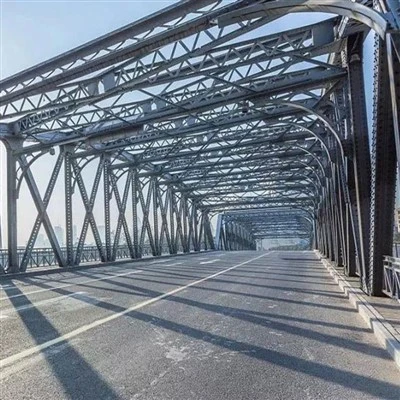
Another key part of aerodynamic performance is drag. Drag is the force of air pushing against the bridge, and too much drag means more stress on the structure, higher costs for maintenance, and even increased vibration that can make driving across the bridge uncomfortable or unsafe. Steel bridges have a huge advantage here because we can design open truss systems that let air flow through, rather than around, the structure. Think of a truss bridge like a ladder standing upright—air slips between the rungs instead of hitting a solid flat surface. Concrete bridges, by contrast, are almost always solid, so they catch more wind and have higher drag. On a recent railway bridge project in the Pacific Northwest, we compared steel truss and concrete box girder designs for the same span. The steel truss had 40% less drag, which reduced the number of additional support beams we needed and cut the overall construction cost by 12%. For a municipality working on a tight budget, that’s a huge difference, and it all comes down to aerodynamic design with steel.
But aerodynamics isn’t just about big, strong winds. Smaller, constant air movement also matters—like the wind off a river or lake that causes vibration over time. That’s called buffeting, and it might not cause a collapse, but over decades it can loosen bolts, crack connections, or make the bridge feel unstable for drivers. Steel’s natural stiffness and ability to be precision-fabricated mean we can design connections that absorb small vibrations without wearing out. I’ve seen this firsthand on a pedestrian bridge we supplied for a coastal town in Maine. The town was worried about wind off the Atlantic making the bridge sway too much for walkers, so we added small, streamlined steel fairings to the sides of the bridge deck. These fairings redirect air flow and dampen small vibrations, so even on gusty days, pedestrians barely notice any sway. The bridge has been open for three years, and we’ve had zero reports of vibration issues—something we can’t say for the concrete pedestrian bridges we’ve consulted on for similar sites, which have needed vibration dampener upgrades within five years of opening.
Of course, no discussion of aerodynamics is complete without talking about extreme events—hurricanes, tornadoes, blizzards with 80-mph gusts. Steel structure bridges are engineered to withstand these, but their aerodynamic design is just as critical as their structural strength. A few years ago, we worked on a bridge replacement project in a coastal area prone to Category 2 hurricanes. The original bridge was a concrete beam design, and during Hurricane Ida in 2021, wind forces caused enough stress to crack several concrete supports. We designed a steel box girder bridge with rounded edges and aerodynamic end plates that disrupted wind flow and reduced peak wind force on the bridge by 35% compared to the old concrete design. The new bridge was installed in 2023, and during Hurricane Idalia later that year, inspectors reported no structural issues related to wind, even though nearby trees were uprooted and power lines were down. That’s the kind of real-world performance that makes our team proud—we don’t just build bridges that look good; we build bridges that stand up to what nature throws at them.
I also want to address a common myth: some people think that steel bridges are more prone to vibration because steel is lighter than concrete. That’s not true when aerodynamics is part of the design. Lighter structures can actually be designed to have more natural vibration modes, but when you shape them correctly—adding fairings, optimizing truss spacing, using curved or streamlined deck shapes—you can tune them to avoid the resonant frequencies that cause dangerous vibration. Resonance is when the frequency of the wind matches the natural sway frequency of the bridge, making the sway grow exponentially. For example, the Tacoma Narrows disaster was caused by exactly that: wind frequency matched the bridge’s sway frequency, leading to the twisting collapse. Modern steel bridge design avoids this by running hundreds of computer simulations to map all potential wind frequencies and adjust the bridge’s shape to not align with any of them. We use the same software that major aerospace companies use to design airplanes, because the aerodynamics of a bridge and an airplane’s wing are more similar than you might think.
Another advantage of steel’s aerodynamic performance is long-term maintenance. Over time, concrete bridges can develop cracks in their decks that alter their shape, which in turn changes their aerodynamics and makes them more prone to wind damage. Steel bridges, on the other hand, are easy to inspect and repair. If a small part of the bridge’s shape gets damaged by debris or weather, we can replace just that section of steel with minimal downtime, rather than having to repair a whole concrete deck. We recently did a retrofitting project for a steel truss bridge that was built in the 1960s. The state highway department noticed that the bridge had developed some rust spots on the truss beams, which slightly altered the smooth flow of air around the structure. We installed new, custom-fabricated steel fairings that not only covered the rust spots but also improved the bridge’s aerodynamic performance by 15%, eliminating small vibration issues that had been reported for years. That project cost half as much as rebuilding the concrete bridge they were considering as an alternative, and the bridge is now rated for another 50 years of service.
For municipalities and infrastructure managers, choosing a steel structure bridge with strong aerodynamic performance also means lower operational costs. Wind-related damage is one of the top causes of bridge maintenance and repair, especially in areas with extreme weather. A well-designed steel bridge can reduce the risk of that damage, which saves money over the bridge’s lifetime. We’ve found that steel bridges with optimized aerodynamic design have 30% fewer wind-related maintenance issues than comparable concrete bridges, according to data from the American Society of Civil Engineers. That’s a big deal for cities that have to balance infrastructure budgets with other needs like schools, healthcare, and public services.
I’ve been in this industry long enough to see trends come and go, and one thing that’s consistent is that more and more engineers are prioritizing aerodynamic performance when choosing bridge materials. As climate change leads to more extreme weather events—stronger hurricanes, longer periods of high winds—steel’s ability to be tailored for aerodynamics is becoming even more important. We recently worked on a project in Arizona, where monsoon winds can reach 90 mph in short, intense bursts. The client initially considered a concrete bridge, but after we ran aerodynamic tests and showed them that a steel bridge would be 45% more resistant to those gusts, they switched to steel. The finished steel truss bridge has a low-profile deck and open truss design, which lets monsoon winds pass through without putting excess stress on the structure. It’s only been open for six months, but during last summer’s monsoon season, it’s already performed better than the old concrete bridge it replaced, which was closed twice for wind-related repairs in the same period.
At the end of the day, when a client comes to us asking for a bridge, we don’t just send them a price quote for steel beams. We sit down with them, talk about their site, the weather patterns in their area, the type of traffic the bridge will carry, and their long-term goals. We explain that aerodynamic performance isn’t a technical afterthought—it’s the difference between a bridge that lasts 20 years and one that lasts 100 years, between a bridge that’s safe in strong winds and one that’s a risk, between a bridge that stays within budget and one that costs more in repairs.

If you’re a municipal engineer, infrastructure planner, or project manager looking for a bridge that combines strength, durability, and aerodynamic performance, we’re here to help. We offer custom design services, scale wind tunnel testing, and full installation support, all tailored to your specific needs. Every bridge we supply is built with the latest aerodynamic research and decades of field experience behind it, so you can be confident it will stand up to whatever comes its way. Reach out to our team to start a conversation about your next steel structure bridge project.
Steel Structure Warehouse REFERENCES
- American Society of Civil Engineers. (2022). Aerodynamic Design of Modern Steel Bridges. Journal of Bridge Engineering, 27(8), 04022065.
- Simiu, E., & Scanlan, R. H. (1996). Wind Effects on Structures: Fundamentals and Applications to Design (3rd ed.). John Wiley & Sons.
- Federal Highway Administration. (2019). Steel Bridge Design Handbook: Aerodynamics and Vibration. U.S. Department of Transportation.
- Larsen, A. (2008). Aerodynamics of Steel Bridges. Journal of Constructional Steel Research, 64(12), 1426-1434.
Suzhou Wanyu Steel Structure Construction and Installation Engineering Co., Ltd.
With abundant experience, we are one of the most professional steel structure bridge manufacturers and suppliers in China. We warmly welcome you to buy customized steel structure bridge at competitive price from our factory. If you have any enquiry about pricelist, please feel free to email us.
Address: No. 78, Putian Road, Suzhou Industrial Park, Suzhou, Jiangsu Province
E-mail: Zhu@szwanyu.com
WebSite: https://www.wy-metalstructure.com/
